The "Me Too" AI Crisis
Over the last two years, every enterprise on earth has added an “AI Assistant” to their product suite. Board members applauded, and press releases were published.
But there is a dark secret hiding in those product updates: Most of them are just “thin wrappers.”
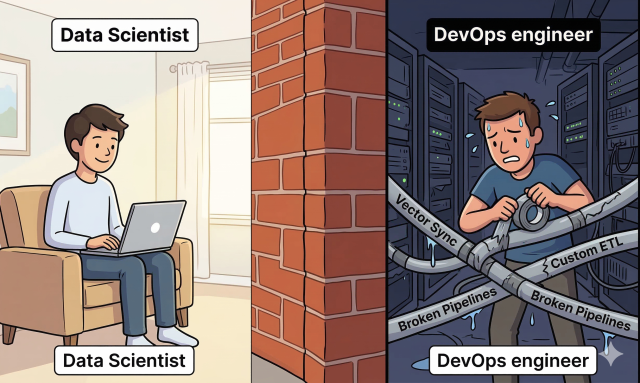
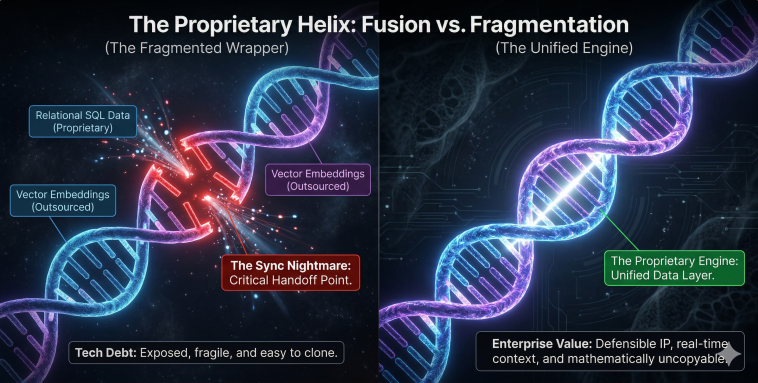
The engineering team simply plugged into an external LLM API, slapped a chat interface on the front, and stored a few embeddings in a standalone Vector Database. You haven’t built artificial intelligence. You are just renting it. And worse—your competitors can copy your exact feature by next Friday.
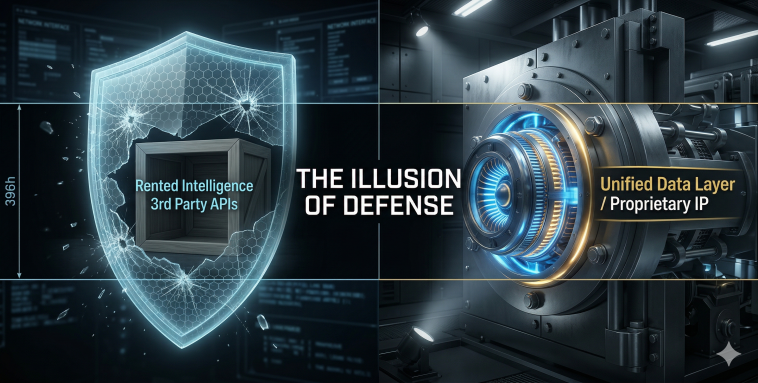
The Illusion of Defensibility
Investors and acquirers are wising up. If your AI strategy relies entirely on moving your proprietary data back and forth between your primary database and a third-party vector silo, your intellectual property isn’t defensible.
When your intelligence layer is outsourced and your data is fragmented, you have no moat. A competitor with a slightly better marketing budget can replicate your entire “AI strategy” in a weekend.
The Engine vs. The Wrapper
The most valuable companies of the next decade won’t be the ones with the best prompts; they will be the ones with the most unified data.
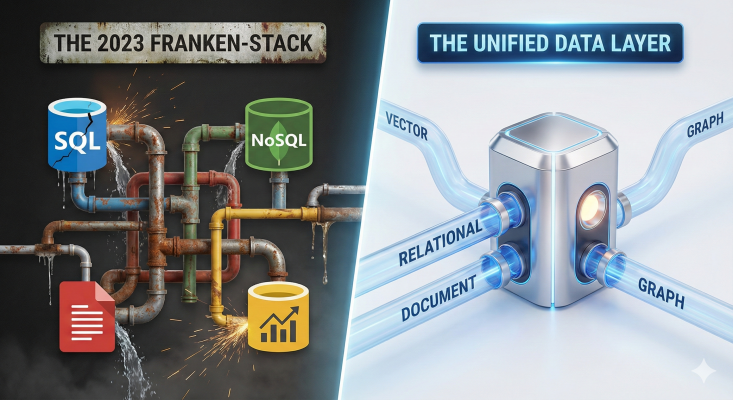
To build a true “AI Engine,” the AI must be deeply, inextricably linked to your proprietary business data. This requires abandoning fragmented infrastructure.
When you utilize a Unified Data Layer (like PostgreSQL with pgvector), your semantic AI searches and your core relational data are queried simultaneously. The AI isn’t an external add-on; it becomes the native operating system of your data.
If your AI relies on a standalone vector DB and an external API, you don't have a moat. You have a feature competitor can clone by Friday. Here is how to build a real Defensible AI Engine. 🧵#Founders #TechStartups #AI #DataEngineering #SaaS
Valuing the Architecture
When you consolidate your vector embeddings into your primary infrastructure, three things happen:
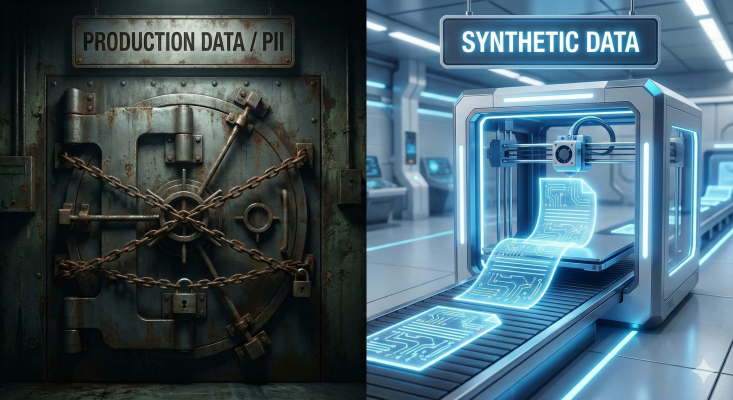
Absolute Security: Your proprietary data never leaves your VPC to hit a third-party vector SaaS, protecting your core IP.
Real-Time Context: Your AI always has the exact, up-to-the-second context of your business, which no competitor can access.
Enterprise Valuation: You transition from selling a “wrapper” to owning a proprietary, defensible data engine.
Conclusion: Stop Renting Intelligence If you want to build a feature, use an API. If you want to build a billion-dollar valuation, build a Unified Data Engine. It is time to audit your architecture before your competitors outmaneuver you.
Understanding that a ‘Thin Wrapper’ offers zero defensible value is step one. Step two is structurally auditing your infrastructure to ensure you own your intelligence layer.
At GYSP, we use our proprietary Vector Consolidation Framework to help executives transition their companies from fragile AI wrappers into highly defensible Data Engines. By migrating your fragmented vector silos into a Unified Data Layer (like pgvector or native Data Warehouses), we secure your data perimeter and solidify your intellectual property.
Stop building on rented land. Use the exact strategic tool we use with enterprise leadership teams to measure the defensibility of your current AI architecture.
Take AI Moat Assessment Below 👇