European Banking & Financial Services Group
Citrix Cloud Migration to Azure: European Banking Case Study
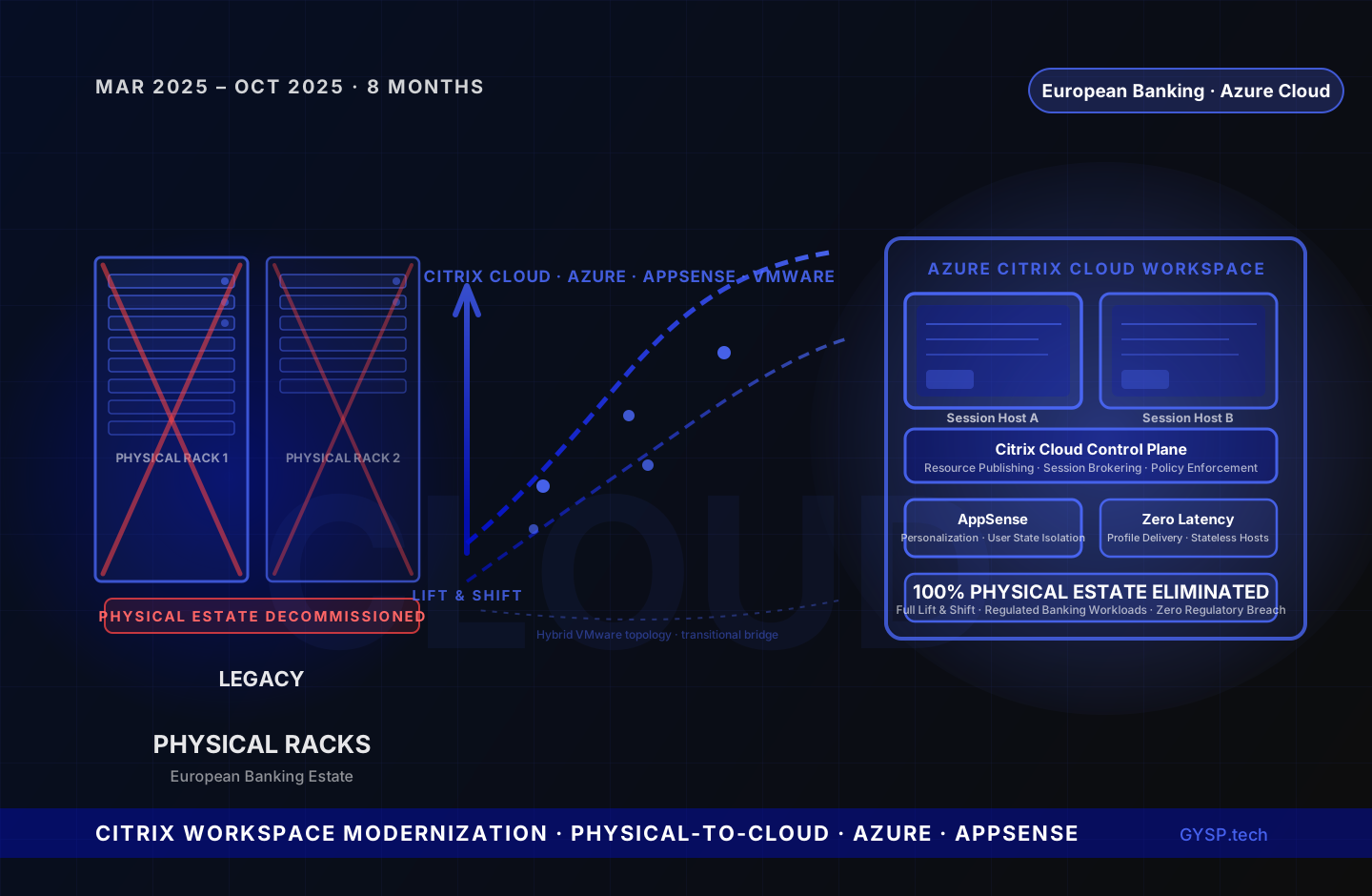
A European banking and financial services group mandated the full decommission of its legacy physical Citrix estate, relocating all regulated workloads into Microsoft Azure. GYSP led the technical migration program: Citrix Cloud control plane deployment, cross-network hybrid connectivity, AppSense Personalization integration for stateless profile continuity, and the hybrid VMware topology that made it all achievable without regulatory breach or operational disruption.
Industry
FinTech
Key Result
100% Physical Legacy Citrix Estate Fully Decommissioned to Azure
Primary Service
Physical-to-Cloud Migration
Core Stack
Microsoft Azure, Citrix Cloud, Citrix Virtual Apps & Desktops
The Challenge
Legacy physical hardware estates running Citrix workloads create compounding risks for regulated financial institutions: hardware approaching end-of-life, inability to scale elastically for demand events, absence of cloud-native security posture, and mounting operational overhead to maintain PCI-DSS and EBA compliance on aging physical servers. This engagement carried a clear mandate: fully evacuate all regulated Citrix workloads from the legacy physical estate and relocate them to Microsoft Azure, with zero tolerance for regulatory breach or operational disruption to an active banking environment.
Our Solution
Led the full technical migration program as senior cloud infrastructure architect: deployed Citrix Cloud management control plane components in Azure, engineered cross-network hybrid connectivity nodes between the cloud fabric and on-premises VMware infrastructure, integrated AppSense Personalization suites to enforce user state isolation and deliver zero-latency profile continuity on stateless Azure hosts, and contributed the hybrid hypervisor topology design that unified Azure cloud assets with on-premises VMware virtualisation throughout the transition period, enabling the physical estate to be fully decommissioned without disrupting live banking operations.
29% of cloud spend is wasted on average. Find yours.
Key Deliverables
- Directed the technical migration program to fully lift and shift regulated Citrix workloads off legacy physical hardware estates into Microsoft Azure, with complete physical server decommission achieved
- Deployed Citrix Cloud management control plane in Azure and engineered cross-network hybrid connectivity nodes to bridge legacy and cloud fabrics during the active migration period
- Integrated AppSense Personalization suites enforcing comprehensive user state isolation and zero-latency profile data delivery to stateless Azure Citrix session hosts
- Contributed architectural design expertise to establish a unified hybrid hypervisor topology linking Azure cloud assets with underlying on-premises VMware virtualisation infrastructure throughout transition
- Maintained high-compliance financial workload handling across the full 8-month program, with zero regulatory breach and zero operational disruption to live banking operations
Services Delivered
- Physical-to-Cloud Migration
- Citrix Cloud Architecture
- AppSense Profile Virtualisation
- Hybrid Hypervisor Design
Tech Stack
This engagement used Microsoft Azure, Citrix Cloud, Citrix Virtual Apps & Desktops, AppSense Personalization, VMware, and 3 additional tools.
Frequently Asked Questions
What is a Citrix Cloud workspace modernisation and how does it differ from a standard cloud migration?+
Standard cloud migrations move applications and databases. Citrix Cloud workspace modernisation moves the end-user computing layer itself, the desktops, virtual applications, and workspace sessions that banking users interact with every working day. This is uniquely complex because banking Citrix environments carry strict compliance requirements around session audit trails, data residency, screen recording controls, and access governance. Moving to public cloud means those compliance obligations must be re-engineered into an Azure-hosted architecture while users continue working uninterrupted.
Why was eliminating the physical hardware estate specifically important for this banking client?+
Physical Citrix infrastructure in banking runs on 5-7 year hardware refresh cycles. As hardware ages, PCI-DSS and FCA/EBA compliance attestations become harder to maintain, patch cadence slows, and elastic scaling for demand spikes becomes impossible. A full physical-to-cloud relocation eliminates hardware refresh capital expenditure, delivers elastic scaling of session host pools, and brings the Citrix estate into alignment with the bank's broader cloud-first infrastructure strategy, replacing operational cost centres with scalable cloud spend.
How did AppSense Personalization solve the stateless Azure host pool problem for banking users?+
Azure Citrix session host pools are stateless, VMs are provisioned fresh for each session cycle and carry no persistent local user state. Without profile management, banking users would lose application settings, macro configurations, accessibility preferences, and compliance-required application states between every session. AppSense Personalization captures and restores the complete user environment from a centralised store at every logon: settings, application configurations, folder redirections, and user-specific policy exceptions are all delivered in under a second, making stateless hosts feel identical to the persistent physical desktops they replaced.
What is the purpose of the hybrid VMware topology and why not decommission VMware at the same time?+
Enterprise banking environments have deep VMware dependencies: storage, networking, security tooling, and legacy workloads all run on VMware infrastructure. Eliminating VMware concurrently with the Citrix migration creates unacceptable blast radius across too many systems at once. A hybrid hypervisor topology keeps VMware running as the on-premises virtualisation substrate while Citrix Cloud migrates to Azure: the two environments interoperate via hybrid connectivity nodes, allowing the Citrix migration to complete cleanly and safely before VMware rationalisation is addressed as a separate program.
Work with GYSP
Similar FinTech challenge?
Get a free technical brief: architecture options, cost estimates, and a delivery timeline scoped to your challenge.
- 48-hour turnaround
- Senior engineers only
- No commitment required
Or call: +1 (929) 588-8364
More FinTech Case Studies
 FinTech
Global FinTech SaaS Company
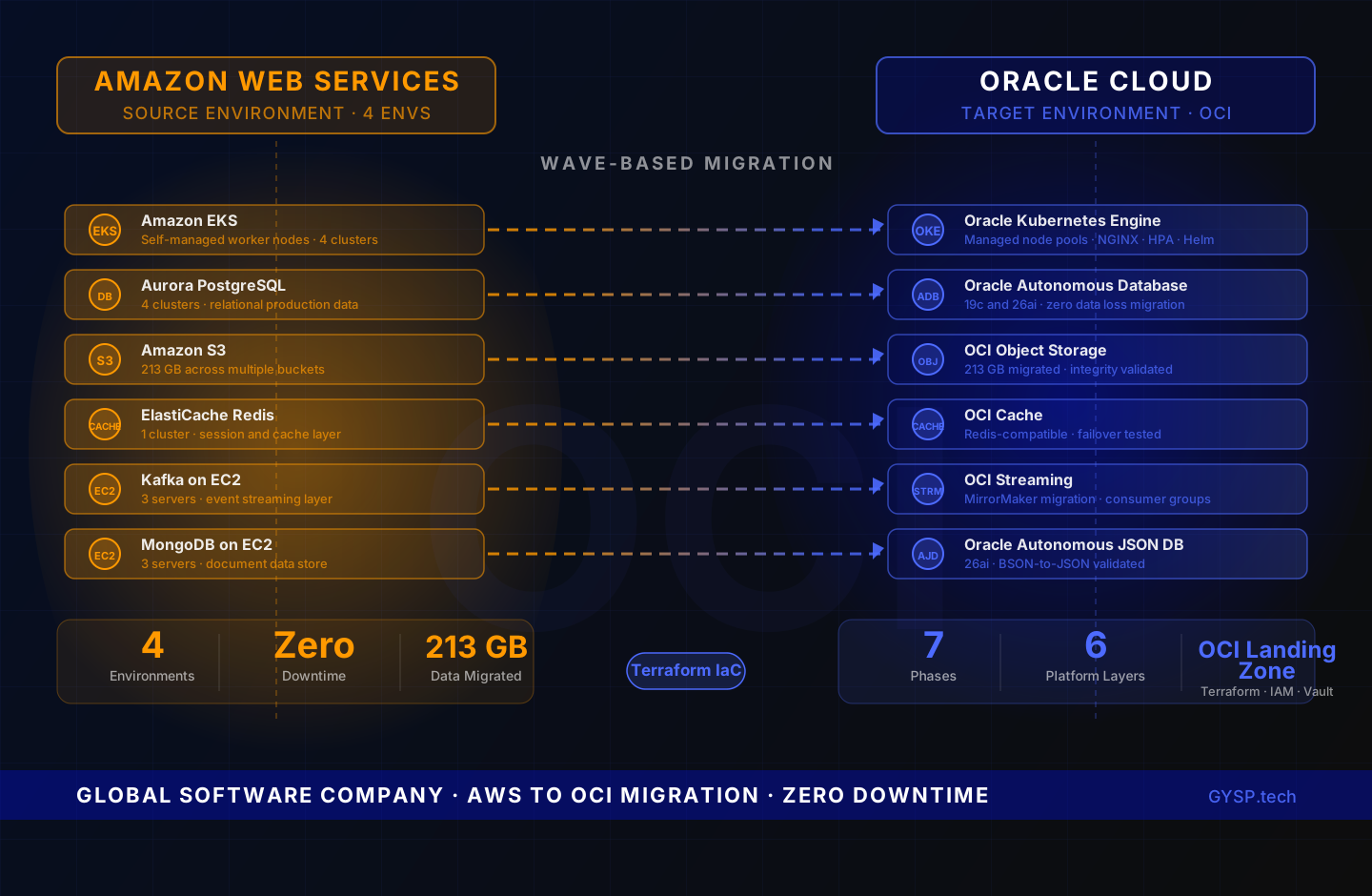
A global software company running business-critical workloads across four AWS environments needed a full-stack migration to Oracle Cloud Infrastructure: containers, databases, messaging, caching, and object storage, without disrupting production operations.
 FinTech
DotPe
Growing transaction volumes, three active compliance frameworks, and a full AWS-to-GCP migration, all without a single major service outage. The stakes were high for this fintech platform.
 FinTech
Options Trading Platform
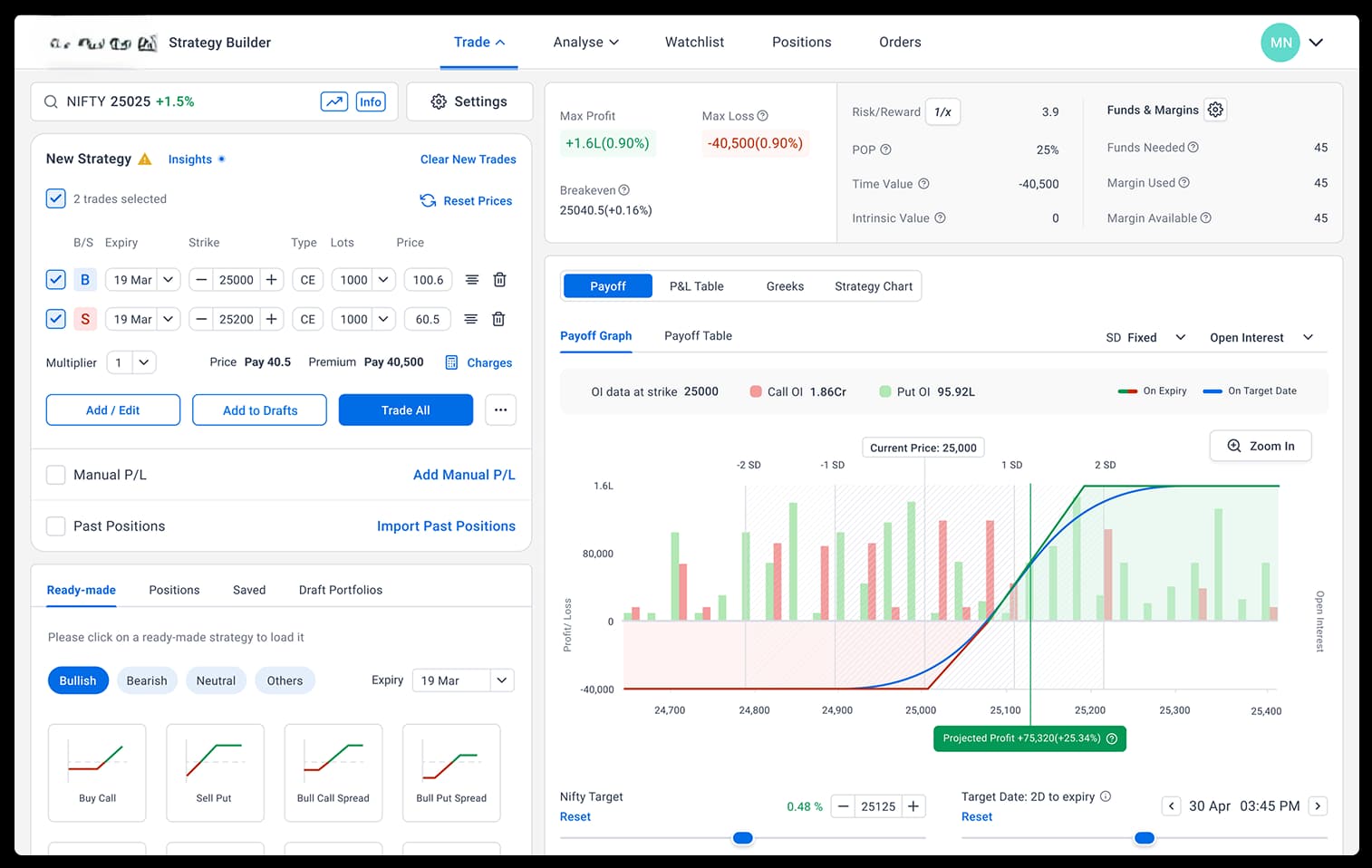
Retail traders were making high-stakes decisions with manual calculations and static charts. They needed the kind of strategy tools professional desks take for granted, built for the masses.
