Insights
Written by Practitioners,
Not Marketers
Deep-dive perspectives on cloud engineering, AI/ML, DevOps, cybersecurity, and digital strategy — from GYSP's senior team.
Featured
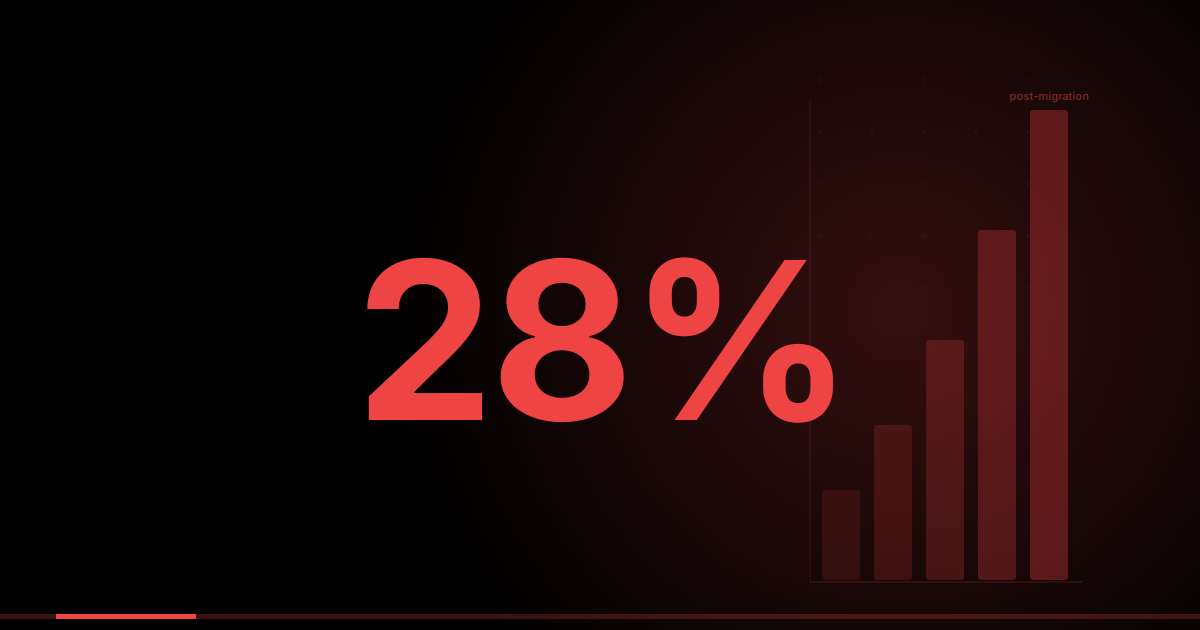
The "Lift and Shift" Lie: Why Your Successful Cloud Migration Is Bleeding Cash
Most cloud migrations succeed on paper and fail on the balance sheet. Here's why lift-and-shift architecture compounds waste and the FinOps framework GYSP uses to recover 20%+ of wasted cloud spend.
 Ankush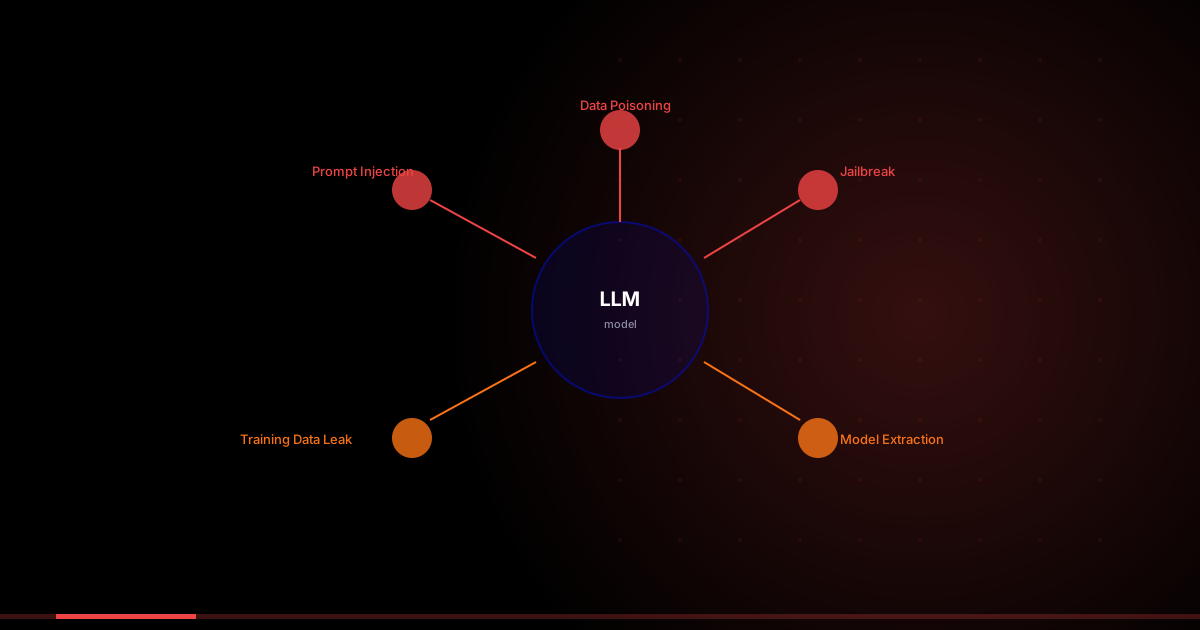
AI Security Attack Vectors Your LLM Vendor Isn't Telling You About — Including the Agentic Ones
You deployed an LLM. You also deployed a new attack surface that your security team has no framework for. In 2026, that surface expanded dramatically when agents got tools. Here's the full threat model, from prompt injection to multi-agent trust chains, that your vendor contract doesn't cover.
 Rahul
Rahul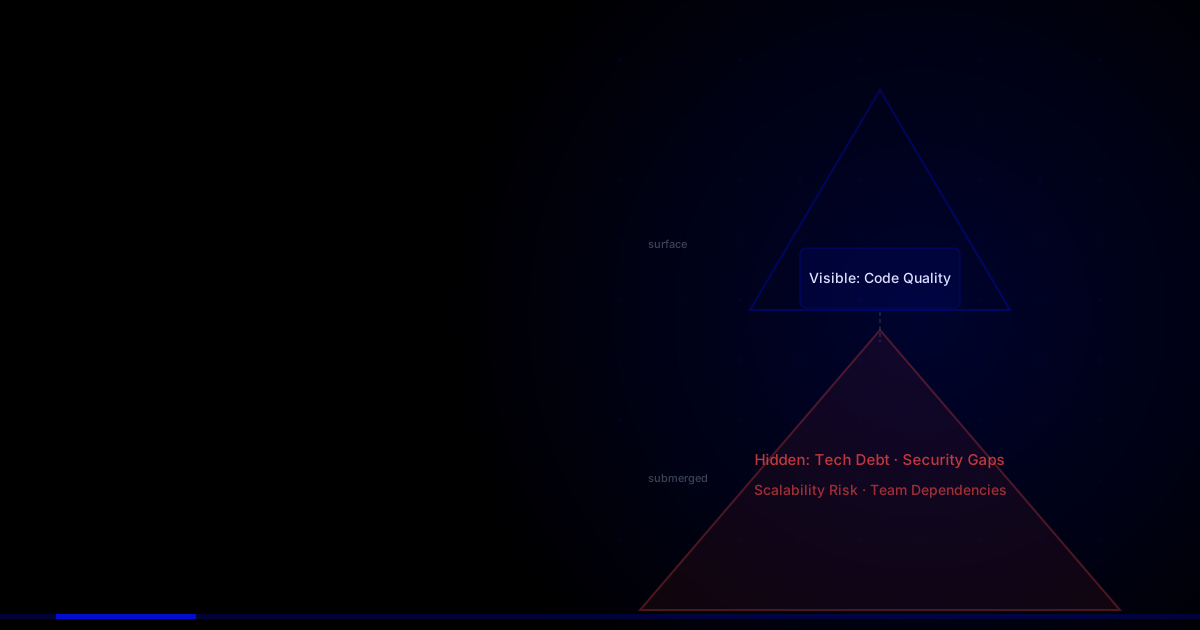
Technology Due Diligence: What PE Firms Miss When Evaluating Tech Stacks
Most technology due diligence stops at security and scalability. The findings that actually destroy deal value, architectural debt, key person dependencies, hidden licensing obligations, and cloud cost time bombs, require a different approach.
 Dhaval Rana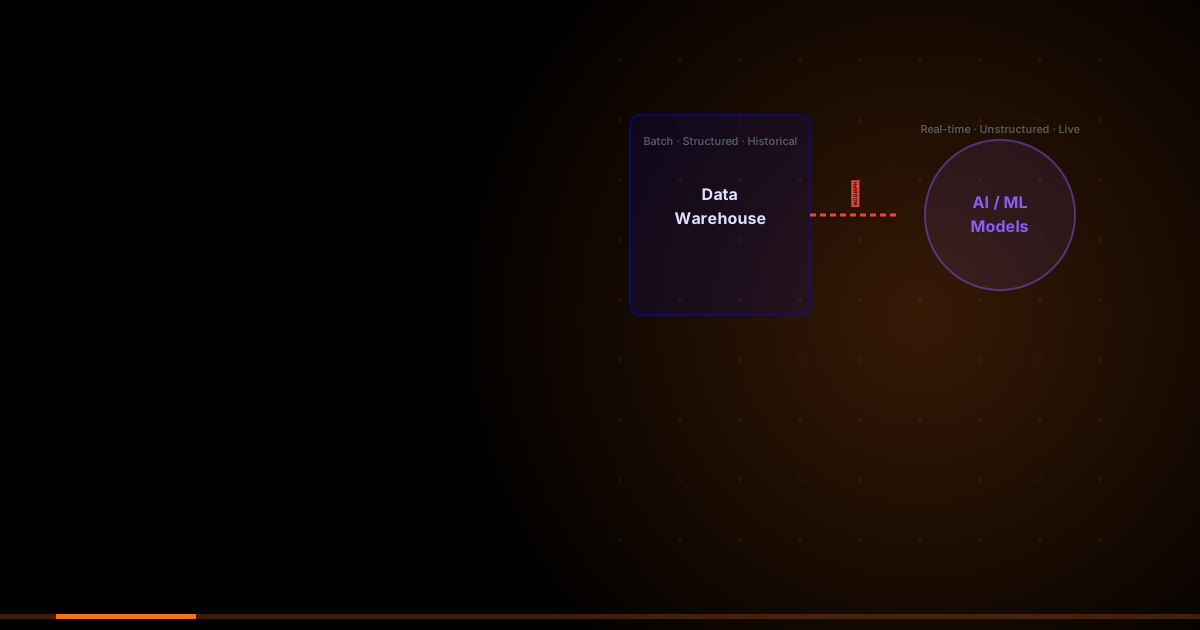
Your Data Warehouse Is Not Ready for AI. Your Data Team Probably Knows It.
Every AI initiative eventually hits the same wall: the data that was good enough for reporting is not good enough for AI. Inconsistent schemas, missing lineage, poor data quality, and no feature store, the data infrastructure debt that reporting tolerated is the debt that AI cannot.
Ankush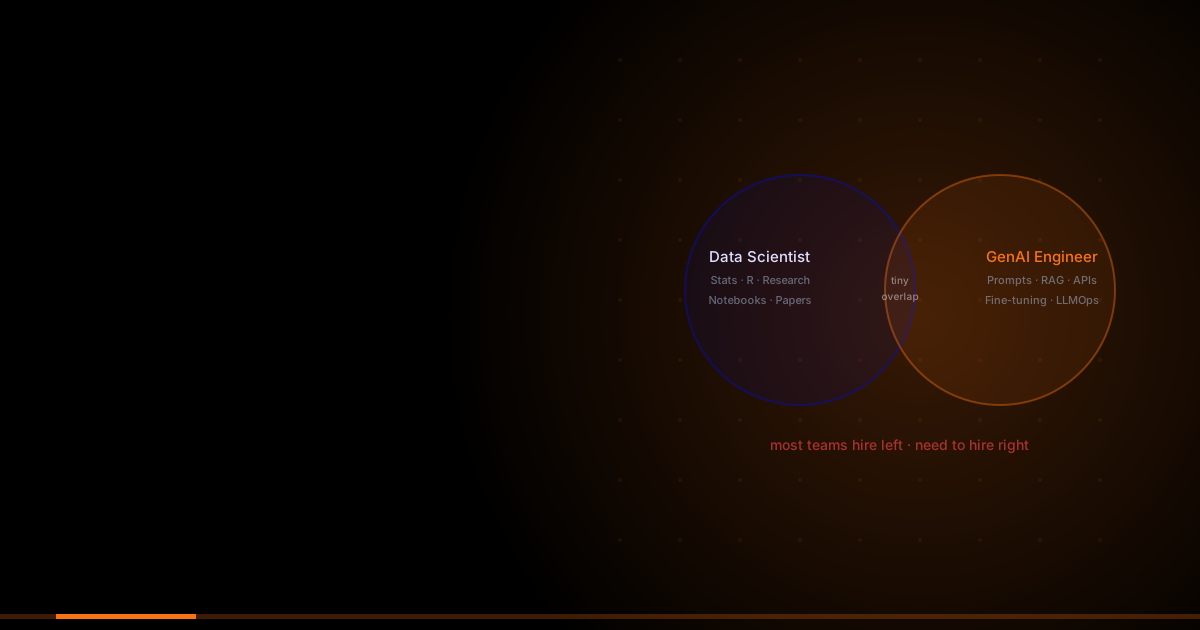
Stop Hiring Data Scientists for GenAI
The most consistent mistake companies make when starting a GenAI programme is posting a job for a Data Scientist. GenAI development requires a completely different skill set and the miscast hire delays delivery by months while frustrating everyone involved.
Rahul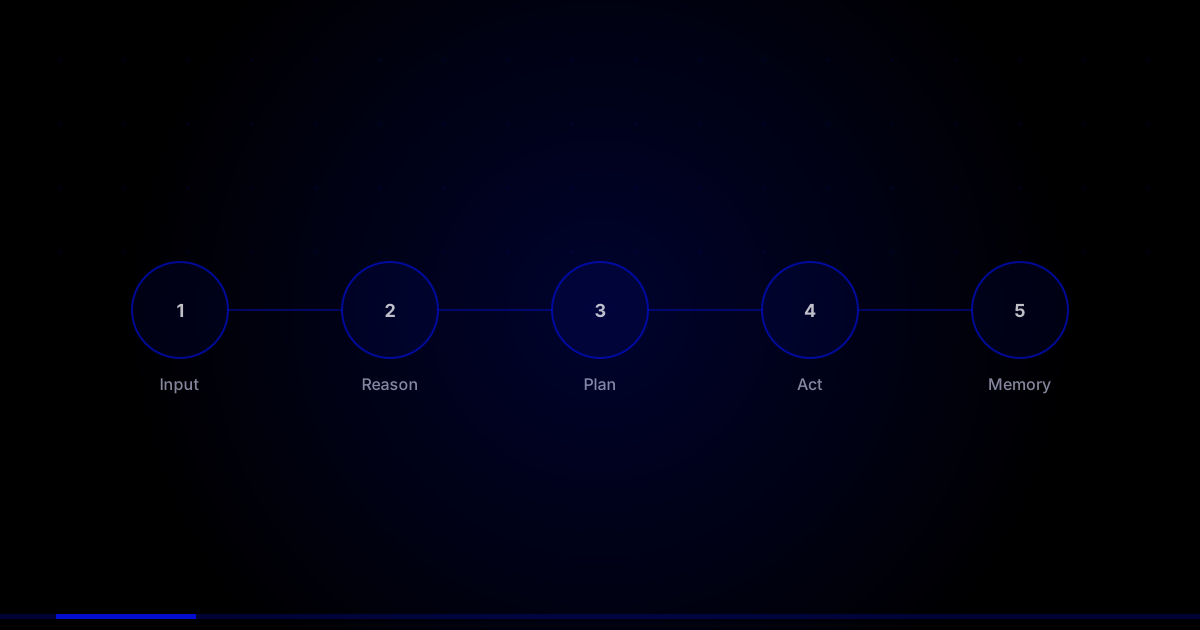
From Chatbots to Agents: The Architecture of Action
Chatbots answer questions. Agents take actions. The gap between them is not a UI decision, it's an architectural one. Here's what it actually takes to build an AI system that can act reliably in the world, and where most agentic systems break down in production.
Rahul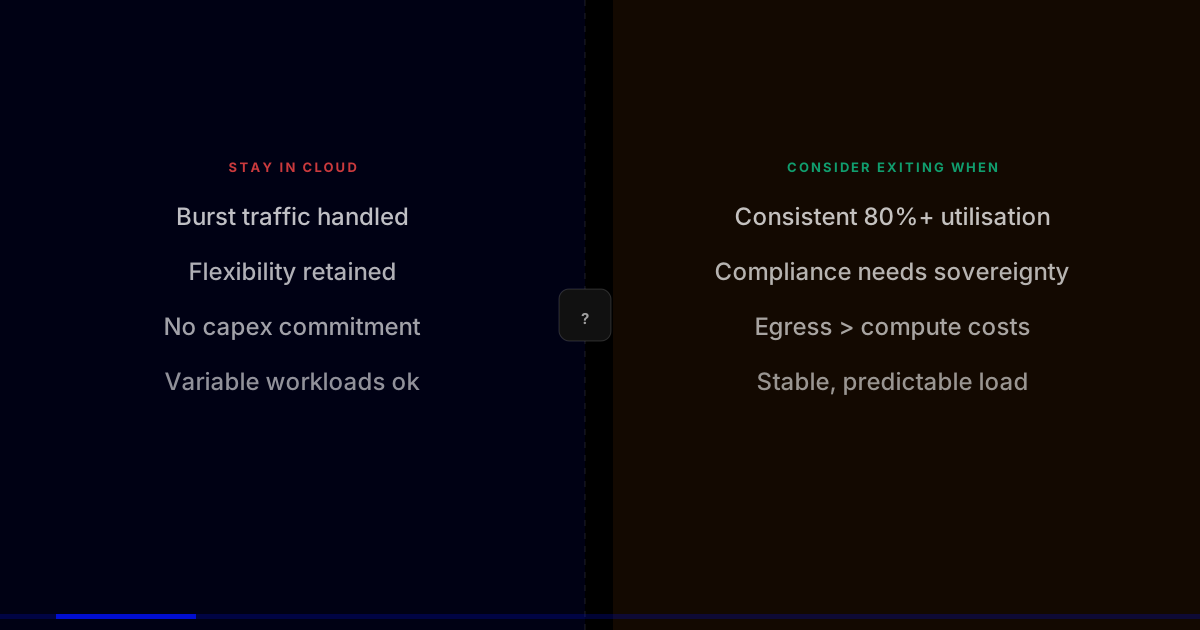
The Cloud Exit: When Does It Actually Make Sense to Leave?
Cloud repatriation is real and growing but it's not a strategy, it's an outcome. The companies successfully moving workloads back on-premise aren't reacting to bills; they have a specific thesis about what they're optimising for. Here's the decision framework.
Dhaval Rana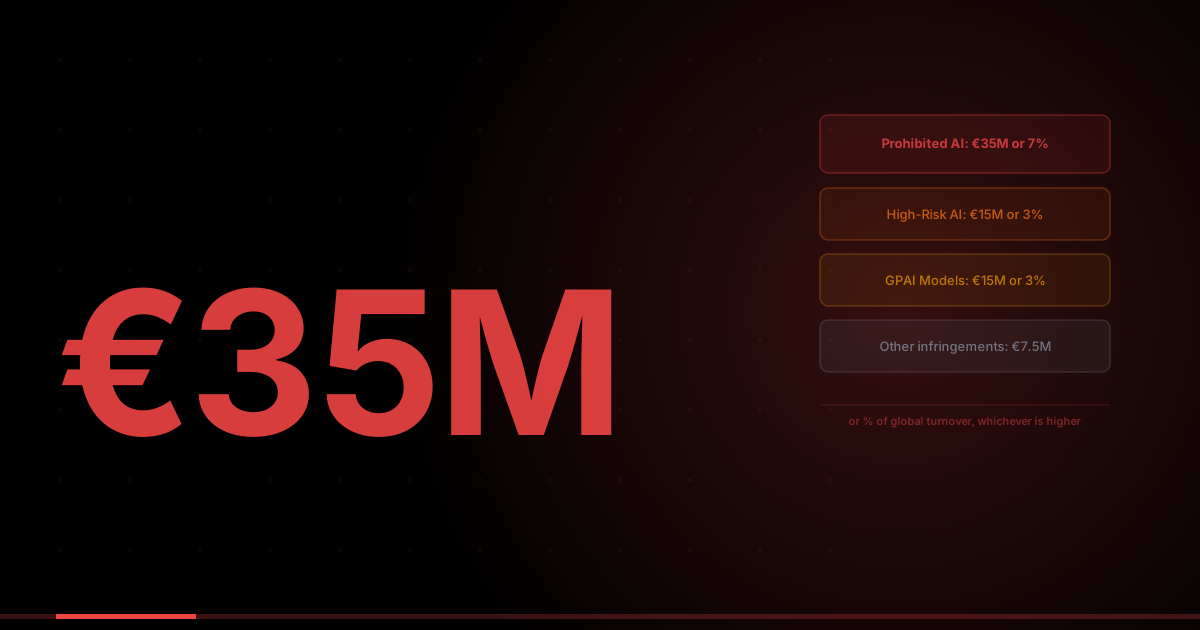
The EU AI Act Is Live: What Software Companies Need to Do Before the Next Enforcement Milestone
The EU AI Act's prohibition articles are already in effect and the high-risk AI obligations are live. Most software companies building or integrating AI have compliance work they don't know they need to do and penalties up to €35M or 7% of global turnover waiting if they don't.
Rahul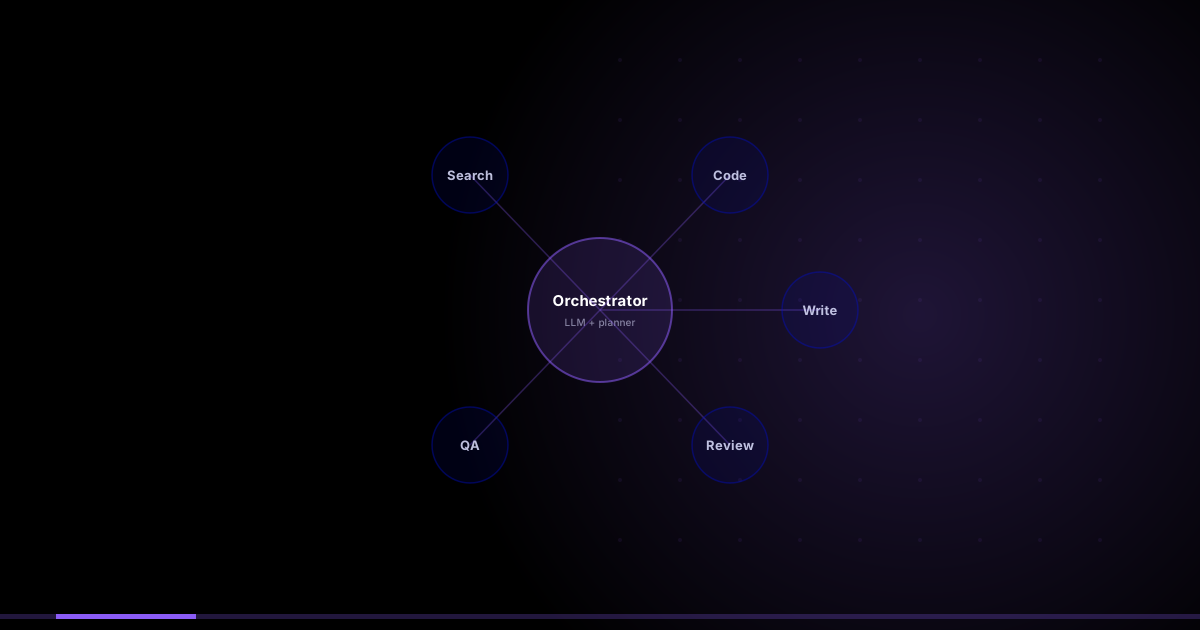
Multi-Agent System Architecture: Patterns, Pitfalls, and What Actually Works in Production
Multi-agent AI architectures look compelling in demos and fail in production for the same reason single-agent systems do, nobody designed for what happens when something goes wrong. Here is the framework for building multi-agent systems that don't collapse when they leave the happy path.
RahulAll Articles
Zero Trust Is Not a Product. It's an Architecture Decision You're Probably Getting Wrong
Most organisations have bought Zero Trust products without implementing Zero Trust architecture and remain fundamentally exposed. Here's the framework that actually reduces blast radius.
 Dhaval S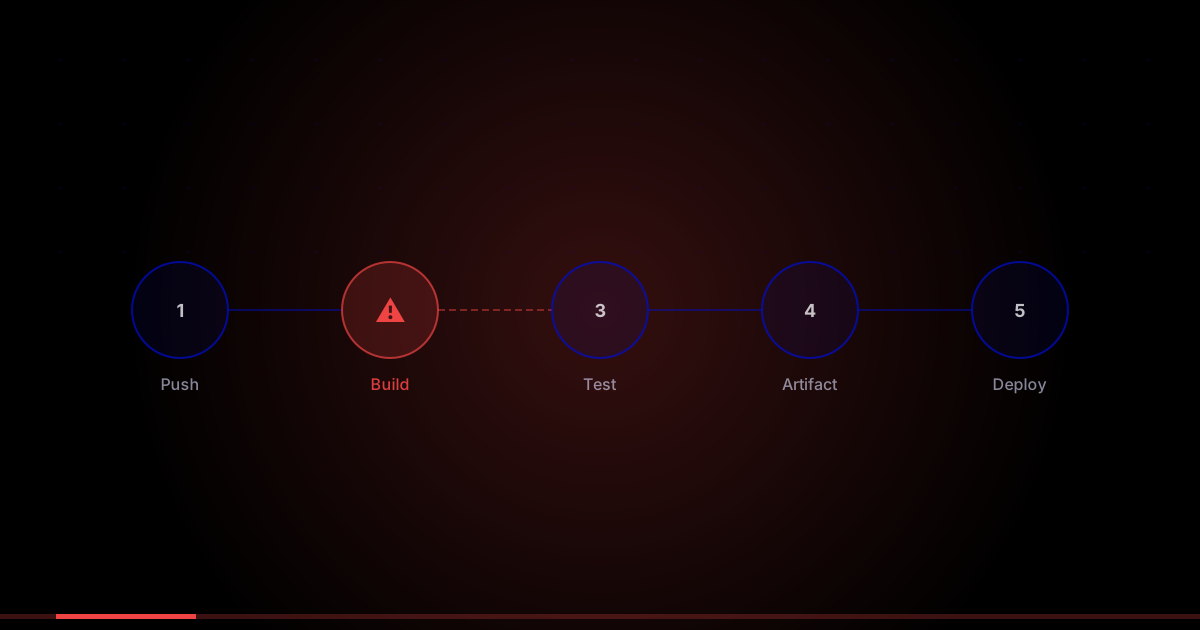
Your CI/CD Pipeline Is Your Biggest Attack Surface (And Your Security Team Doesn't Own It)
Modern supply chain attacks don't breach your application, they compromise your build pipeline and ride the next deployment into production. Here's how to secure the attack surface your security team doesn't control.
Dhaval S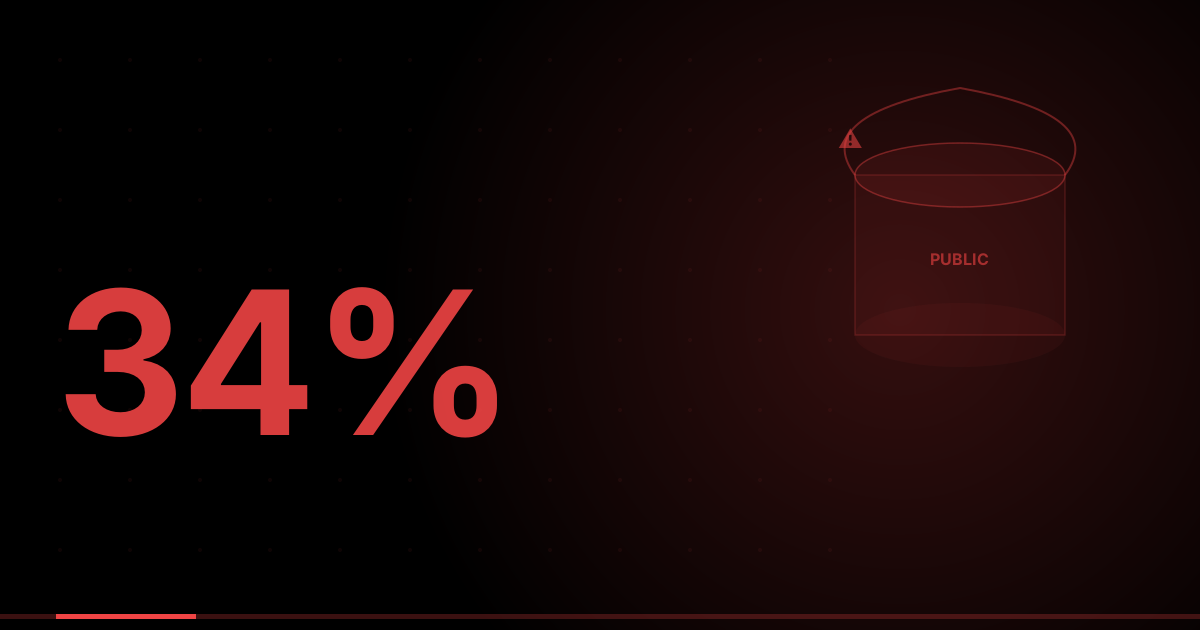
The Hidden Cost of Misconfigured Cloud: Why CSPM Is Non-Negotiable in 2026
Cloud misconfigurations cause more breaches than zero-day exploits, yet most organisations don't have systematic detection in place. Here's what CSPM actually does and how to build a programme that reduces real risk.
Dhaval S
How to Measure ROI on Workflow Automation Before You Buy
Most automation ROI projections are optimistic fictions. Here's a framework to calculate realistic automation return before you commit to a platform, covering time savings, error reduction, capacity release, and the maintenance costs vendors don't mention.
Dhaval Rana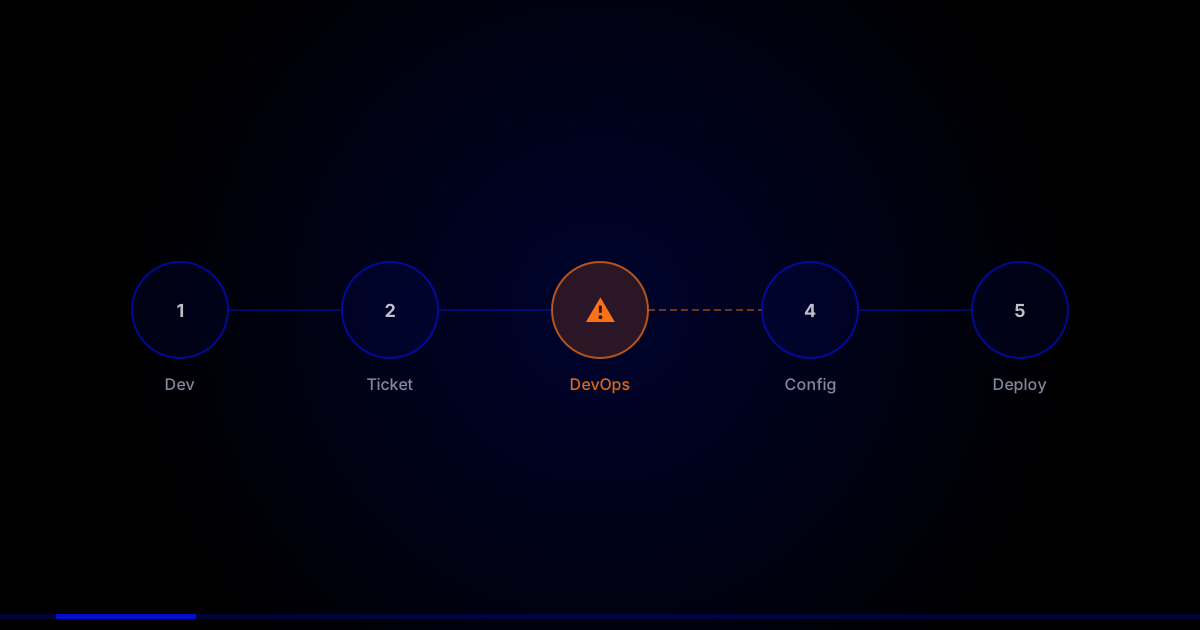
Your DevOps Team Is a Bottleneck. An Internal Developer Platform Is the Fix.
When every deployment needs a DevOps ticket and every environment request takes three days, your platform team has become a service desk. An Internal Developer Platform breaks the bottleneck, here's how to build one that sticks.
 Akshay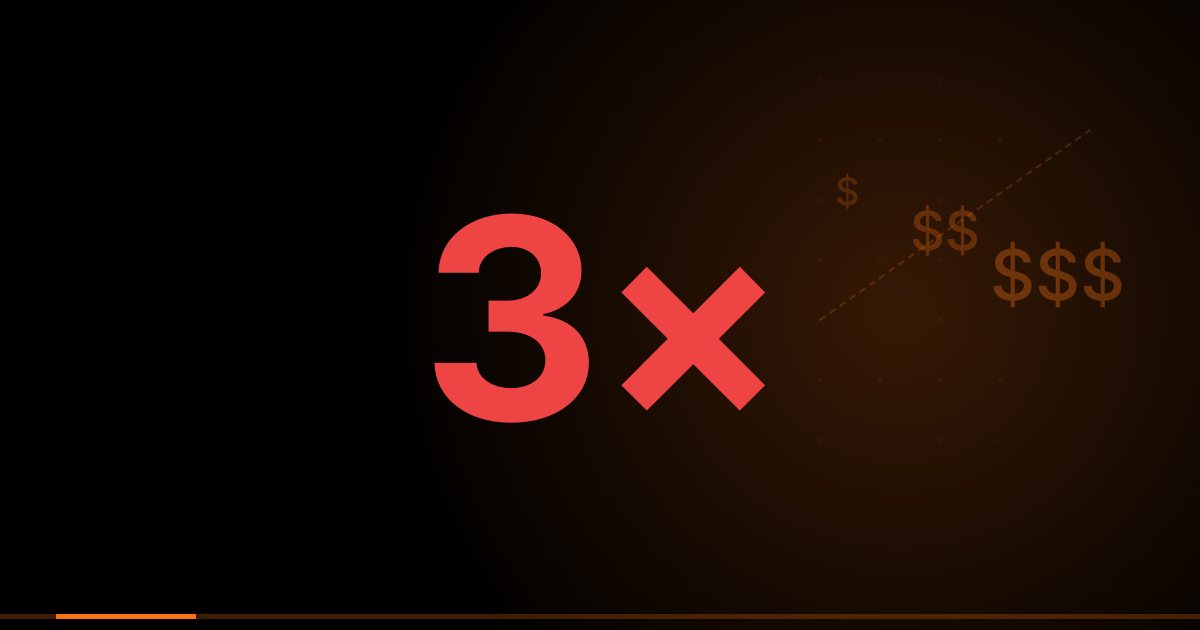
Why FinTech Companies Pay 3× More for Cloud Than They Should
FinTech companies have the highest cloud waste rates of any industry. Compliance requirements, real-time processing demands, and rapid growth create a perfect storm of over-provisioning and architectural debt. Here's how to fix it.
Dhaval Rana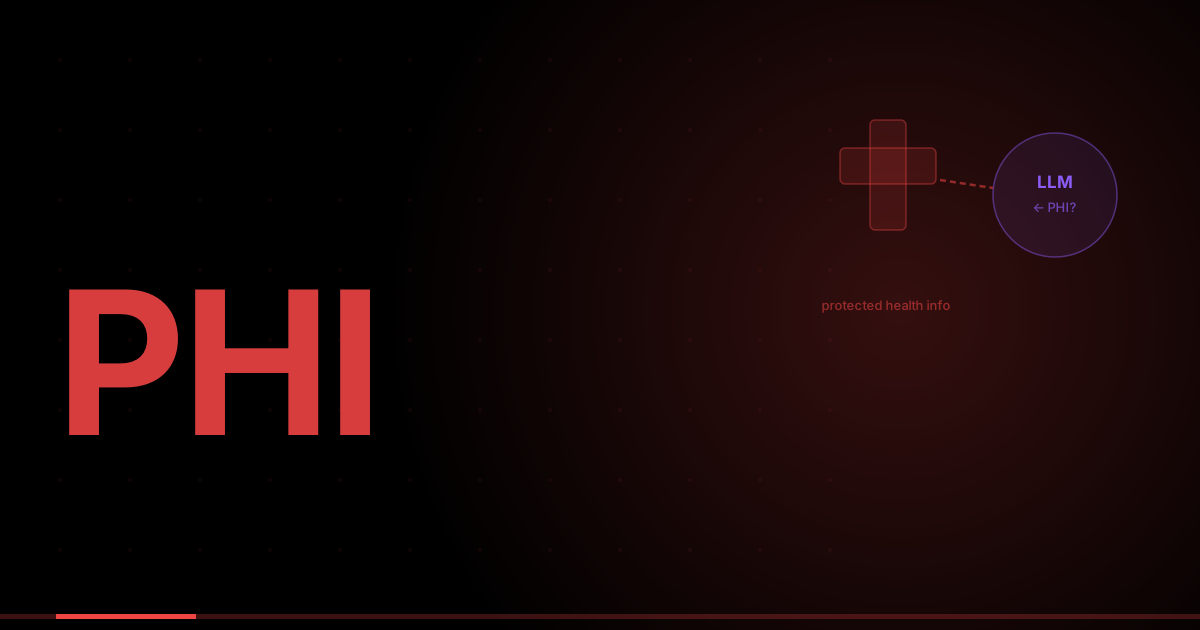
HIPAA in the Age of AI: What Healthcare CIOs Need to Know Before Deploying LLMs
AI deployment in healthcare creates HIPAA obligations that most IT teams are not prepared for. Clinical AI, ambient documentation, and patient-facing chatbots all introduce PHI handling patterns that existing compliance frameworks do not fully address.
Dhaval Rana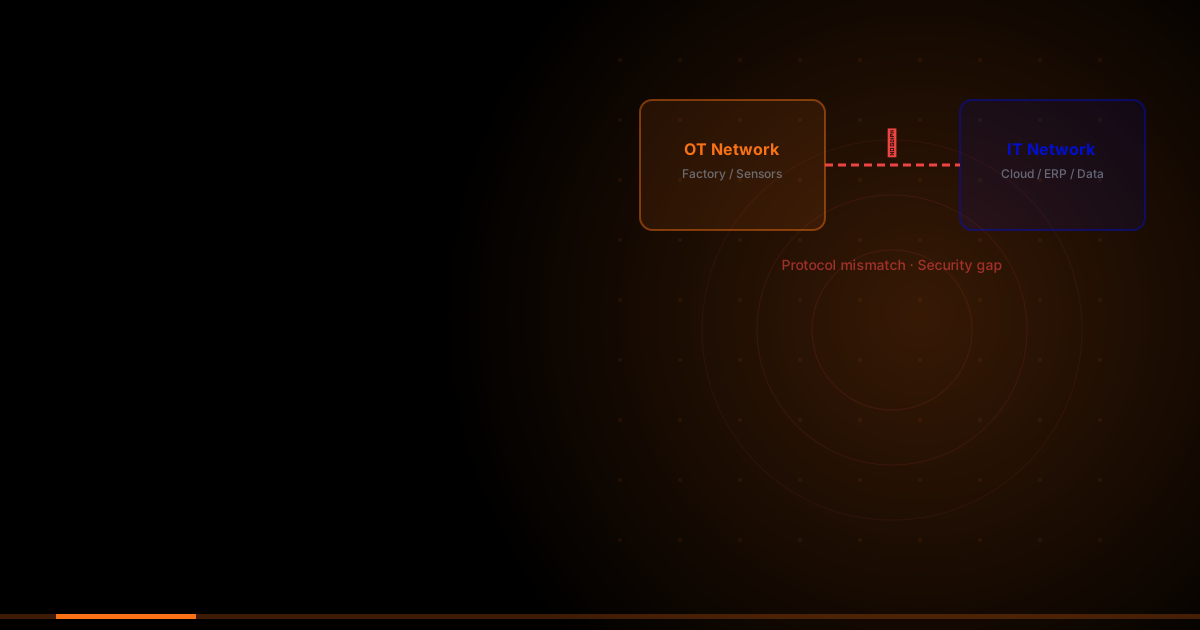
Why Industry 4.0 Fails Before It Starts: The OT/IT Integration Problem Nobody Talks About
Every Industry 4.0 initiative, predictive maintenance, digital twins, real-time quality monitoring, depends on operational data flowing from factory floor to cloud. Most fail not because the AI is wrong but because the OT/IT integration never worked.
Dhaval Rana
The Fractional CTO Trap: When Part-Time Technology Leadership Becomes Full-Time Risk
A fractional CTO sounds cost-efficient, until you realise that your most consequential technology decisions are being made by someone whose attention is split across four other clients. Here's when fractional works, when it doesn't, and what to demand if you go that route.
Dhaval Rana
The AI Engineer Shortage Is Real. Here's How to Stop Waiting for the Perfect Hire.
Demand for AI engineers has outpaced supply by a factor that makes traditional hiring timelines untenable. Companies waiting for the perfect full-time hire are losing 12-18 months of AI momentum. Here are the three models that actually work.
Dhaval Rana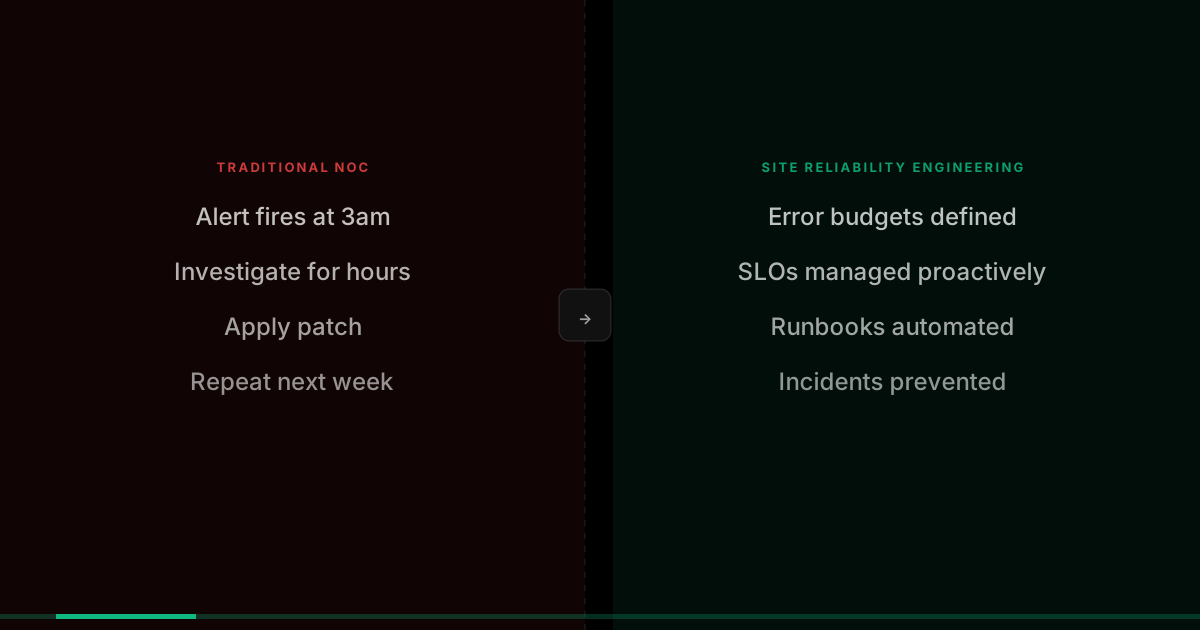
Why Your NOC Is the Wrong Answer: The Case for SRE Over Traditional Managed IT
A Network Operations Centre monitors your systems and responds to alerts. An SRE practice eliminates the alerts by building reliability into the system. For companies running critical digital infrastructure, the difference is the gap between reactive and reliable.
Ankush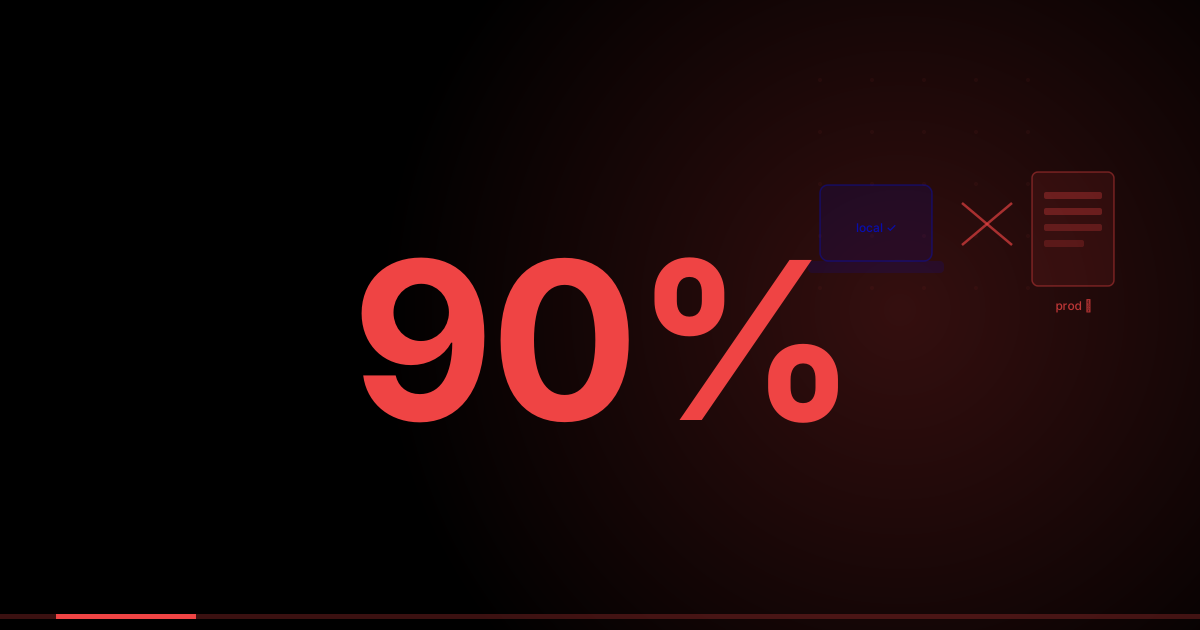
The "It Works On My Machine" AI Crisis: Why 90% of Models Die in Production
Data scientists spend months building models that score brilliantly in evaluation, then fail within weeks of production deployment. The problem isn't the model. It's the gap between notebook and production that nobody planned for.
Rahul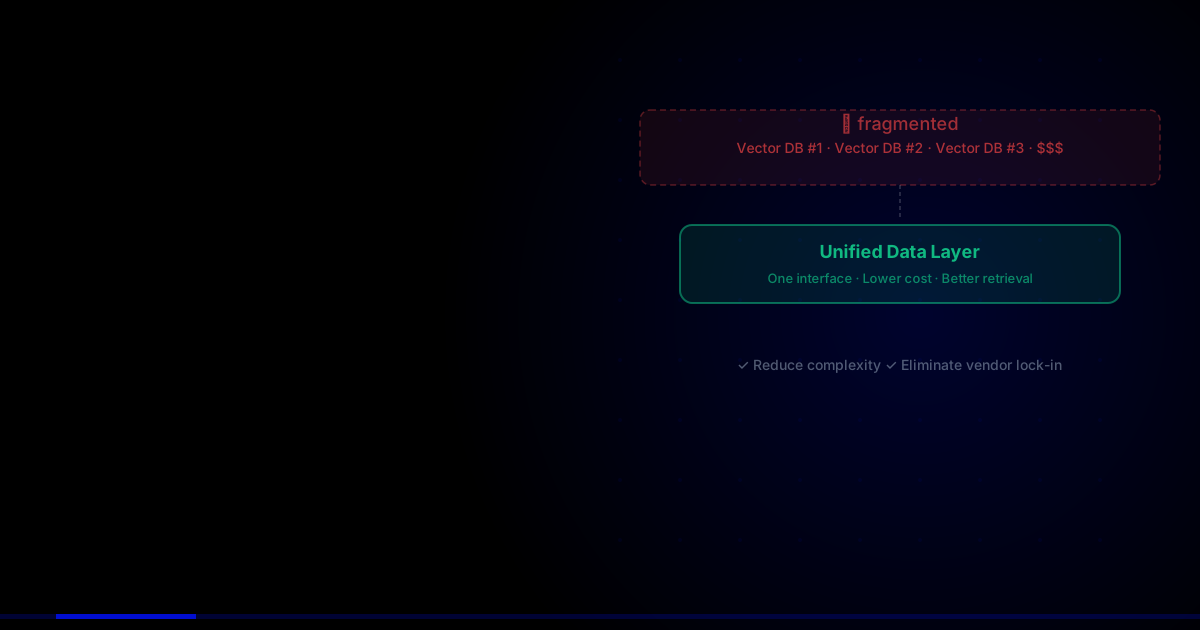
Stop Buying Vector Databases: The Case for the Unified Data Layer
Every company building RAG applications reaches for a dedicated vector database. Most of them shouldn't. Here's when pgvector, your existing search stack, or your data warehouse is the better answer and when a dedicated vector DB is actually warranted.
Rahul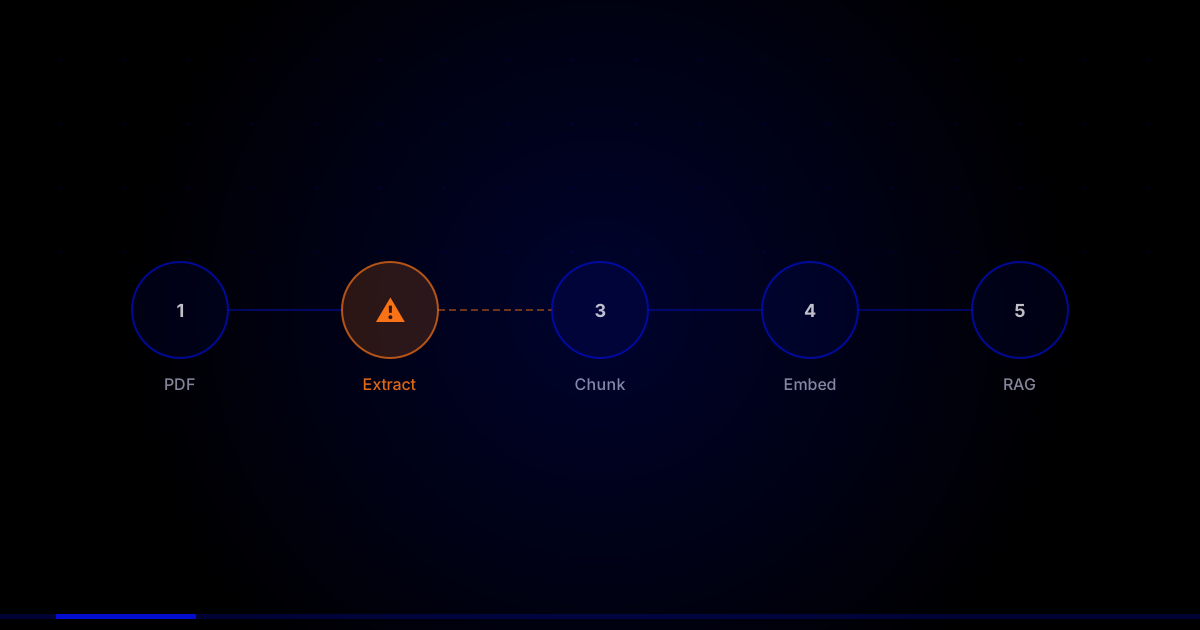
Your PDFs Are Ruining Your AI: The Case for Layout-Aware Ingestion
Most enterprise knowledge lives in PDFs. Most PDF parsing for RAG strips out the layout information that makes that knowledge coherent. The result is a retrieval system that returns corrupted context and a model that hallucinates on questions it should answer correctly.
Rahul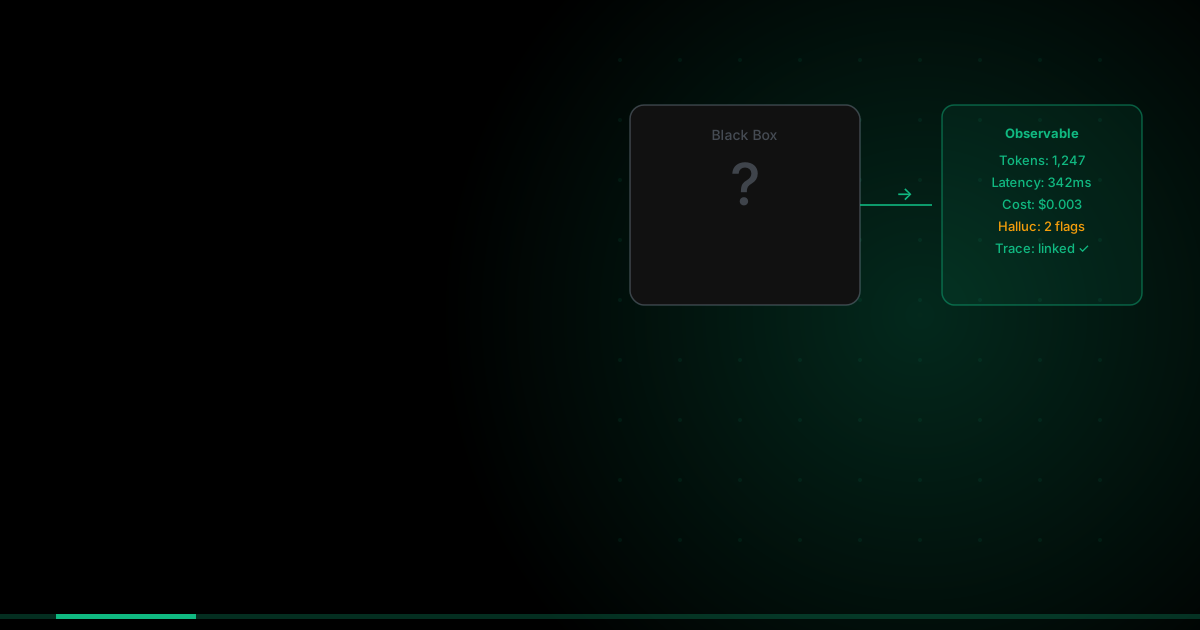
Debugging the Black Box: Why Standard Logging Is Dead for AI
You have structured logging, distributed tracing, and a Datadog dashboard. Your AI system still fails in ways you cannot diagnose. Standard observability was built for deterministic software. AI is probabilistic, and it needs a different instrumentation strategy.
Rahul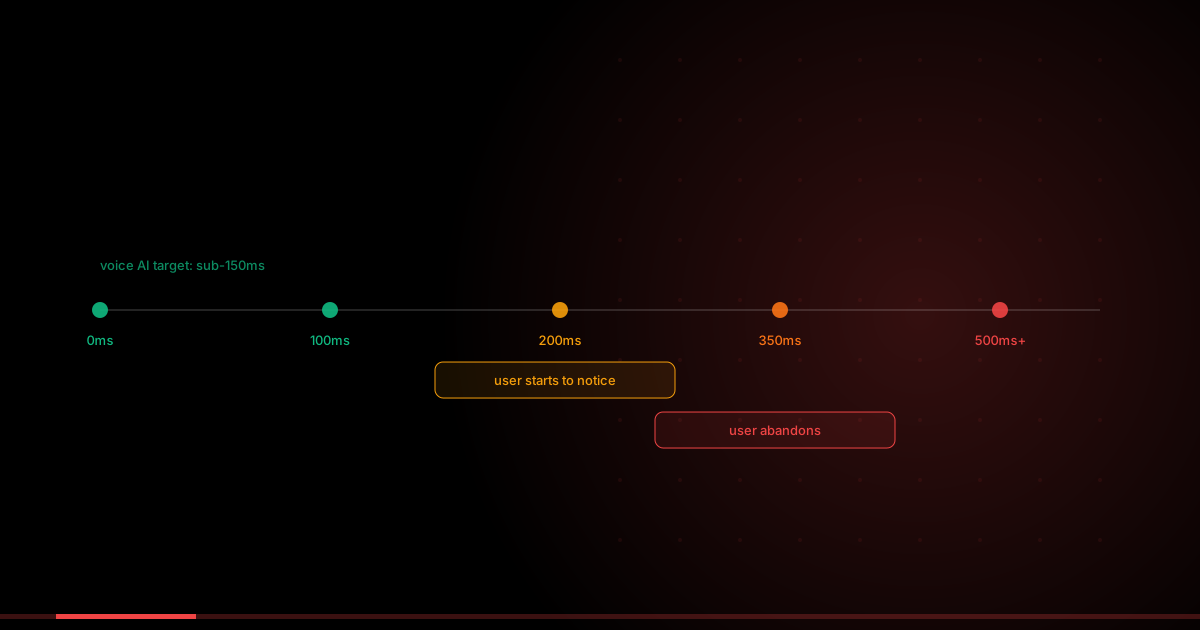
Latency Is the New Outage: Architecting for Voice AI
In text-based AI, a 3-second response is noticeable. In voice AI, it is a dead conversation. Voice interfaces have a 300ms latency budget that collapses the normal tolerance for AI system lag and most architectures aren't built to meet it.
Rahul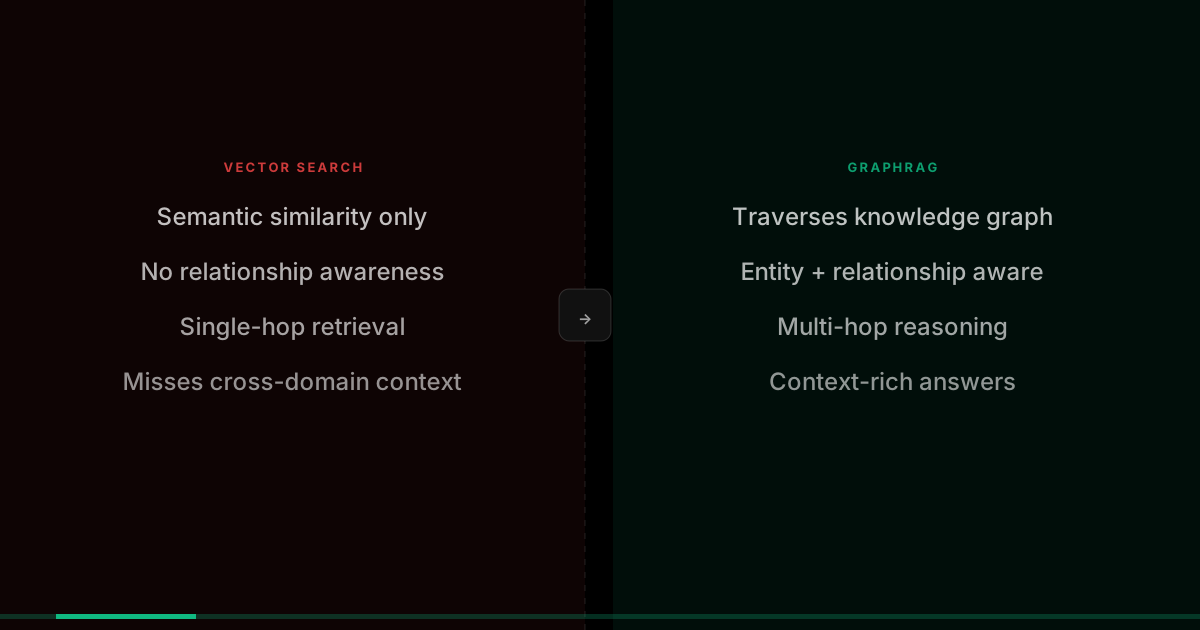
When Vectors Fail: The Case for GraphRAG
Vector search is the default RAG architecture and it fails a predictable class of enterprise queries. Here's when GraphRAG outperforms pure embedding-based retrieval, and how to decide which approach your use case actually needs.
Rahul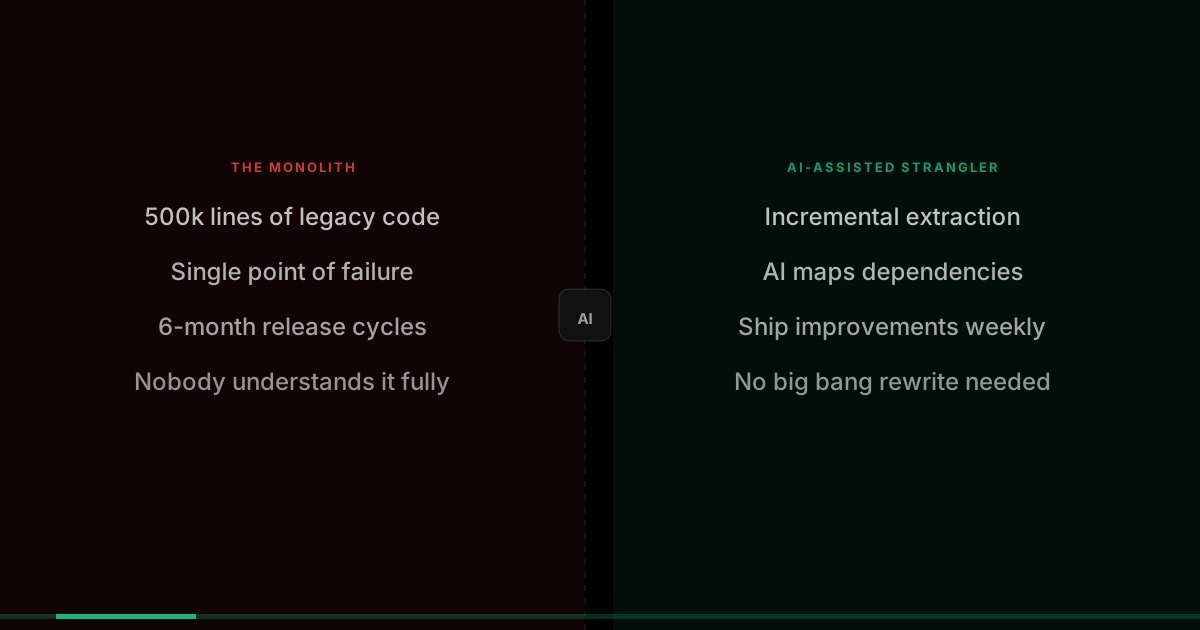
Strangling the Monolith: Using AI to Refactor Legacy Code
The strangler fig pattern for legacy modernisation is thirty years old. AI code assistants have changed what's feasible to execute. Here's how senior engineers are using LLMs to accelerate monolith decomposition without burning down the system.
Rahul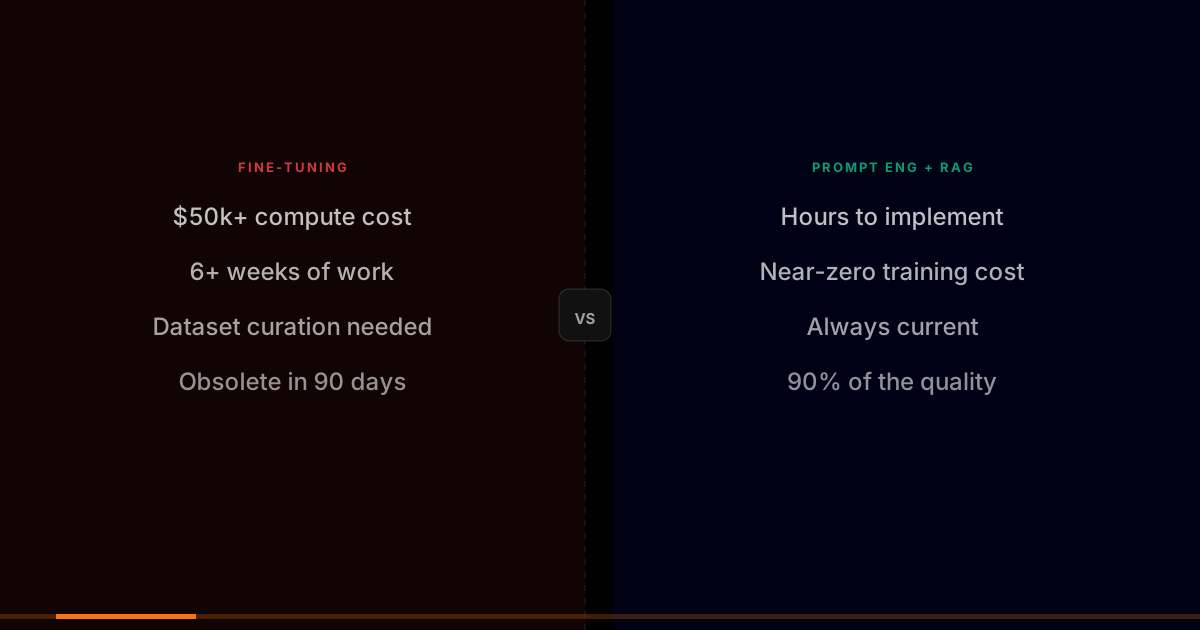
Stop Fine-Tuning Llama (Unless You Have To)
Most enterprise teams that choose to fine-tune an open-source LLM would have been better served by prompt engineering or RAG. Here's the decision framework that tells you when fine-tuning is genuinely necessary and when it's just expensive complexity.
Rahul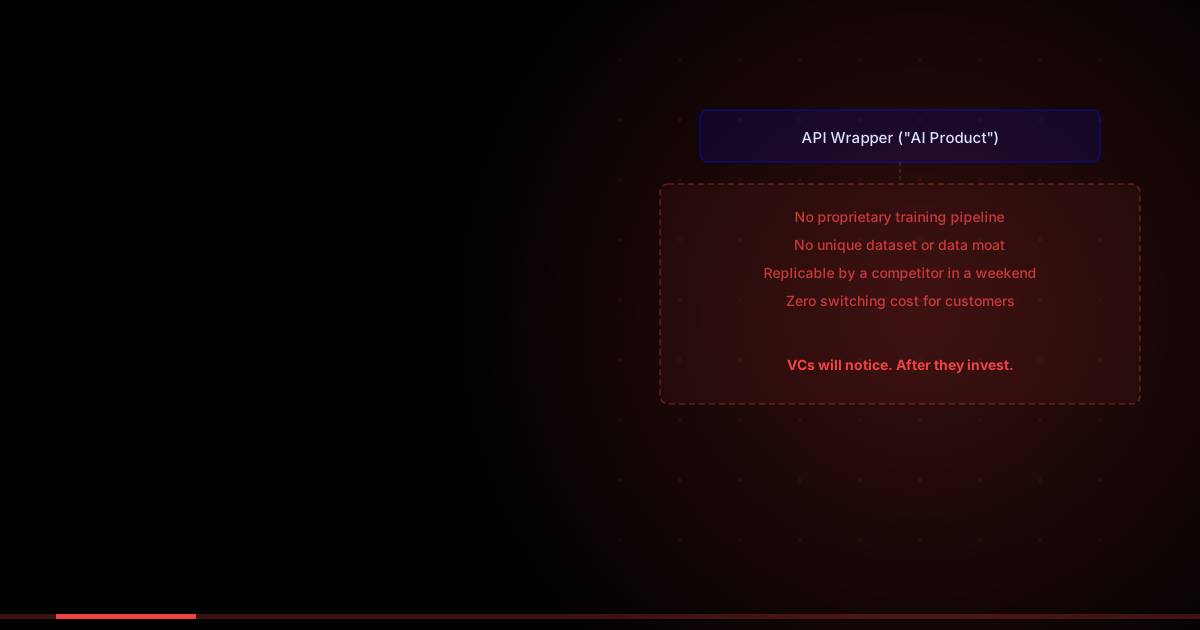
The AI Valuation Trap: Why Thin Wrappers Will Destroy Enterprise Value
Every enterprise is under pressure to 'add AI' to their products and processes. The rush has produced a class of AI implementations so shallow that they create vendor dependency without creating value. Here's how to tell the difference and what genuine AI-enabled value actually looks like.
Dhaval Rana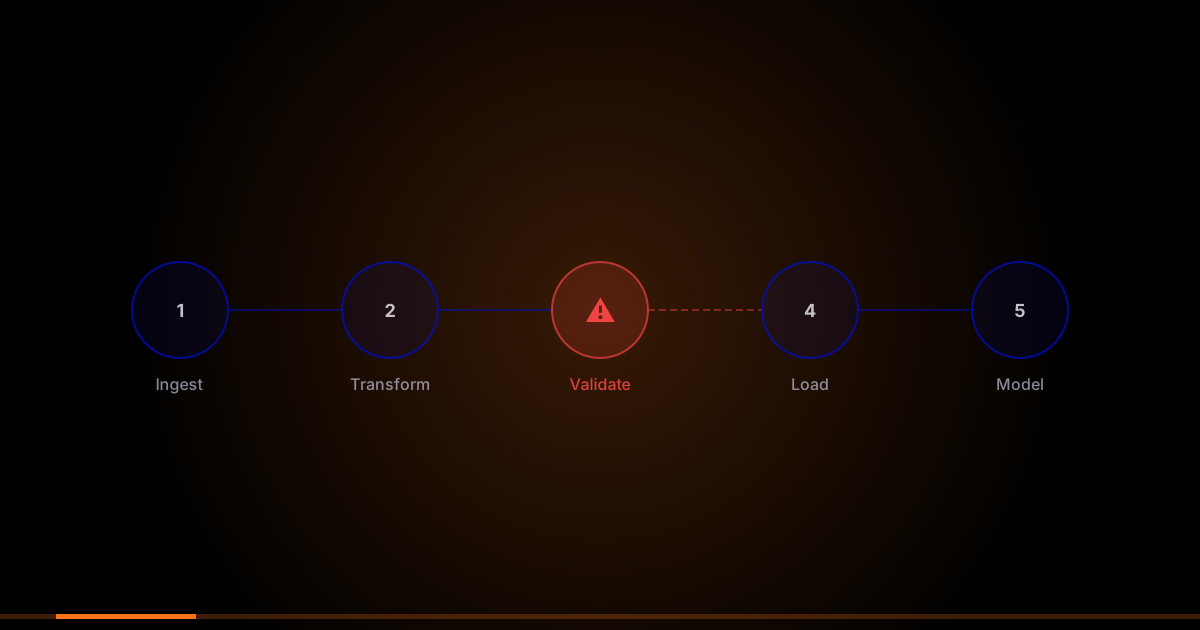
Why Your Data Pipeline Keeps Breaking Your AI
Most AI failures aren't model failures, they're data infrastructure failures that the model makes visible. Bad input quietly becomes confident wrong output. Here's the data pipeline discipline that production AI systems actually require.
Ankush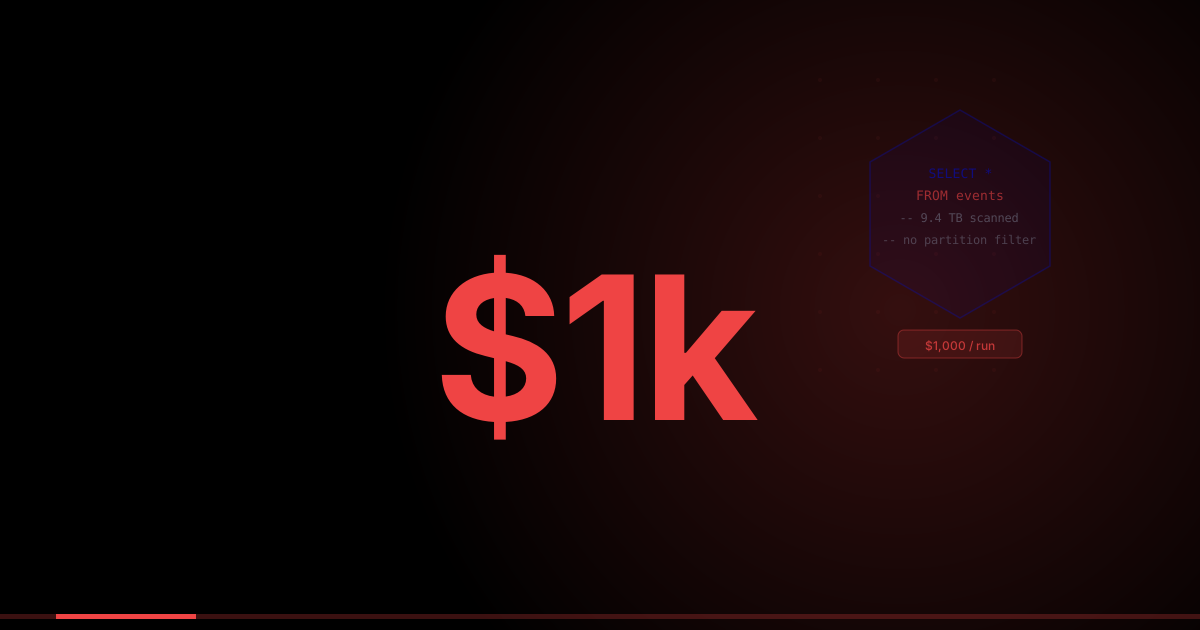
The 1,000 SQL Query: Why Your Snowflake Bill Is Spiralling
Snowflake's credit-per-compute model is transparent and predictable, until it isn't. Teams that migrate from on-premise warehouses without rethinking query patterns, clustering, and warehouse sizing routinely discover their data costs have doubled. Here's why and how to fix it.
Ankush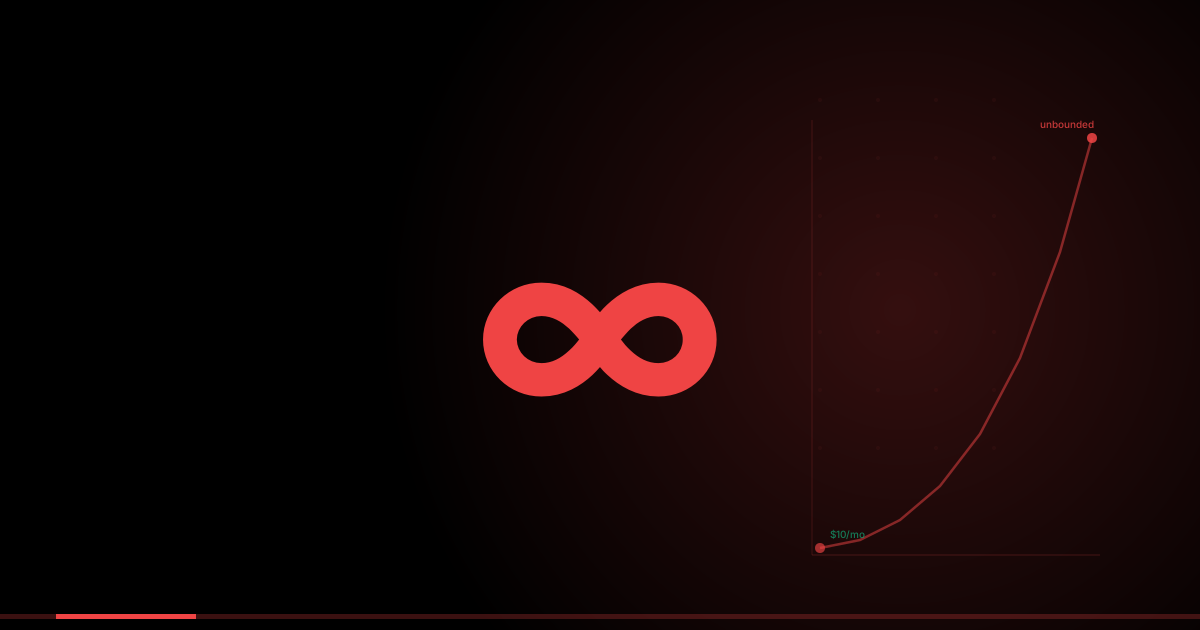
Serverless vs Containers: Cost Comparison and When to Switch
Serverless promised to eliminate idle compute costs. For many workloads it delivered. For others, the per-invocation pricing model costs two to five times more than equivalent container or VM hosting. Here's a direct cost comparison and the audit steps to find which workloads to move.
Ankush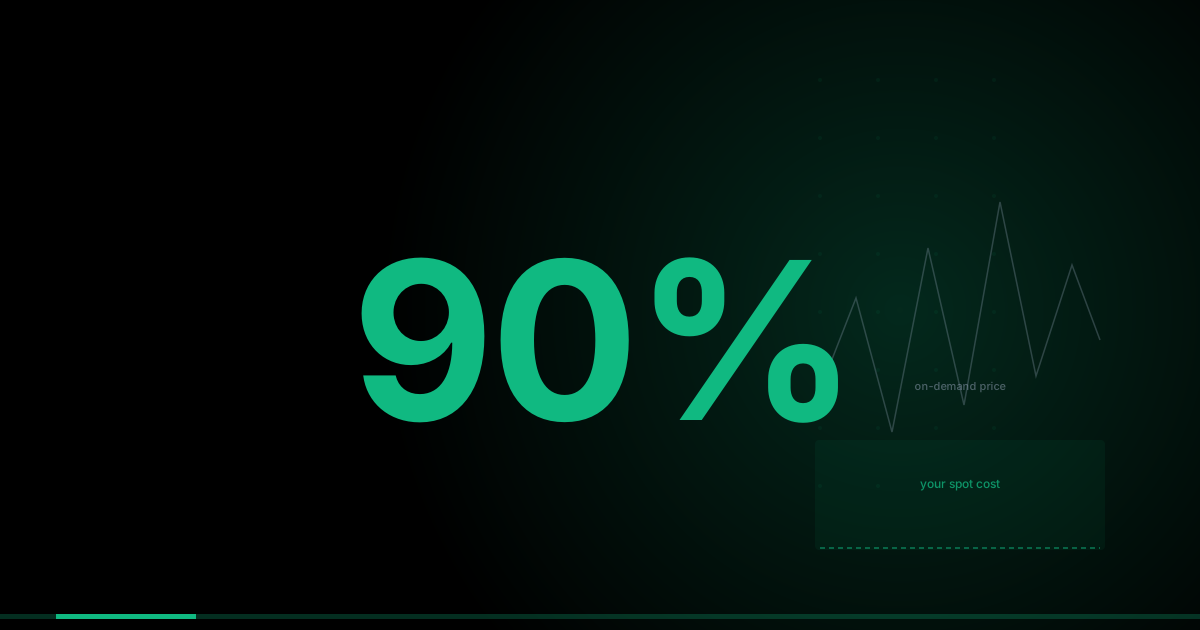
The 90% Discount: How to Run Production on Spot Instances Without Crashing
Spot and preemptible instances offer 60–90% discounts over on-demand pricing. Most teams won't touch them for production because they fear interruptions. The teams that have solved this run significant production workloads on spot without reliability penalties. Here's their architecture.
Ankush
The Token Tax: Preventing Your GenAI Pilot from Bankrupting the Budget
GenAI pilots routinely deliver impressive demos and catastrophic cost surprises when they scale. The teams that avoid the token cost spiral understand prompt economics before they deploy. Here's what you need to know about LLM cost at scale.
Rahul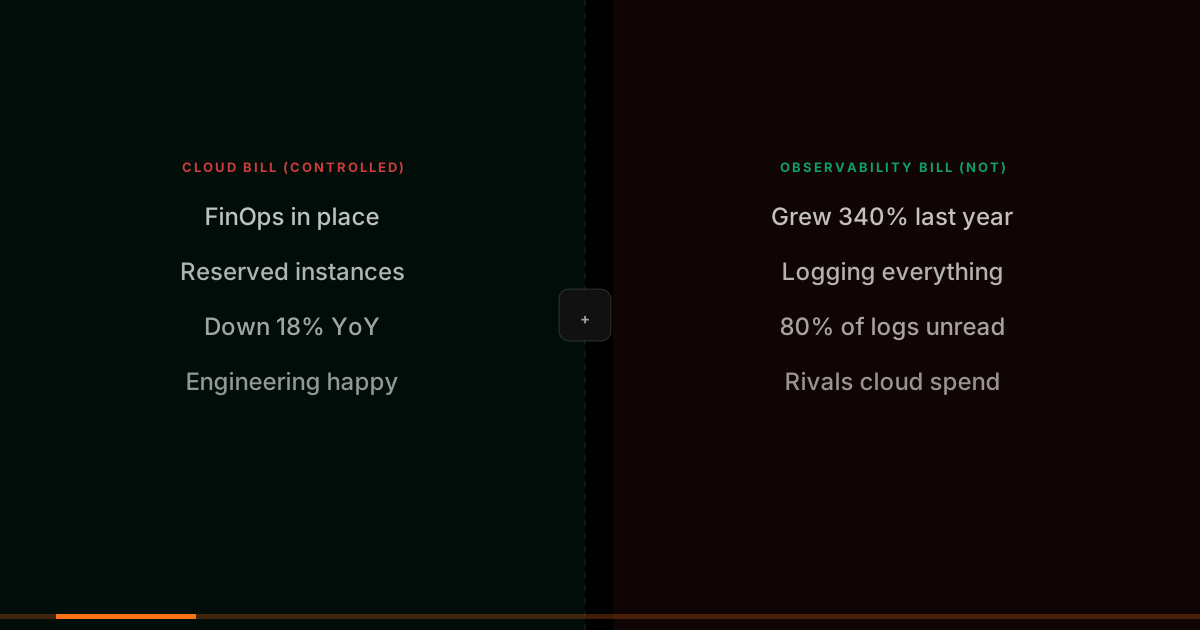
Justifying a Million-Dollar Observability Bill — Or Cutting It by 40–70%
Datadog, New Relic, and Splunk invoices have become line items that CFOs specifically ask about. Here's the benchmark for what your observability bill should cost, the three drivers inflating it, and the strategies that cut spend 40–70% in 30 days without losing visibility.
Akshay
The Kubernetes Black Hole: Why You're Paying for Air
Kubernetes clusters are notorious for low resource utilisation. Teams configure generous CPU and memory requests to avoid throttling, and the gap between what's allocated and what's actually used becomes a silent, growing tax on the cloud bill. Here's how to measure it and close it.
Akshay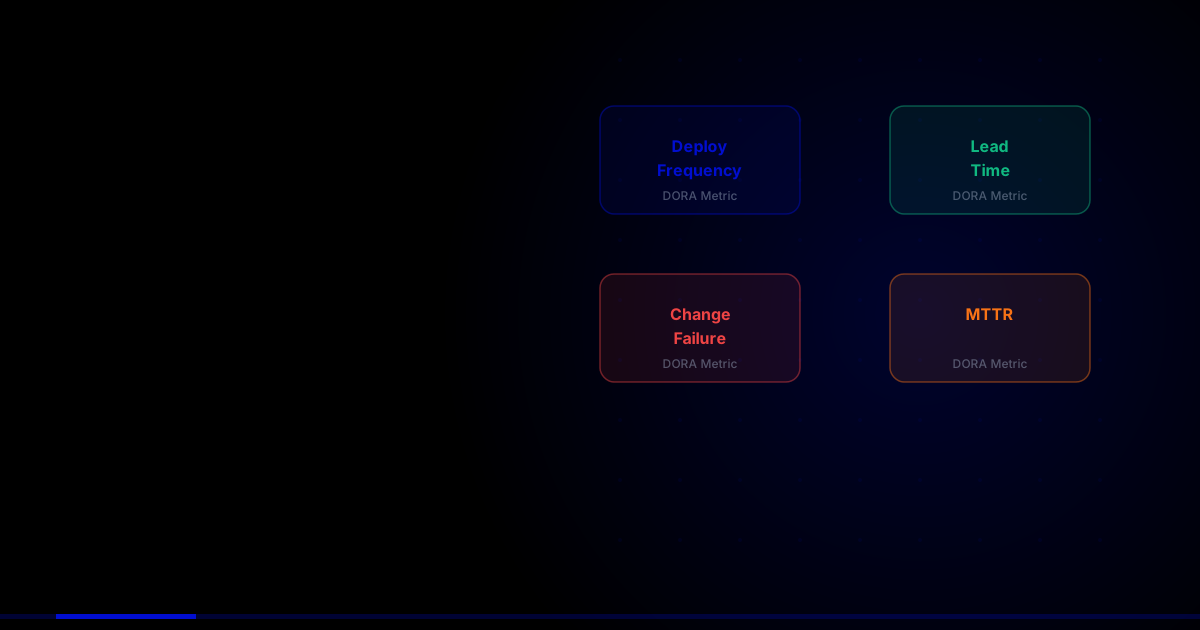
Beyond Uptime: The 4 CI/CD Metrics That Actually Define Developer ROI
Uptime is a lagging indicator of engineering health, not a leading one. The four DORA metrics, deployment frequency, lead time, change failure rate, and MTTR, tell you whether your engineering investment is compounding or decaying. Here's how to use them.
Akshay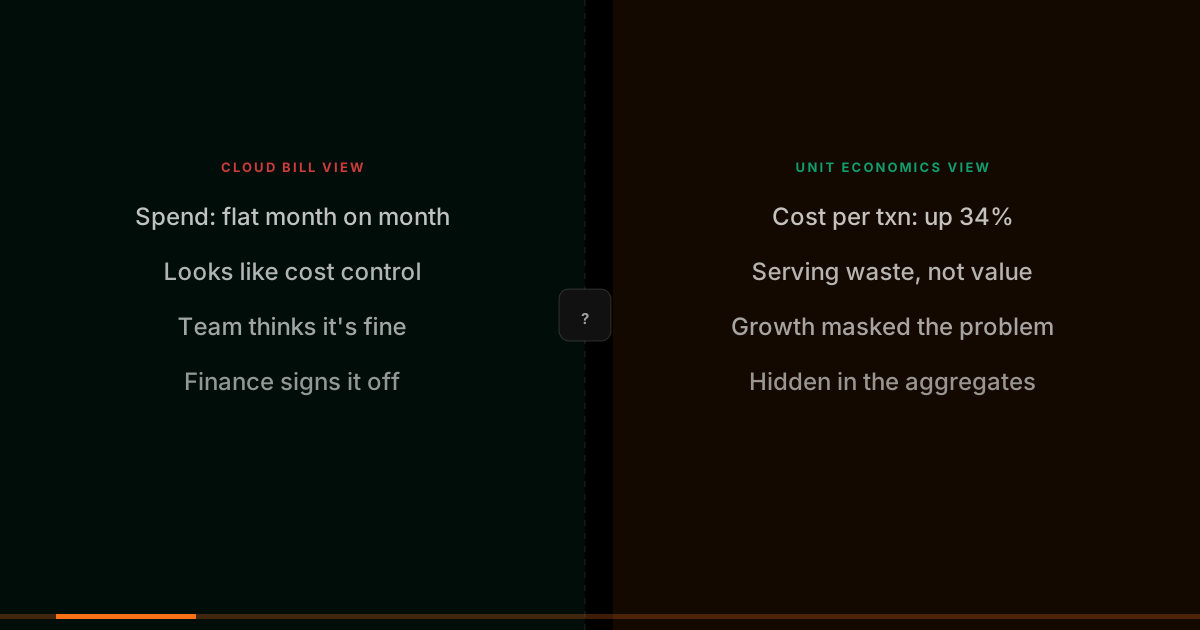
Stop Looking at the Cloud Bill: Why Unit Economics Is the Only Metric That Matters
Your cloud bill is going up. Is that a problem? Without unit economics, cost per transaction, cost per active user, cost per processed GB, you cannot answer that question. Here's how to shift from bill management to unit cost management.
Dhaval Rana
Vendor Lock-In Strategy 2026: Why Cloud Agnosticism Restores Leverage
Complete cloud agnosticism is an engineering fantasy. Strategic cloud agnosticism, protecting the parts of your stack where vendor lock-in creates financial exposure, is a practical business decision. Here's how to draw the right lines.
Dhaval Rana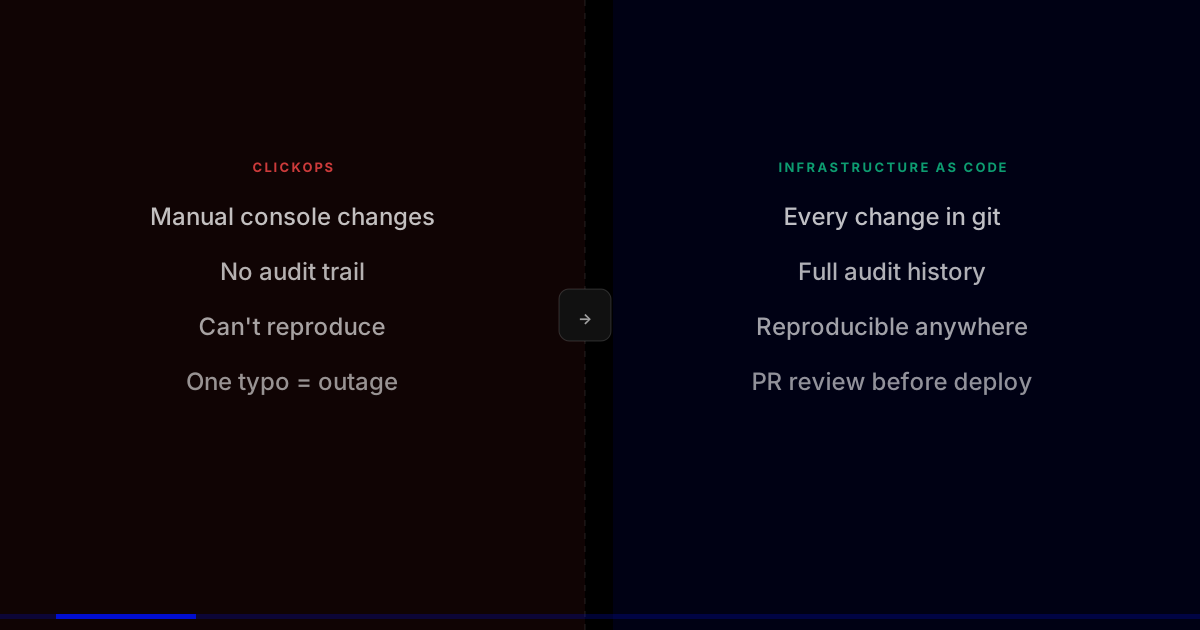
The High Cost of ClickOps: Why Manual Infrastructure Is a Financial Liability
Infrastructure configured by clicking through cloud consoles looks like the easiest path until you're debugging a production incident caused by a setting nobody documented, or rebuilding an environment from scratch because nobody wrote down how it was built. ClickOps doesn't cost nothing, it costs this.
Akshay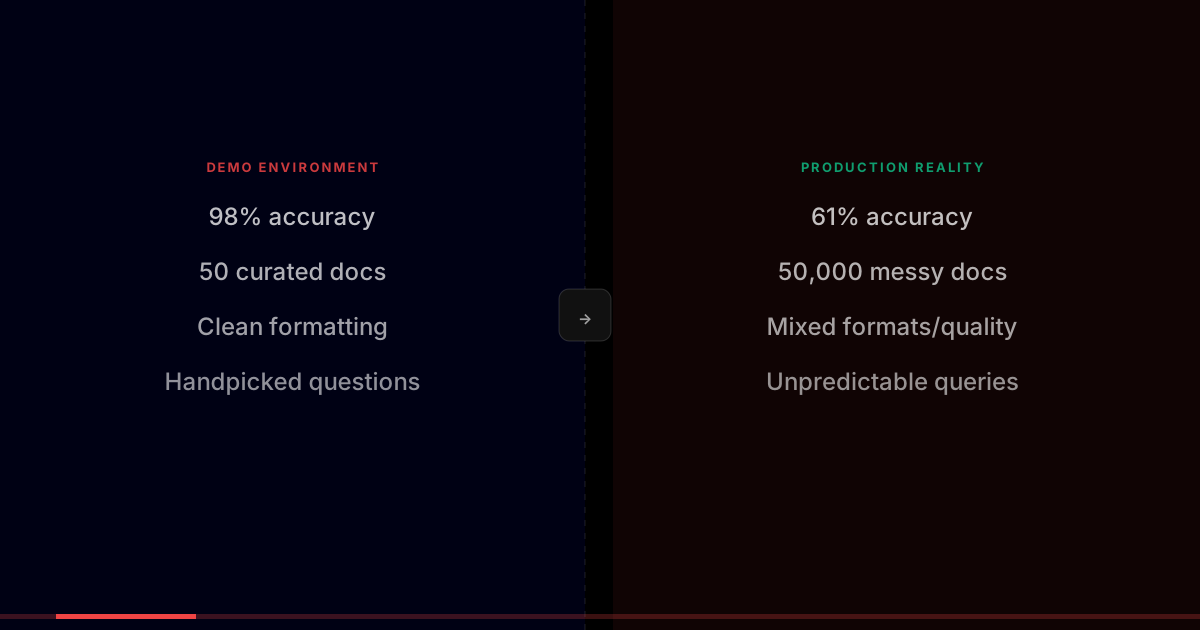
Beyond the Demo: Why Your RAG Architecture Is Failing in Production
RAG demos are convincing. RAG systems in production break in ways that are hard to diagnose and embarrassing to explain to users. The gap between demo quality and production quality is an architecture problem, not a model problem. Here's where it goes wrong.
Rahul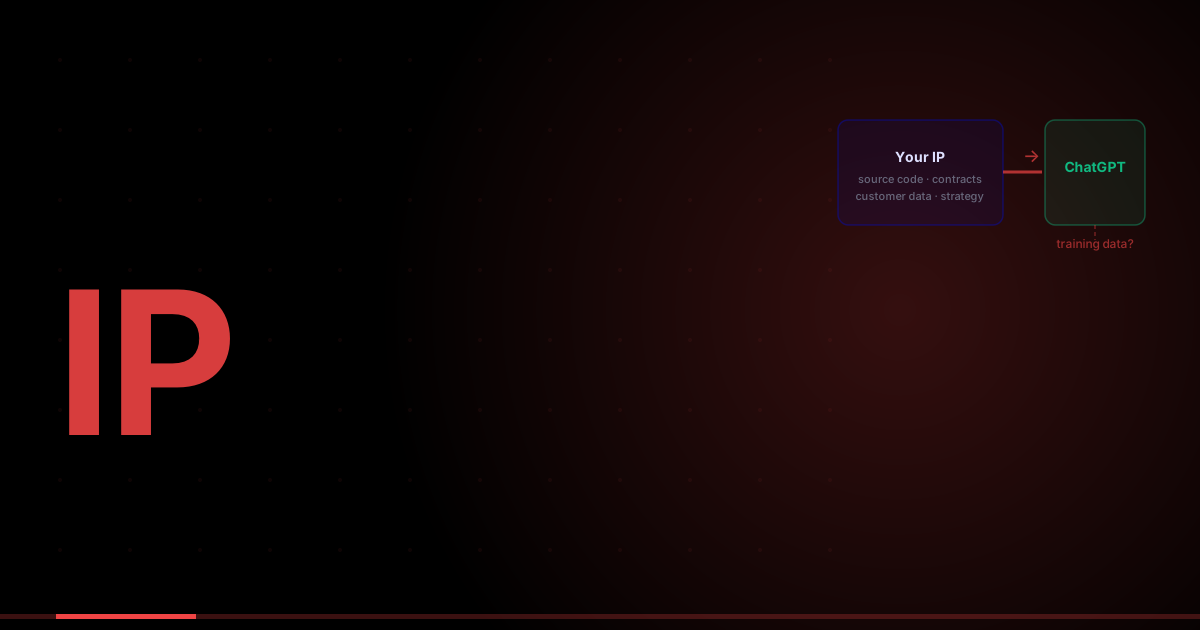
The Privacy Firewall: Stop Feeding Your IP to ChatGPT
Employees are using ChatGPT, Copilot, and Claude with company data and in most organisations, nobody has decided whether that's acceptable or what the exposure means. Here's the governance framework that lets you enable AI productivity without surrendering your intellectual property.
Dhaval S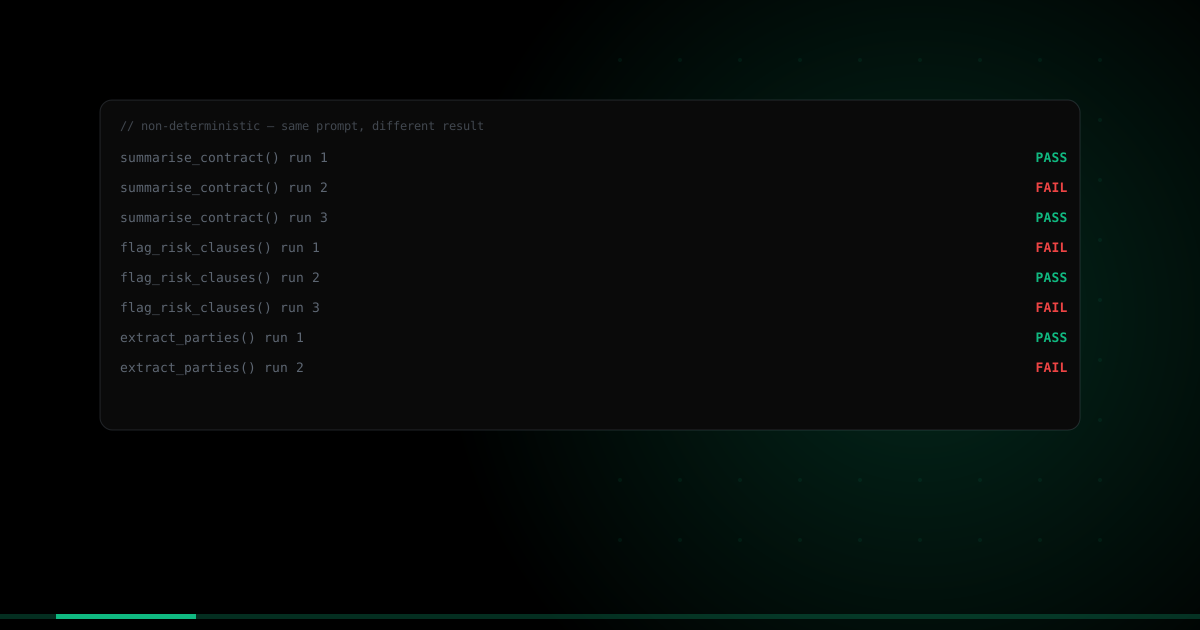
The End of Vibes: How to Unit Test Your AI
Most teams evaluate AI output by feel. They prompt the system, look at the response, and decide whether it seems right. This is vibes-based QA, and it's why AI systems degrade silently in production. Here's what systematic AI evaluation actually looks like.
Rahul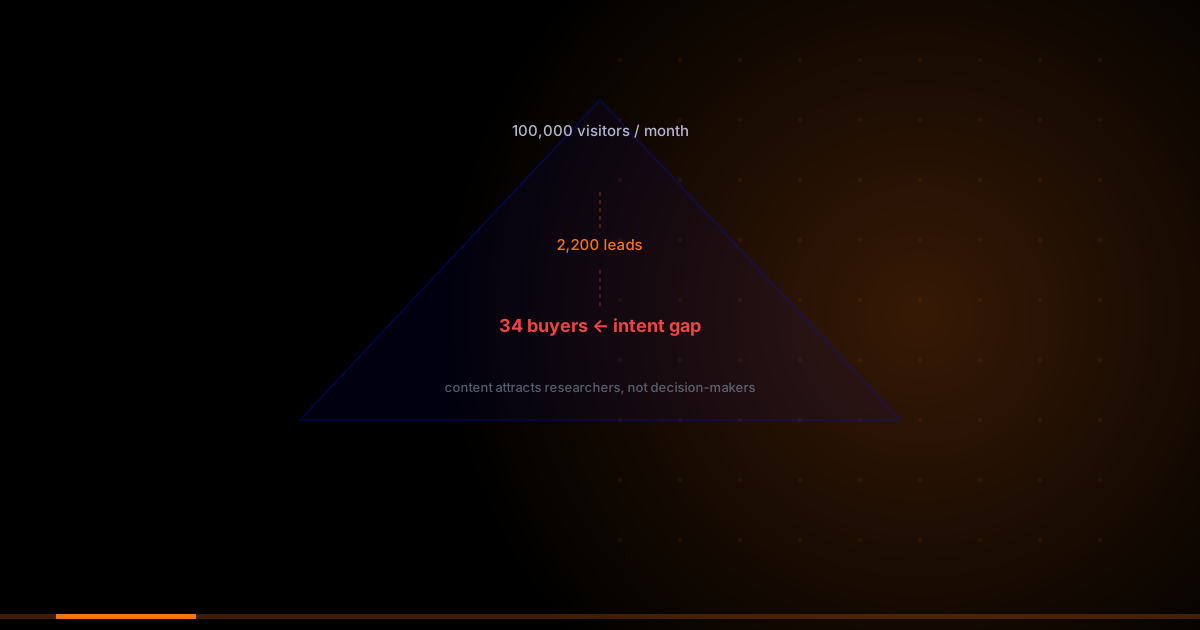
The Intent Gap: Why Your Digital Marketing Attracts Visitors But Not Buyers
Most B2B digital marketing optimises for the wrong signal, traffic and impressions rather than buyer intent. Here is the framework for aligning every channel to the moment when your prospects are actually ready to act.
 Aniruddha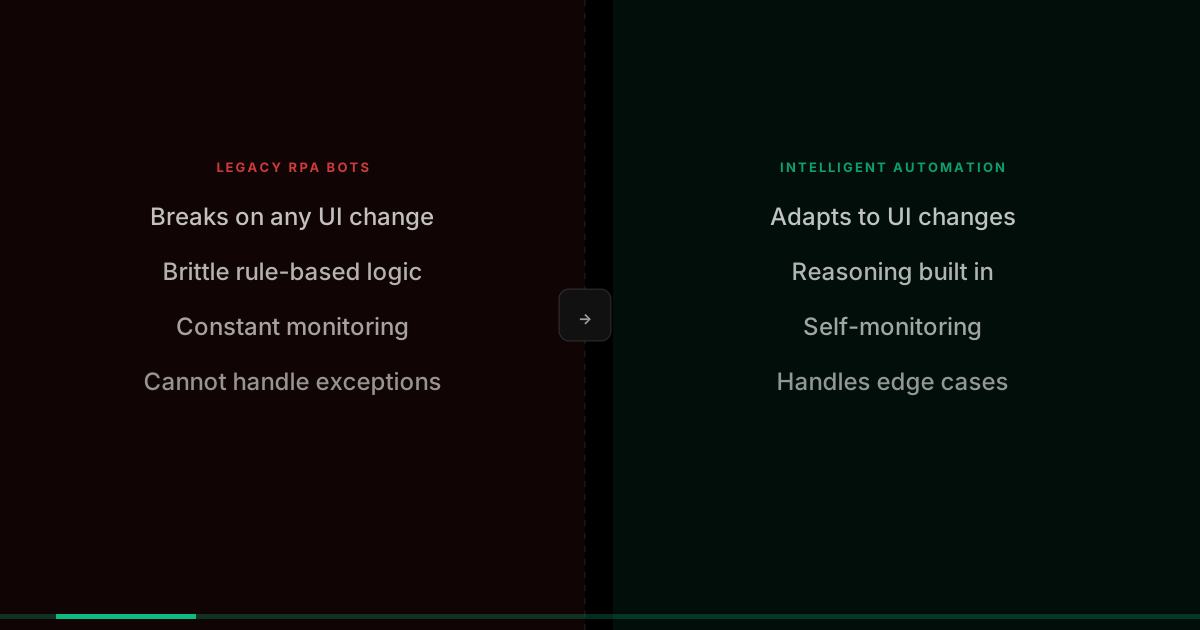
Why Your RPA Bots Are Becoming a Liability (And What Intelligent Automation Replaces Them With)
RPA was sold as the gateway to digital transformation. For most enterprises it created a portfolio of brittle scripts that break every quarter. The replacement is not more bots, it is a different architecture entirely.
Aniruddha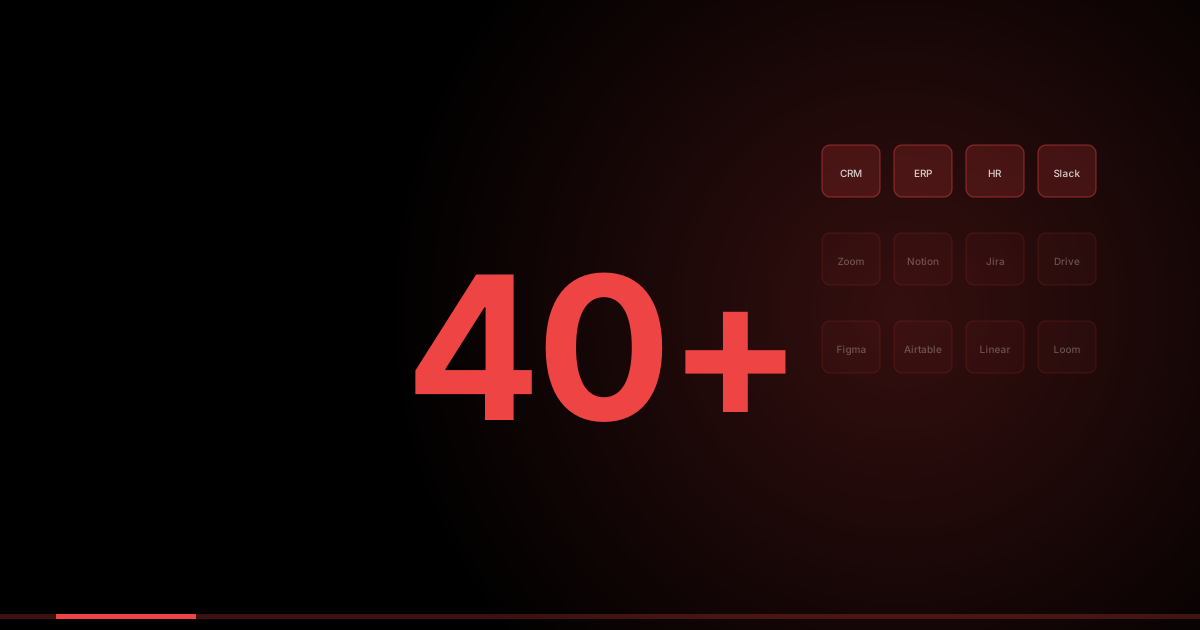
The SaaS Sprawl Tax: When Your Software Subscriptions Cost More Than Building Would Have
The average mid-market company pays for 130 SaaS tools, with 44% underutilised and 22% functionally overlapping. The integration and data reconciliation costs buried in engineering and ops budgets push the real total 40% above the invoice.
Dhaval Rana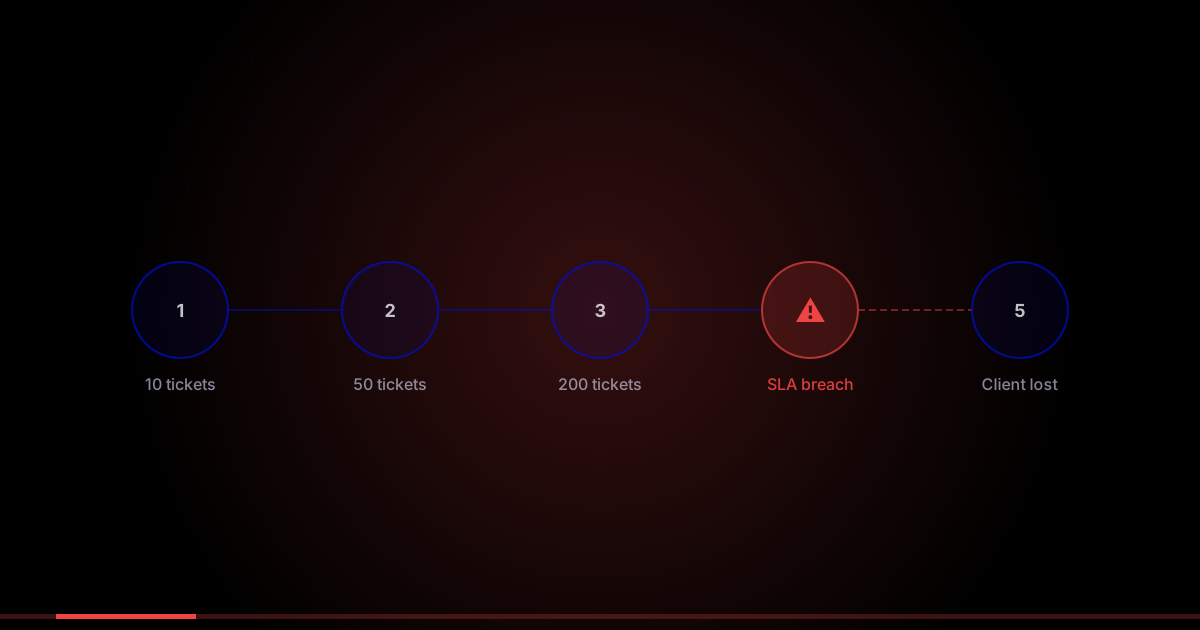
The Ticket Queue Is a Business Risk: Why Reactive IT Support Fails Growing Companies
Measuring IT success by ticket resolution time is like measuring a hospital by how quickly it discharges patients without asking how many of those patients needed to come in at all. The real question is whether your IT function is preventing failures or just processing them.
Akshay
Why Hiring Senior Engineers Takes Six Months — and What to Do While You Wait
The median time-to-hire for a senior engineer at a mid-market company is 22 weeks. The projects waiting on that hire do not pause. Here is how leading companies keep critical work moving without compromising on technical expertise.
Dhaval Rana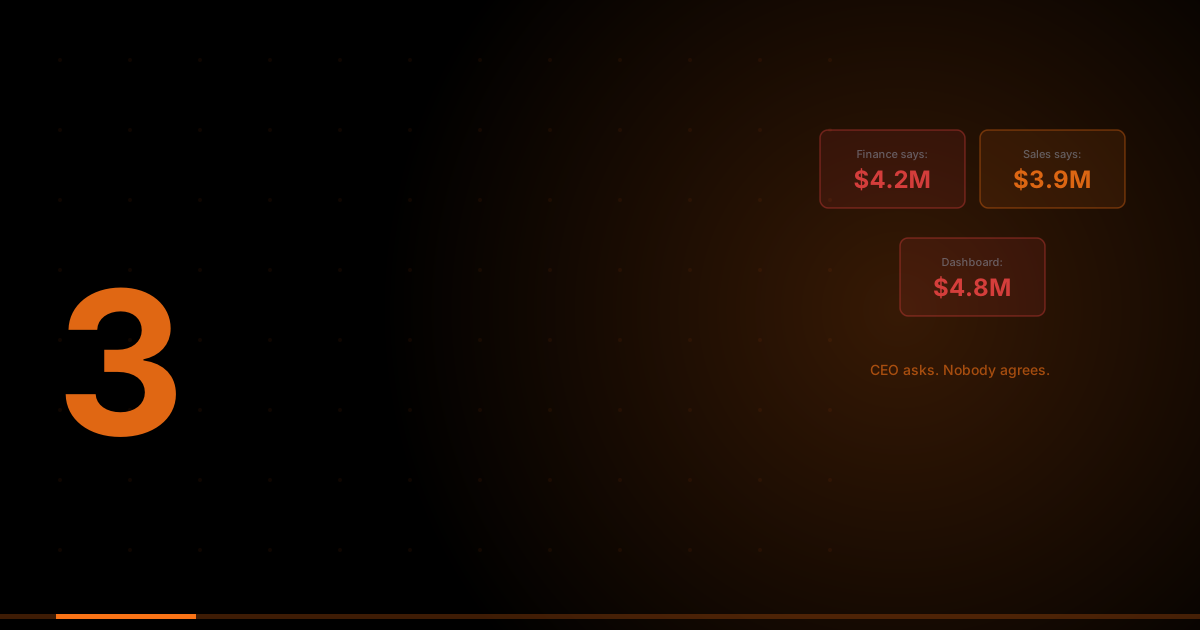
Why Your Data Team Discovers Data Quality Issues When the CEO Asks a Question
The worst way to discover a data quality problem is when a C-suite executive spots the anomaly in a presentation. Data observability exists to make that scenario, and the three hours of pipeline archaeology that follows, unnecessary.
Ankush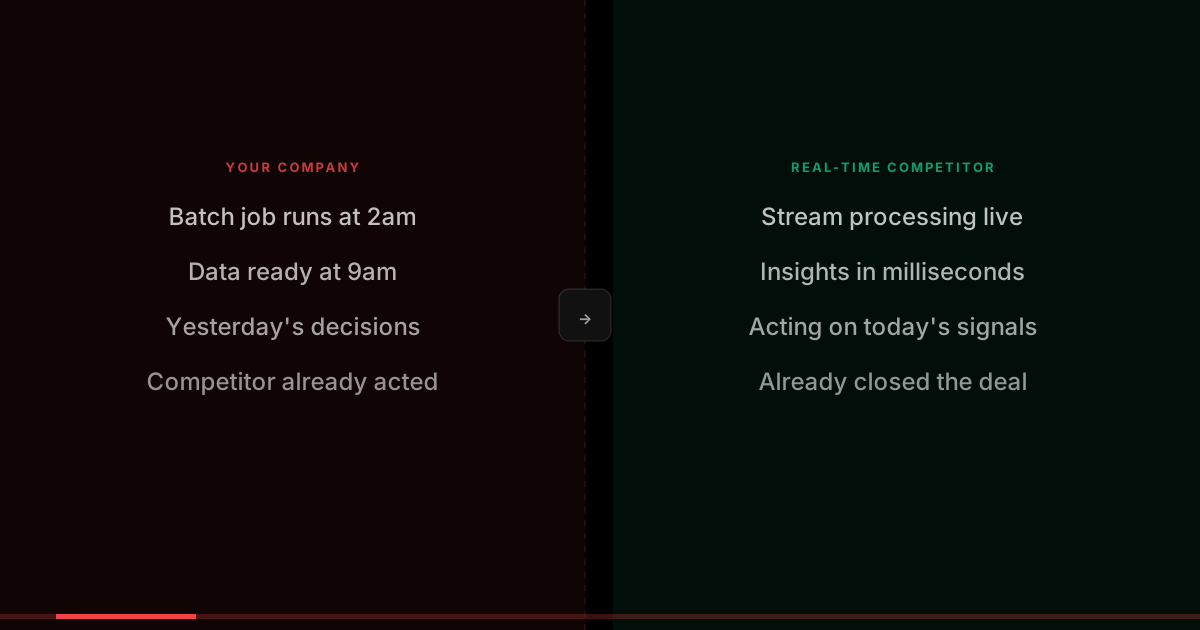
The Batch Processing Trap: Why Your Competitors Are Acting on Today's Data While You Wait for Tomorrow's
Batch data pipelines were a reasonable engineering compromise when real-time was expensive. That compromise is now a competitive disadvantage in fraud detection, personalisation, inventory, and anywhere else that decisions compound over hours.
Ankush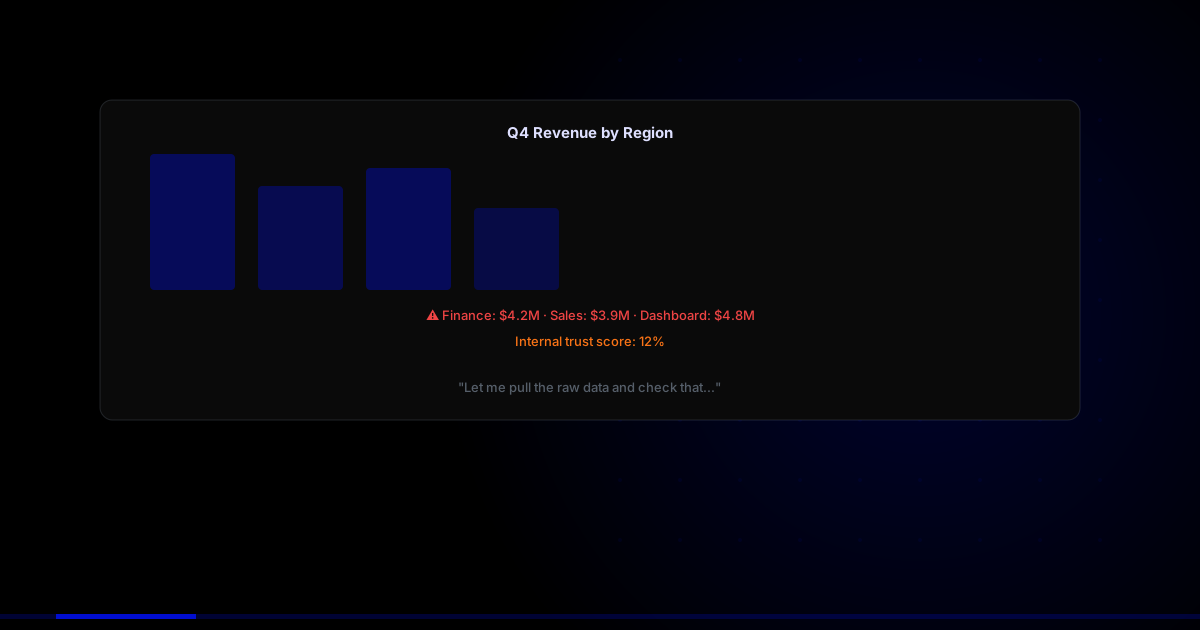
Why Your BI Dashboard Is Never Trusted — and How Analytics Engineering Fixes It
The moment your CFO says 'those numbers don't match what I got from the other report,' you have a transformation problem masquerading as a reporting problem. Analytics engineering is the discipline that makes one version of the truth structurally possible.
Ankush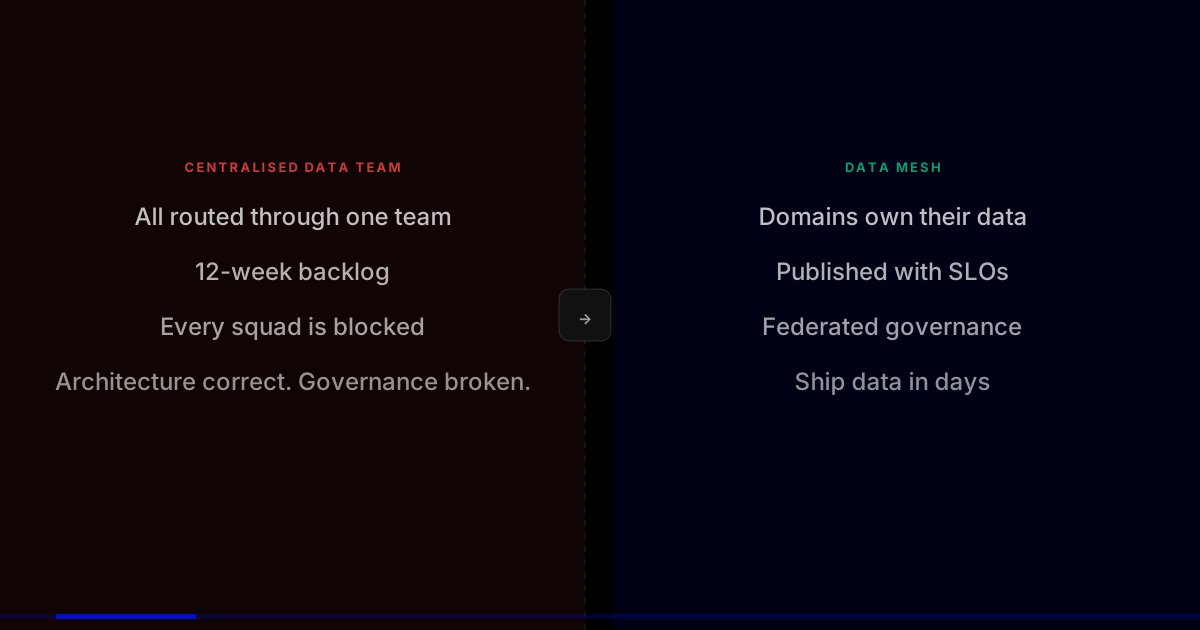
Data Mesh: Why the Architecture Is Right and Most Implementations Still Fail
The data mesh model, domain ownership, data as a product, federated governance, is the correct answer to the centralised data team bottleneck. The execution is where 80% of organisations go wrong, and where the theoretical becomes the expensive.
Ankush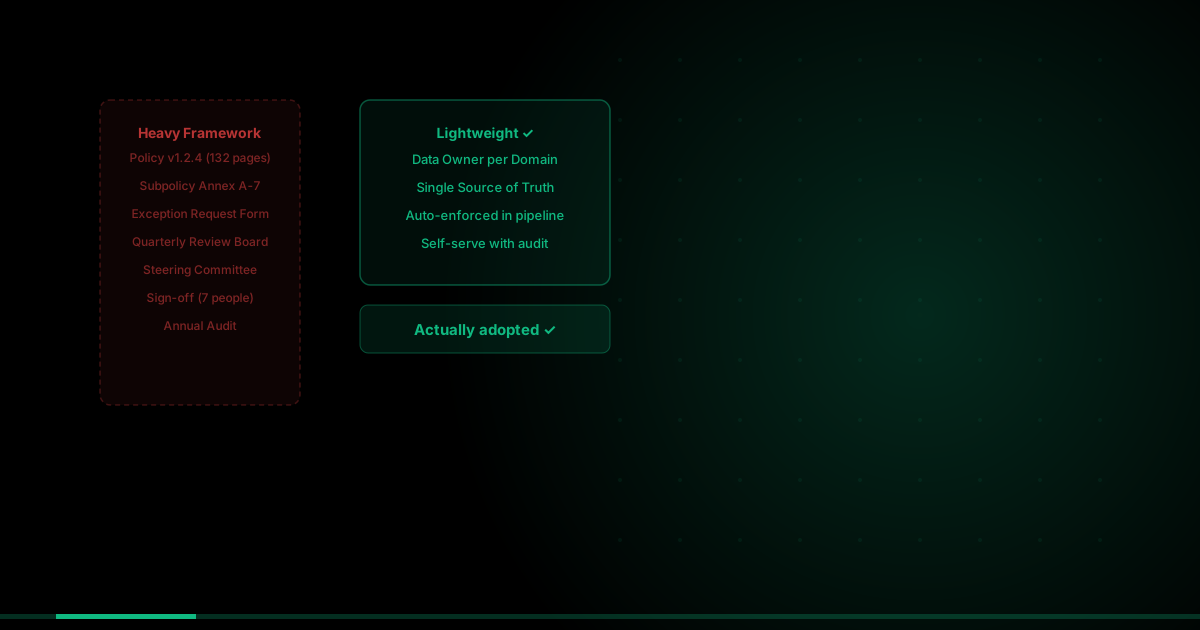
Data Governance Without the Bureaucracy: The Lightweight Framework That Actually Gets Adopted
Most data governance programmes die in a committee. The ones that survive start with data contracts, not data catalogues and treat governance as an engineering problem, not a compliance exercise.
Dhaval Rana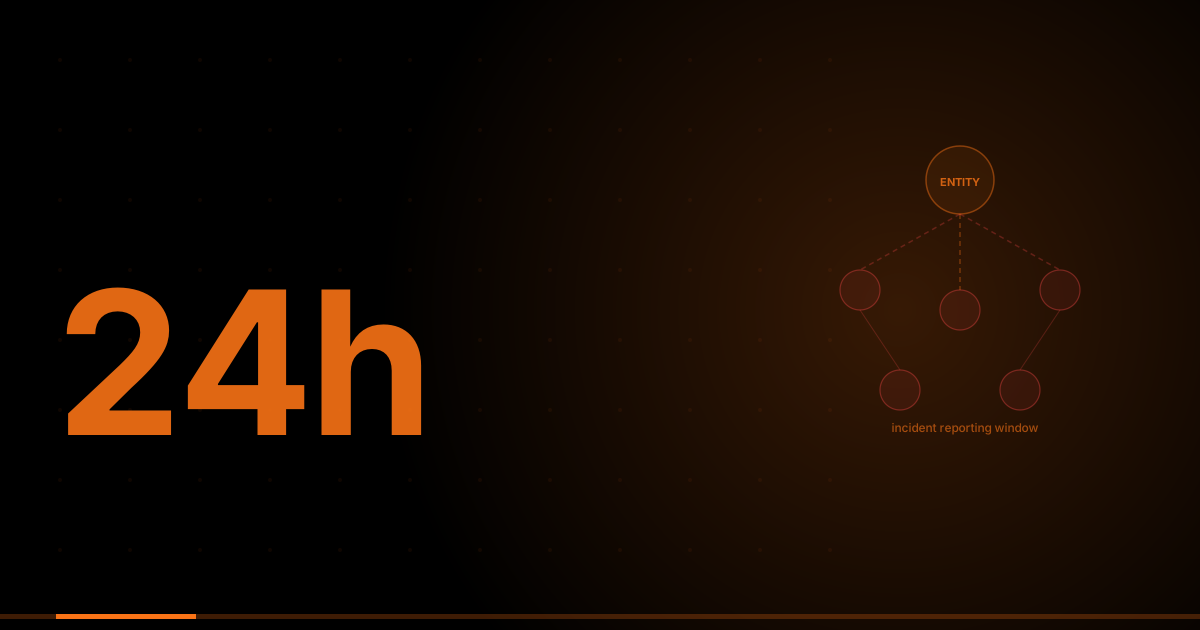
NIS2 Is in Effect. Here Is What It Means for Your IT Infrastructure.
The NIS2 Directive dramatically expanded the scope of EU cybersecurity regulation, bringing 160,000 more entities into mandatory compliance. If you operate in any of the 18 covered sectors and dismissed NIS1 as irrelevant, the new regime may have changed that.
Rahul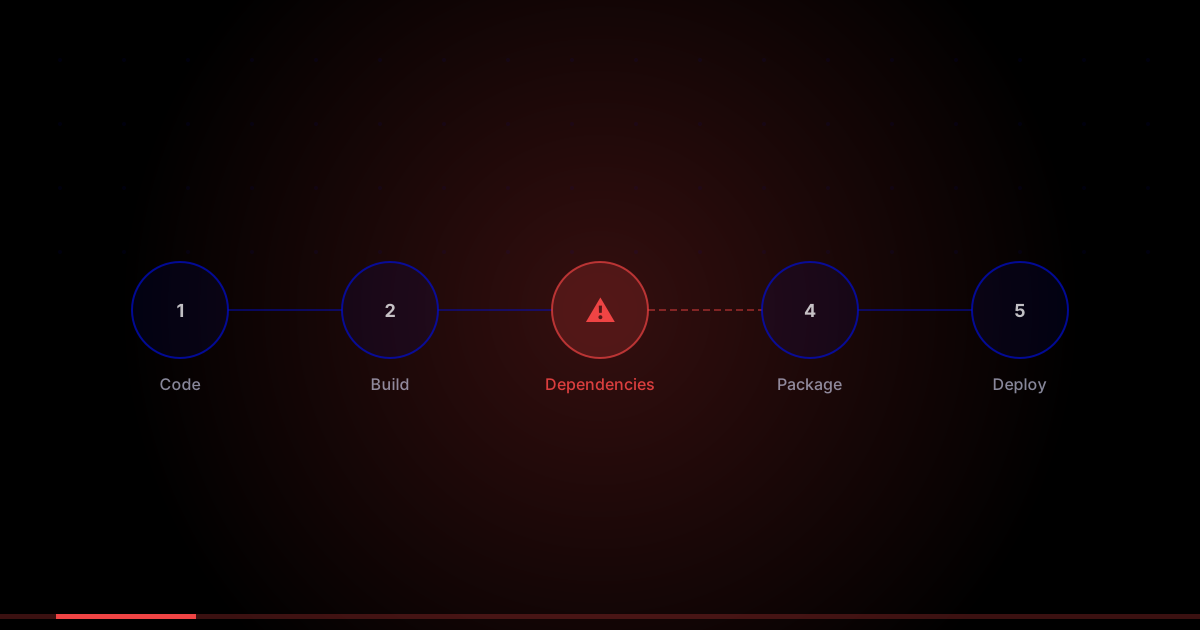
Your Software Supply Chain Is Your Biggest Unmanaged Risk — SBOM Is the Starting Point
The Log4Shell vulnerability was in a library that 93% of affected organisations didn't know they were running. The XZ Utils backdoor almost shipped in major Linux distributions. Your enterprise has hundreds of dependencies you have never audited. A Software Bill of Materials tells you what you're actually running.
Rahul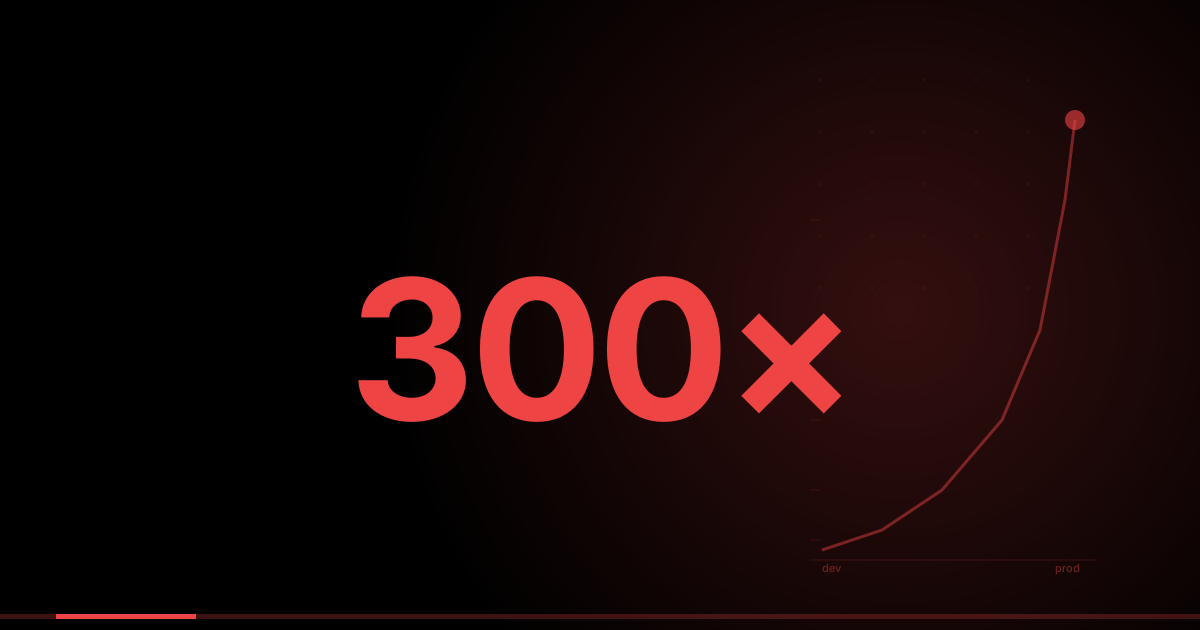
AI Inference Cost Governance: The New Cloud Bill Nobody Is Managing
The cloud cost management discipline took a decade to mature after organisations started getting surprised by AWS invoices. AI inference costs are following the same pattern and the organisations that don't build governance infrastructure now will repeat every cloud FinOps mistake on an accelerated timeline.
Ankush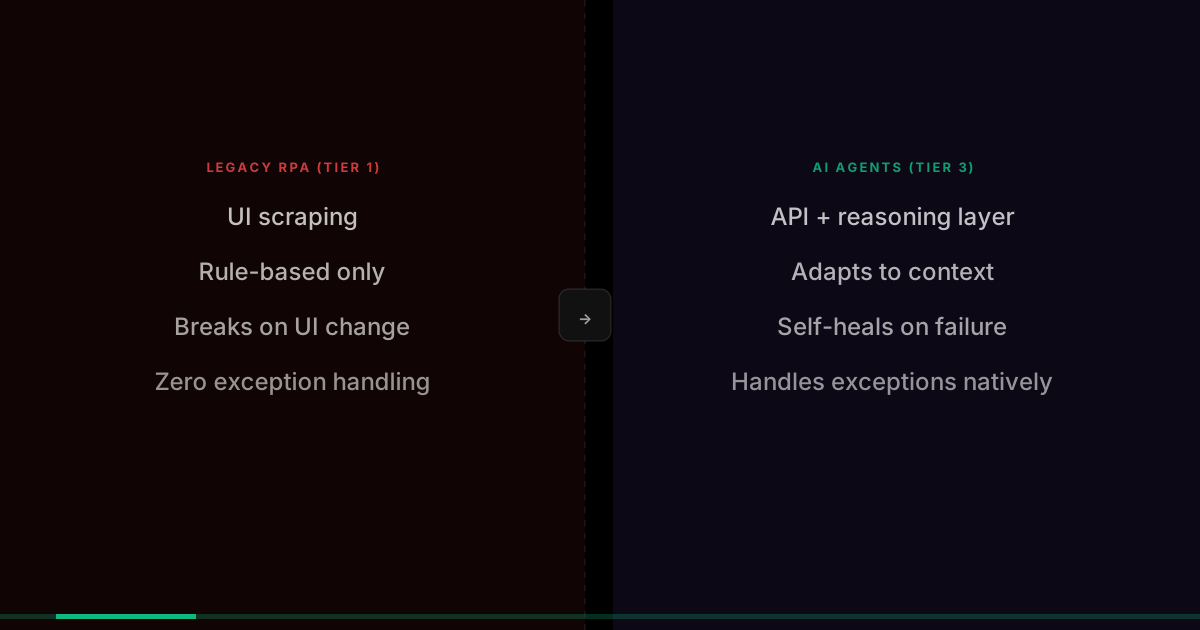
Why RPA Is Being Replaced by AI Agents — and How to Migrate Without Breaking Production
Intelligent automation was the upgrade from brittle RPA bots. AI agents are the upgrade from intelligent automation. They are not the same thing, and organisations that treat them interchangeably will design systems that fail in the same ways their bots did, just faster.
Dhaval Rana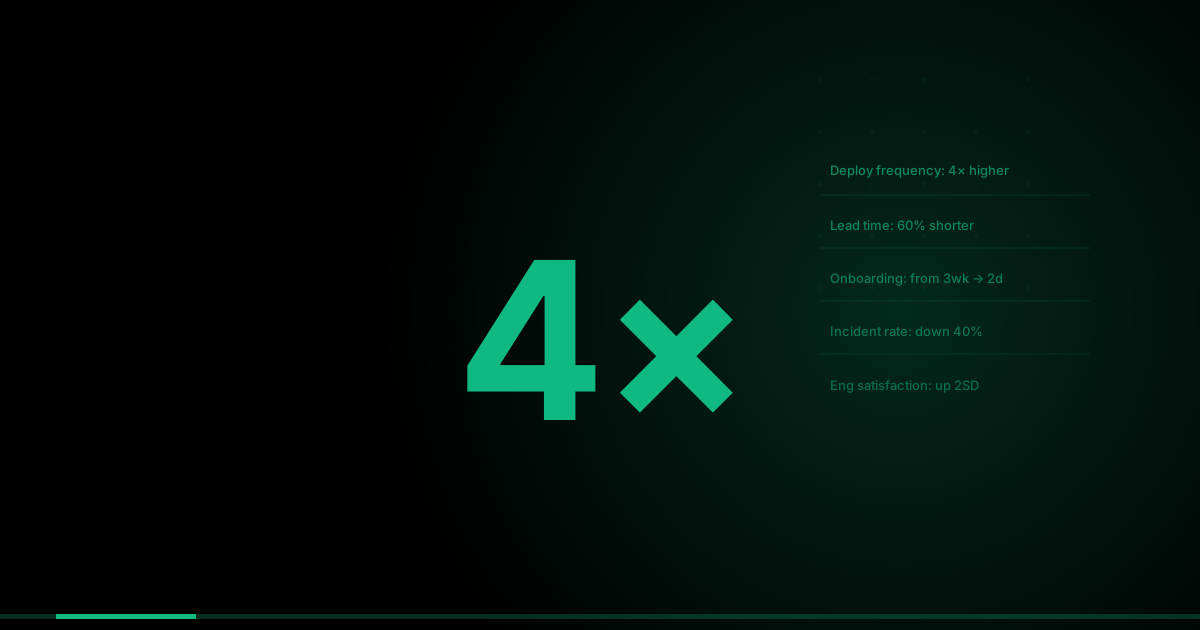
Platform Engineering ROI: The Business Case for an Internal Developer Platform
Platform engineering is consistently treated as a cost centre until someone calculates what the absence of one costs. Developer waiting time, onboarding delays, environment provisioning tickets, and production variance from ungolden paths are real, measurable costs and building the business case for an IDP starts with making them visible.
Ankush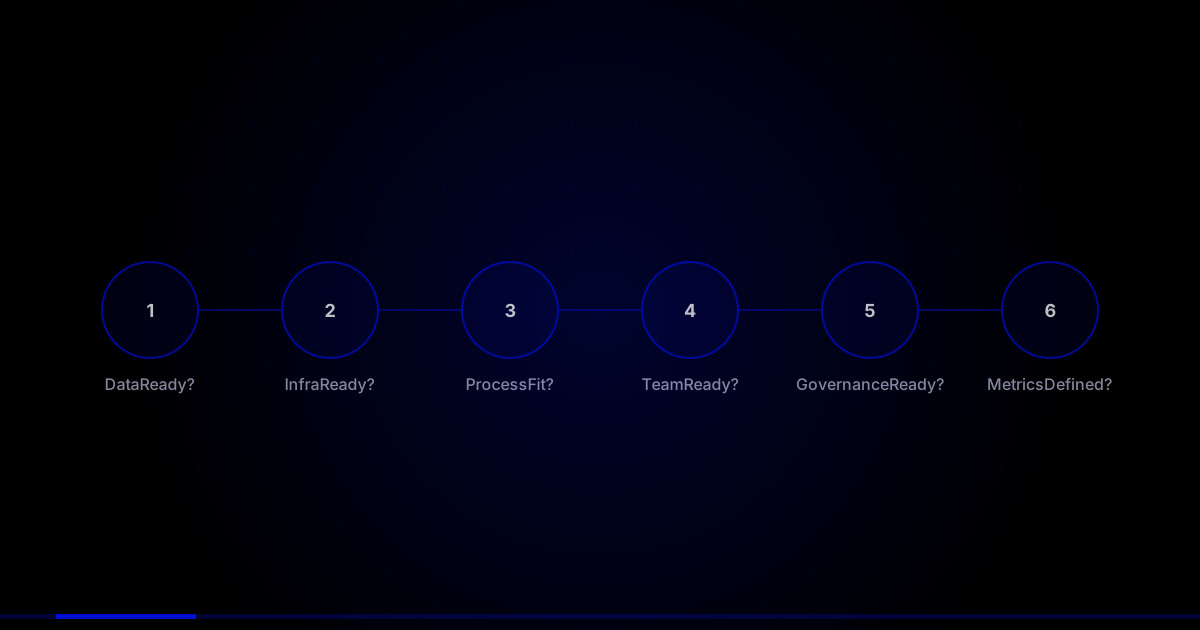
AI Readiness Assessment: The Six Questions Every Enterprise Must Answer Before Deploying AI
Most enterprise AI projects fail not because the AI doesn't work but because the organisation was not ready for it. Data that looked clean in demos turned out to be unusable in production. Infrastructure that seemed adequate couldn't handle inference load. Teams that were excited about AI had no idea how to own it. These failures are preventable.
Dhaval Rana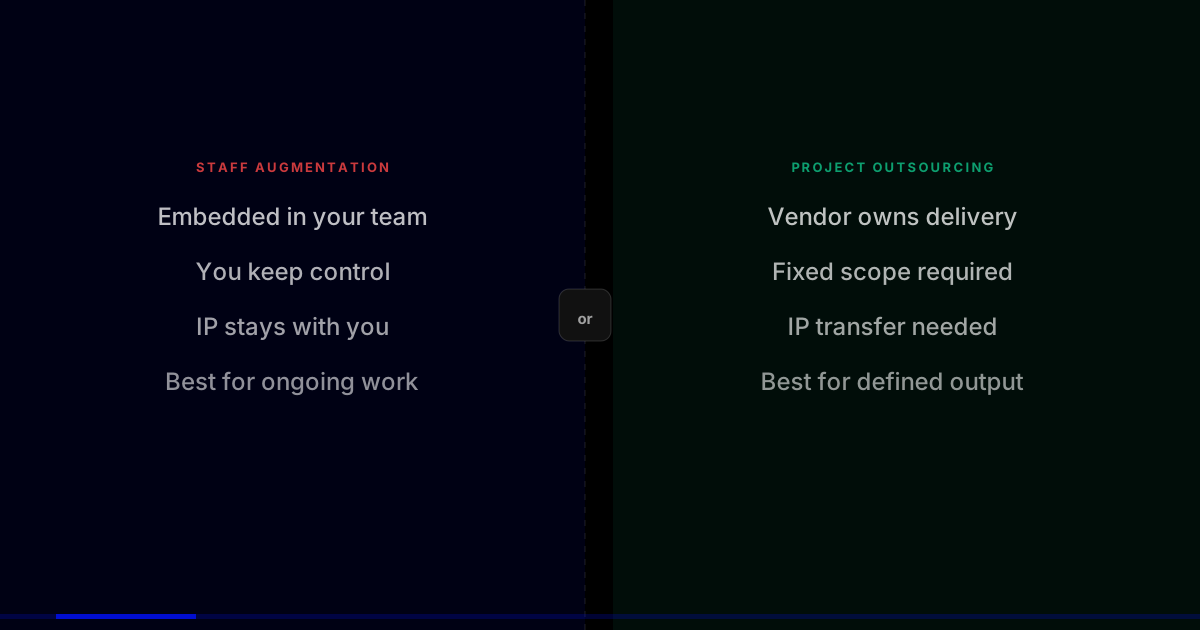
Staff Augmentation vs. Outsourcing: A Decision Framework for Technology Teams
The choice between staff augmentation and project outsourcing is routinely made for the wrong reasons, cost per day without accounting for management overhead, or availability without accounting for IP governance. A structured decision framework produces better outcomes than procurement instinct.
Dhaval RanaWant expert advice specific to your challenge?
Get a free technical brief with architecture options and realistic outcomes — tailored to your stack and goals. 48-hour turnaround.
Get Free Technical Brief