Enterprise Integration & iPaaS Services
Every system talking. No data trapped in silos.
Enterprise integration services that connect your ERP, CRM, HRM, and cloud applications through iPaaS, eliminating data silos, replacing point-to-point middleware, and creating a single connected data flow across your business.
What We Deliver
Core Capabilities
- Integration Architecture & iPaaS Platform Selection
- ERP, CRM & HRM System Connectivity
- API Design, Gateway & Management
- Real-Time & Batch Data Sync
- Legacy Middleware Modernisation & Migration
- Integration Monitoring & Alerting
Ready to get started?
Get a free technical brief — architecture options, timelines, and cost estimates delivered within 48 hours. No commitment required.
- 01Submit your challenge≈ 1 min
- 02Receive your Technical BriefWithin 48h
- 03Discovery call — no obligationOptional
Or call us: +1 (929) 588-8364
By the Numbers
What clients achieve with GYSP
real-time event-driven integration means data entered in one system appears in every downstream system automatically, eliminating the spreadsheet handoffs and copy-paste errors
replacing a brittle web of custom scripts and direct database links with a central iPaaS layer cuts maintenance overhead and makes adding a new system connection a configuration task, not a development project
pre-built connectors for Salesforce, HubSpot, SAP, NetSuite, Workday, and 1,000-plus other apps mean new integrations are configuration, not custom development
Proven Results
Enterprise Integration & iPaaS Case Studies
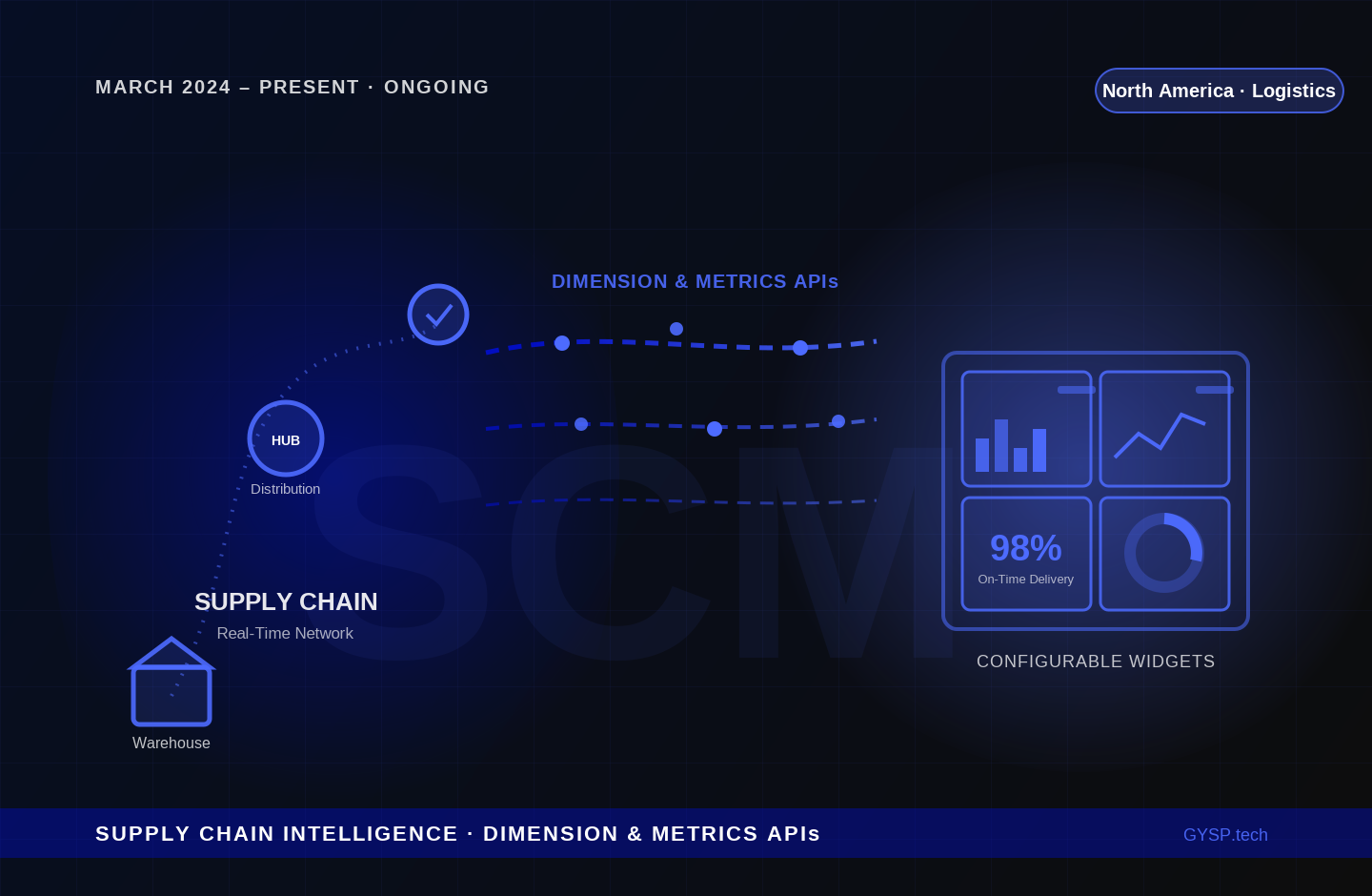 Logistics & Supply Chain
Enterprise Supply Chain Network, North America
Supply chain leaders didn't need another static dashboard, they needed self-service visibility, where any team could configure its own analytics widget without filing an engineering ticket. GYSP built the API layer that made it possible, alongside an organisation-wide rollout of Power Platform automation.
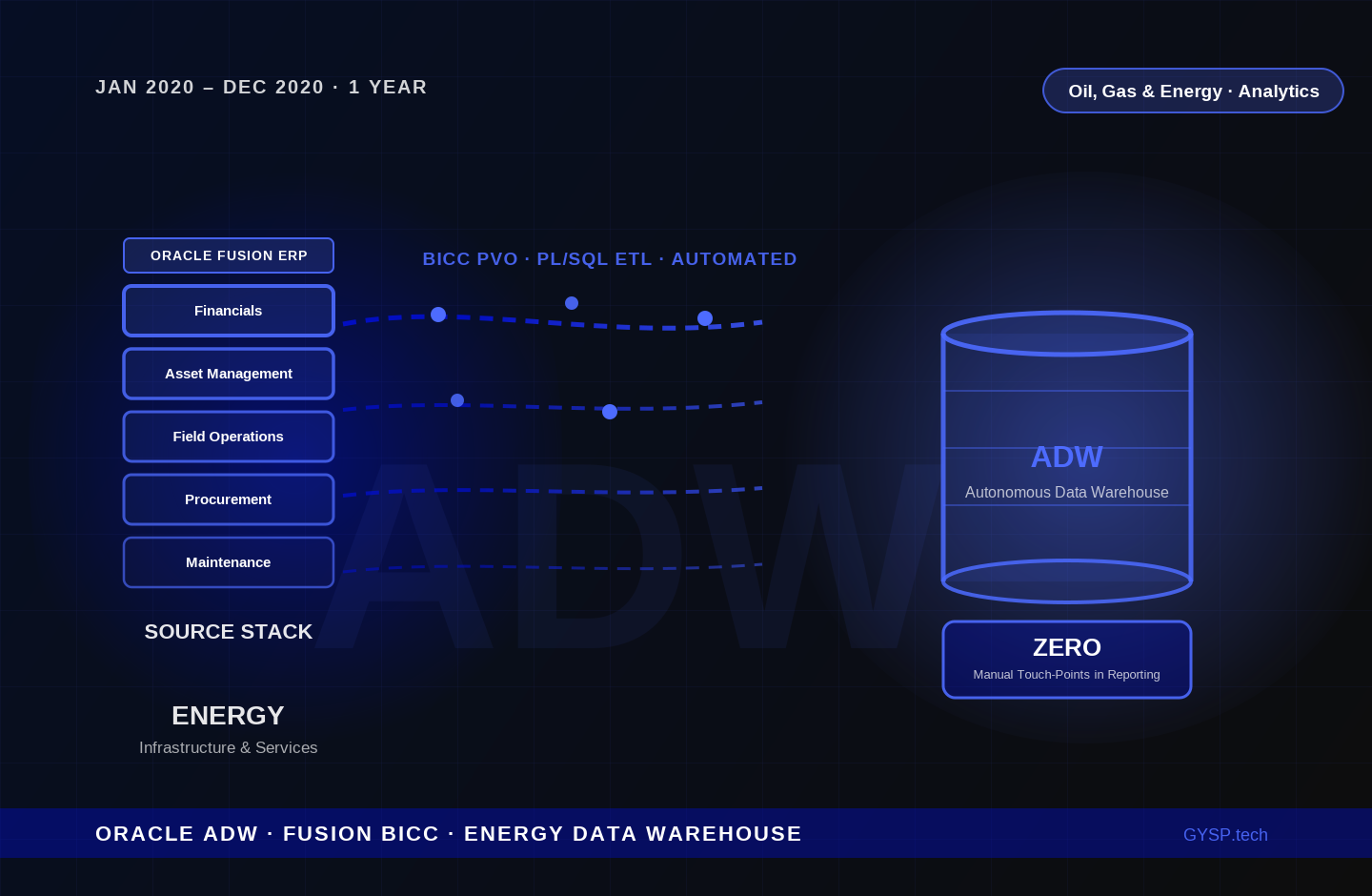 Oil, Gas & Energy
Energy Infrastructure & Services Provider
An energy infrastructure and services company was running financial and operational reporting through a cycle of manual extractions, transformations, and handoffs from Oracle Fusion, slow, error-prone, and dependent on IT for every update. GYSP built an Oracle Autonomous Data Warehouse from scratch, automated the full BICC extraction pipeline, and eliminated every manual touch-point from the reporting loop.
 Automotive
Cars24
Scaling India's largest digital auto marketplace meant modernising cloud infrastructure, real-time data pipelines, and observability, simultaneously, without slowing the product team.
Industry Expertise
Industries We Serve with Enterprise Integration & iPaaS
FAQs
Common questions
Everything buyers typically ask before starting a enterprise integration & ipaas engagement.
Ask us anythingWhat is iPaaS and how is it different from traditional middleware?
iPaaS (Integration Platform as a Service) is a cloud-hosted integration layer that connects applications, automates data flows, and manages APIs without requiring custom-coded middleware. Traditional middleware (MuleSoft on-premise, IBM MQ, custom scripts) requires infrastructure, specialist developers, and significant maintenance. iPaaS moves integration to a managed, visual platform where most connections use pre-built connectors and configuration rather than code, dramatically reducing both build time and ongoing maintenance.
Which iPaaS platforms do you work with?
We work with MuleSoft Anypoint, Dell Boomi, Workato, Celigo, and Microsoft Azure Integration Services. For lighter integration needs we use Make or n8n, which offer iPaaS-like connectivity at lower cost and complexity. Platform selection depends on your data volume, the systems being connected, your internal IT capability, and your budget for licensing.
We already have point-to-point integrations, do we need to replace them all at once?
No. We typically run a phased migration: assess your existing integration estate, identify the highest-risk or highest-maintenance connections, migrate those first, and add the central iPaaS layer progressively. You get value from early migrations while the full estate moves over time. Some stable, low-risk point-to-point connections may not be worth migrating at all if they are working reliably.
How do you handle data mapping and transformation between systems with different schemas?
Data transformation is one of the most complex parts of integration work. We document the source and target schemas for every integration, build transformation logic in the iPaaS platform (or in dbt for data-warehouse-bound flows), and test with real data before go-live. We also version transformation logic so changes to either system schema can be updated without touching the underlying connection.
What happens when an integration fails or a connected system is unavailable?
Every integration we build includes error handling, retry logic, and dead-letter queuing for messages that cannot be processed immediately. We set up alerting so the right team is notified the moment a failure occurs, and we provide monitoring dashboards showing message volumes, success rates, and error counts in real time. For business-critical integrations we also design retry and replay mechanisms so no data is lost during a downstream outage.
Let's build something together
Get a free technical brief on your enterprise integration & ipaas challenge — architecture, timeline, and cost estimate in 48 hours.
Get Free Technical Brief