Enterprise Supply Chain Network, North America
Supply Chain Intelligence Platform — Metrics API
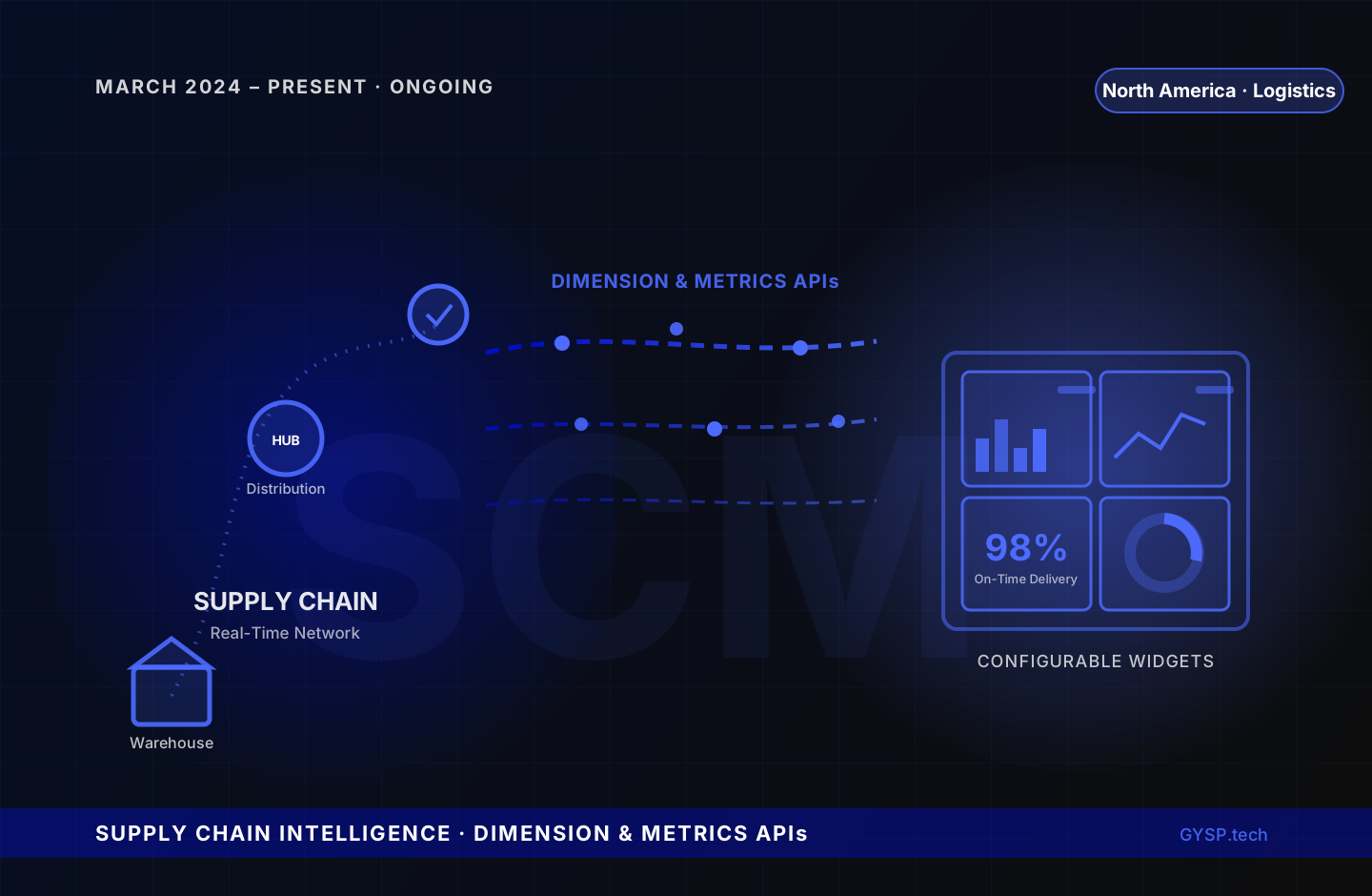
Supply chain leaders didn't need another static dashboard, they needed self-service visibility, where any team could configure its own analytics widget without filing an engineering ticket. GYSP built the API layer that made it possible, alongside an organisation-wide rollout of Power Platform automation.
Industry
Logistics & Supply Chain
Key Result
Self-Service Widget Configuration Enabled Across Teams
Primary Service
Data Engineering
Core Stack
Dimension & Metrics APIs, REST APIs, SharePoint
The Challenge
Supply chain visibility initiatives tend to fail for a structural reason, not a data reason: every new operational question requires a new custom report, and a fixed dashboard can't keep pace with how fast priorities shift in logistics. The platform needed a Dimension and Metrics API layer flexible enough to power many different widget configurations, region, supplier, product line, carrier, on-time delivery, inventory turnover, without a bespoke backend build for every new view, so business and analytics teams across the organisation could configure their own widgets directly. That self-service ambition only works if the platform is genuinely simple to operate, which meant investing as much in widget configuration patterns and team enablement as in the APIs themselves. Beyond the analytics platform, the broader organisation was still running document management, approvals, and internal process workflows through manual, email- and spreadsheet-driven routines, slow, inconsistent, and disconnected from the SharePoint repositories where the underlying documents actually lived.
Our Solution
GYSP designed and built the Dimension and Metrics APIs powering the Supply Chain Intelligence platform's configurable widget system, a flexible data layer letting any new widget query the dimensions and metrics it needs without a bespoke backend build for every new view. To make the platform genuinely self-service, GYSP ran dedicated knowledge transfer sessions for other teams on widget configuration, alongside ongoing mentorship for junior developers joining the project, extending the platform's reach without growing engineering headcount. The team operates fully within Agile: sprint planning, daily stand-ups, reviews, and retrospectives, with peer review on every completed task to maintain code quality at pace. In parallel, GYSP modernised the organisation's internal process layer on the Microsoft Power Platform: SharePoint integrations connected document management and workflow automation directly to the platform, Power Apps solutions replaced ad hoc spreadsheet- and email-driven processes with structured business applications, and Power Automate streamlined approvals and notifications across the organisation, extending the same Office automation discipline built on earlier engagements into a low-code, organisation-wide automation layer. The engagement remains active, with platform capability and process automation continuing to expand.
42% of AI projects fail at the data layer. Where do you stand?
Key Deliverables
- Dimension and Metrics APIs designed and built to power a configurable, widget-based Supply Chain Intelligence platform
- Self-service widget configuration enabled across teams through dedicated knowledge transfer sessions and ongoing mentorship
- Full Agile delivery cadence: sprint planning, daily stand-ups, reviews, retrospectives, and peer review on every completed task
- SharePoint integrations connecting document management and workflow automation directly to the platform
- Power Apps business applications built for internal process improvements, replacing ad hoc spreadsheet- and email-driven workflows
- Power Automate flows streamlining approvals and notifications organisation-wide
- Internal tools extending Office Add-in automation concepts beyond the original VSTO-based integrations
- Active, ongoing engagement since March 2024, continuously expanding platform capability and internal process automation
Services Delivered
- Data Engineering
- BI & Analytics APIs
- Power Platform Automation
- SharePoint Integration
Tech Stack
This engagement used Dimension & Metrics APIs, REST APIs, SharePoint, Power Apps, Power Automate, and 2 additional tools.
Frequently Asked Questions
What are Dimension and Metrics APIs and why do they matter for self-service analytics?+
Dimension APIs expose the categorical groupings data can be sliced by, region, supplier, product line, carrier, while Metrics APIs expose the quantitative measures being tracked, such as on-time delivery rate or inventory turnover. Building these as a flexible, general-purpose layer means any new analytics widget can be configured by querying the dimensions and metrics it needs, rather than requiring a dedicated backend endpoint for every new view, which is what makes genuine self-service analytics possible.
How did GYSP enable other teams to configure their own widgets?+
Beyond building the underlying API layer, GYSP ran dedicated knowledge transfer sessions specifically on widget configuration for teams outside the core engineering group. This meant business and analytics teams could build and adjust their own dashboard widgets directly against the Dimension and Metrics APIs, rather than routing every new visualisation request through engineering.
What is the Microsoft Power Platform and how was it used in this engagement?+
The Microsoft Power Platform is a suite of low-code tools, Power Apps for building business applications and Power Automate for workflow automation, that integrate natively with Microsoft 365 and SharePoint. GYSP used Power Apps to replace ad hoc, spreadsheet- and email-driven internal processes with structured applications, and Power Automate to streamline approvals and notifications across the organisation, extending the same Office automation discipline from earlier VSTO-based engagements into a broader, low-code automation layer.
How does an Agile delivery cadence work on an ongoing, multi-year platform engagement?+
The team runs full Agile ceremonies, sprint planning, daily stand-ups, sprint reviews, and retrospectives, with peer review applied to every completed task regardless of size. For a continuously evolving platform like this one, that cadence keeps delivery predictable and quality consistent even as new widget requirements and process automation requests are added throughout the engagement's lifecycle.
Work with GYSP
Similar Logistics & Supply Chain challenge?
Get a free technical brief: architecture options, cost estimates, and a delivery timeline scoped to your challenge.
- 48-hour turnaround
- Senior engineers only
- No commitment required
Or call: +1 (929) 588-8364