British Telecom
British Telecom Mainframe to ODI 12c Migration
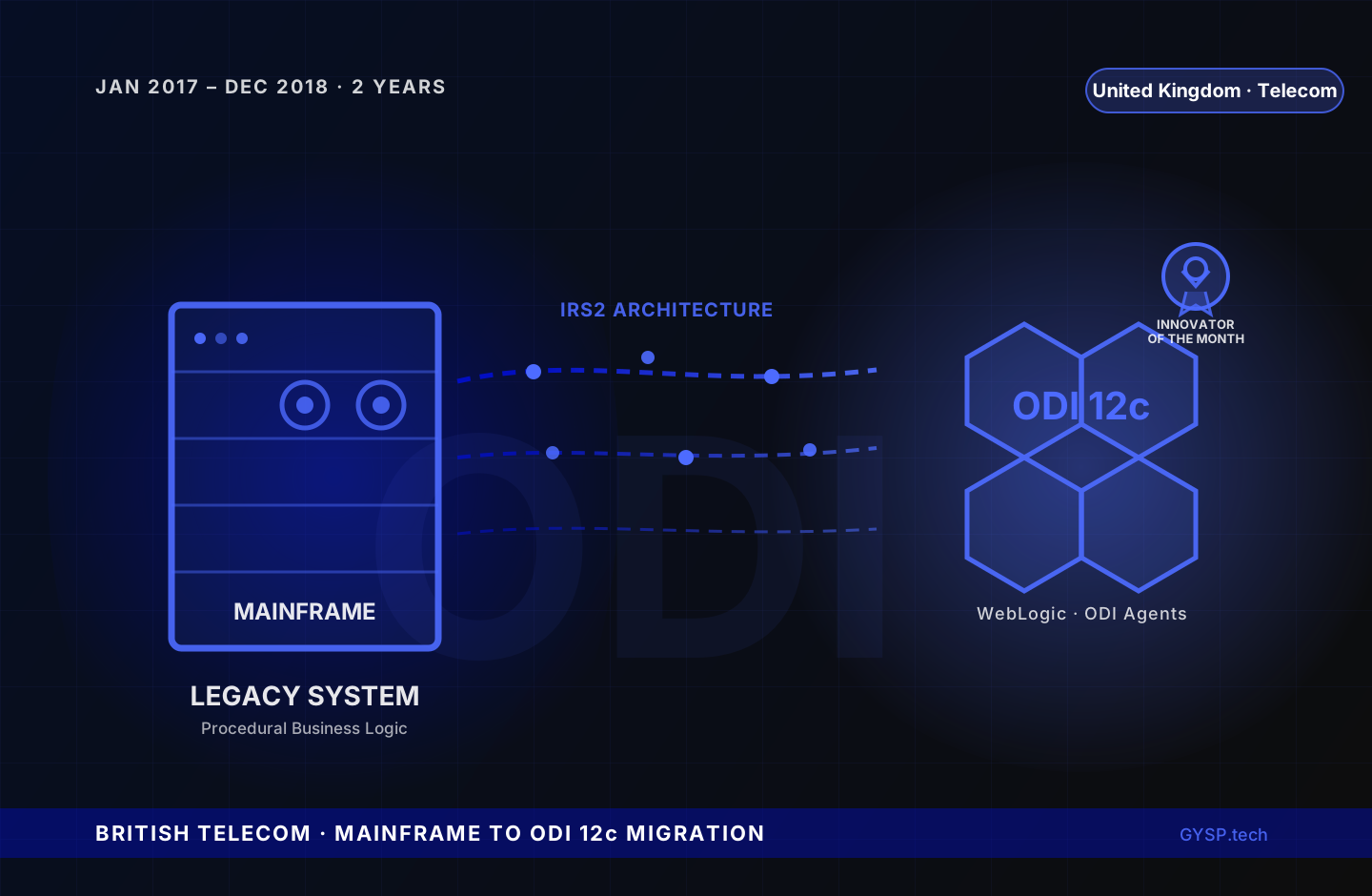
British Telecom needed to retire a legacy Mainframe platform without losing decades of embedded business logic. As ODI Lead, GYSP re-architected the system on Oracle Data Integrator 12c, work recognised internally with British Telecom's "Innovator of the Month" award.
Industry
Telecom
Key Result
2 Years Large-Scale Mainframe-to-ODI 12c Migration
Primary Service
Data Integration
Core Stack
Oracle Data Integrator (ODI) 12c, Mainframe / COBOL, Oracle WebLogic
The Challenge
Decades of British Telecom's business logic were encoded in procedural Mainframe code, deeply embedded into daily operations at national telecom scale, poorly documented by nature of the platform, and not something that could simply be lifted and shifted onto modern infrastructure. Migrating it to Oracle Data Integrator 12c meant genuinely re-architecting that logic, not just relocating it: procedural, line-by-line Mainframe code doesn't map directly onto ODI's declarative, dataset-driven integration model, so every piece of transformed logic had to be re-thought in terms of how ODI actually processes data. The migration needed a coherent target architecture capable of absorbing that transformed logic in a structurally sound way, rather than accumulating ad hoc transformations with no unifying design. File transfers that previously ran through Mainframe job scheduling needed an equivalent automation layer outside the Mainframe entirely. And because the migration ran across multiple environments over roughly two years, it needed disciplined repository management and release control, as without it a programme of this scale and duration would have drifted into inconsistency between environments long before reaching production.
Our Solution
As ODI Lead, GYSP spearheaded the migration of British Telecom's legacy Mainframe systems to a modern Oracle Data Integrator 12c architecture. The IRS2 architecture was designed as the structural foundation for the entire migration, the target model every piece of transformed Mainframe logic would be built against. Procedural Mainframe code was systematically transformed into optimised ODI datasets, re-architecting business logic from a sequential, line-by-line model into ODI's declarative, dataset-driven integration model while preserving the original business rules and making them maintainable and observable on a modern platform. File transfers previously handled through Mainframe job scheduling were automated via Unix shell scripting, replicating and improving on the reliability of the legacy job dependency chains. ODI agents were deployed and managed on Oracle WebLogic servers, providing the production runtime layer that executed the transformed integration logic. Repository management, code versioning, and deployments were directed across every environment in the migration pipeline, giving a multi-year, high-stakes programme the structure to progress without environment drift or uncontrolled releases. The quality and rigour of the delivery was recognised internally at British Telecom with an "Innovator of the Month" award and official client appreciation.
42% of AI projects fail at the data layer. Where do you stand?
Key Deliverables
- Spearheaded a large-scale migration of legacy Mainframe systems to a modern ODI 12c architecture for British Telecom
- Designed the IRS2 target architecture as the structural foundation for the entire migration
- Transformed procedural Mainframe code into optimised ODI datasets, re-architecting decades of embedded business logic into a maintainable, modern integration model
- Automated file transfers via Unix shell scripting, replicating and improving on legacy Mainframe job scheduling reliability
- Deployed and managed ODI agents on Oracle WebLogic servers, providing the production runtime layer for the transformed integration logic
- Directed repository management, code versioning, and deployments across multiple environments throughout the migration
- Recognised with British Telecom's "Innovator of the Month" award and official client appreciation for the engagement
Services Delivered
- Data Integration
- Legacy System Migration
- ODI Architecture
- DevOps & Release Management
Tech Stack
This engagement used Oracle Data Integrator (ODI) 12c, Mainframe / COBOL, Oracle WebLogic, Unix Shell Scripting, Repository Management, and 1 additional tools.
Frequently Asked Questions
What is ODI 12c and why was it used to replace British Telecom's legacy Mainframe systems?+
Oracle Data Integrator (ODI) 12c is an enterprise data integration platform that processes data through declarative, dataset-driven transformations rather than procedural code. British Telecom's Mainframe systems encoded decades of business logic in procedural code that was difficult to maintain and extend. Migrating to ODI 12c gave that logic a modern, maintainable home, but required genuinely re-architecting it, since procedural Mainframe code doesn't translate directly into ODI's dataset model.
How was procedural Mainframe code transformed into ODI datasets?+
Each piece of Mainframe business logic was re-thought in terms of how ODI actually processes data, as declarative transformations operating on datasets, rather than sequential, line-by-line procedural steps. This transformation was built against the IRS2 target architecture designed for the migration, ensuring every transformed piece of logic fit a coherent overall structure rather than becoming an isolated, ad hoc conversion.
What is the role of Oracle WebLogic and ODI agents in this architecture?+
ODI agents are the runtime components that execute ODI's integration logic in production. GYSP deployed and managed these agents on Oracle WebLogic servers, which provided the enterprise application server layer hosting and running the transformed Mainframe logic as live, production-grade integration jobs.
How did GYSP manage repository, versioning, and deployments across multiple environments during a multi-year migration?+
GYSP directed ODI repository management, code versioning, and deployment promotion across every environment in the migration pipeline throughout the roughly two-year engagement. This discipline prevented environment drift, a common failure mode on long-running migrations, and ensured that what was tested and validated in lower environments matched exactly what was promoted to production.
Work with GYSP
Similar Telecom challenge?
Get a free technical brief: architecture options, cost estimates, and a delivery timeline scoped to your challenge.
- 48-hour turnaround
- Senior engineers only
- No commitment required
Or call: +1 (929) 588-8364
More Telecom Case Studies
 Telecom
5G Telecom Giant, Thailand
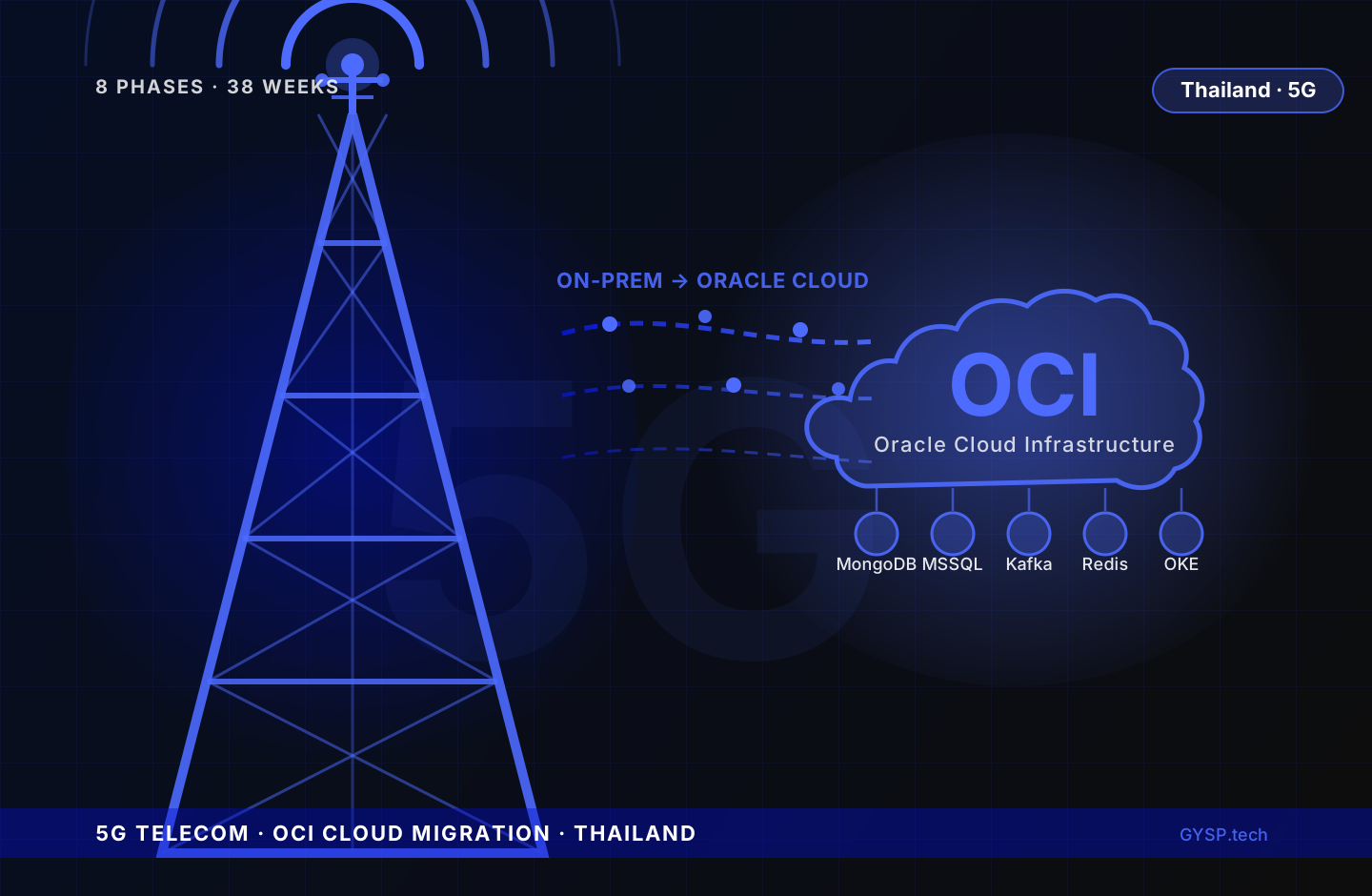
A national 5G telecom leader in Thailand needed to migrate an entire on-premises platform to Oracle Cloud Infrastructure, across four heterogeneous data systems, with zero production downtime, and a mandate to build a reusable blueprint for 11 more sites to follow.
 Telecom
Enterprise Telecom BSS/OSS Platform
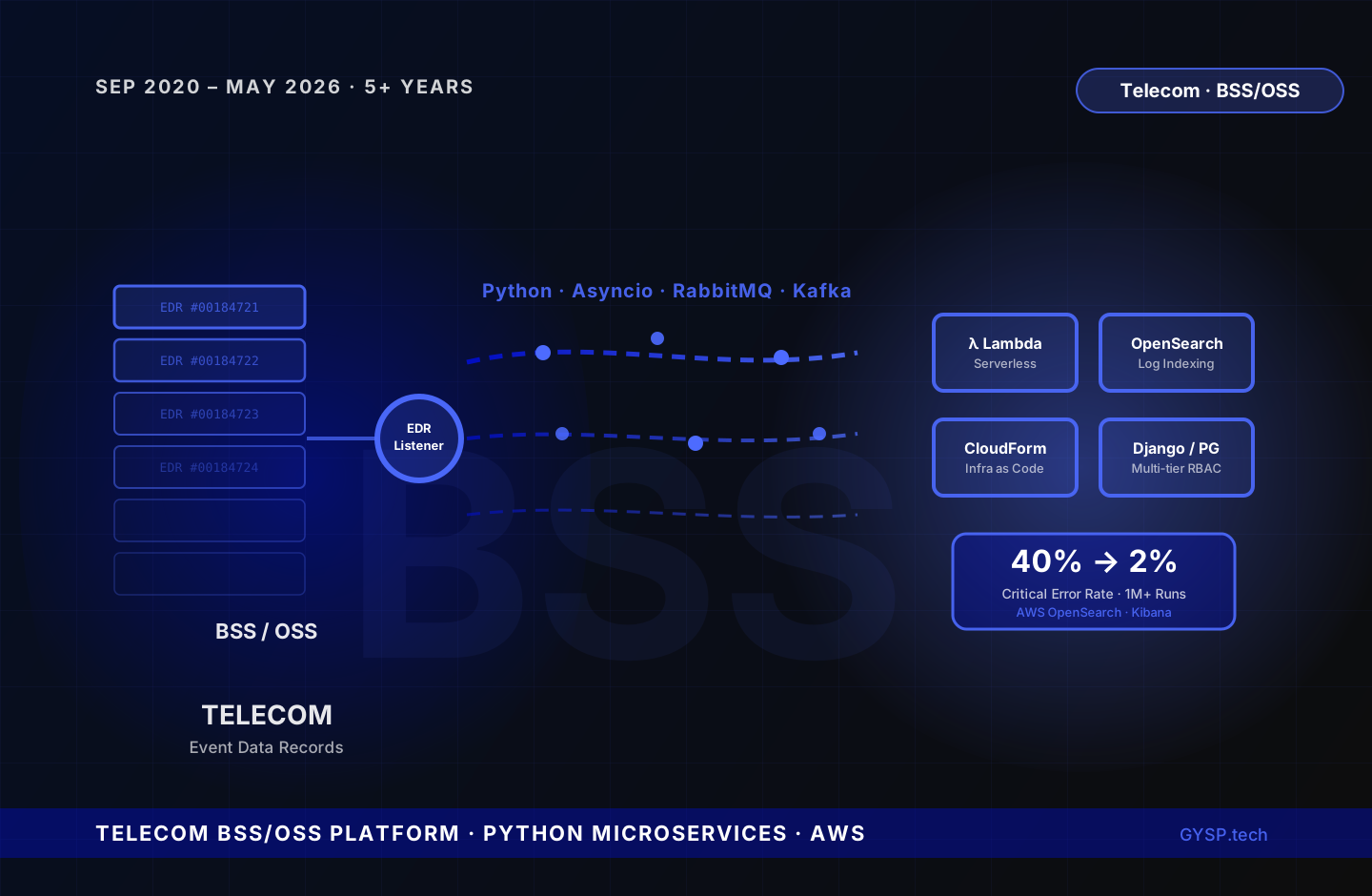
A telecom BSS/OSS platform processing millions of Event Data Records was failing at a 40% critical error rate. Over a 5+ year engagement, GYSP led the development of its core async microservices, cut critical errors to 2%, and scaled the platform across AWS infrastructure without accumulating the system bottlenecks that kill throughput at telecom load.
