Data Engineering
AI-ready data infrastructure, built for scale
We build the data foundation your AI and analytics systems depend on, including a modern data stack (dbt, Snowflake, Databricks), real-time streaming pipelines, and governance frameworks that keep data trustworthy at scale.
What We Deliver
Core Capabilities
- Modern Data Stack Implementation (dbt, Airbyte, Snowflake, Databricks)
- Data Pipeline Architecture & Development
- Data Lakehouse & Data Mesh Design
- Real-Time Streaming Analytics (Kafka, Flink)
- Data Observability & Quality Governance
- AI/ML Feature Engineering & Data Pipelines
Ready to get started?
Get a free technical brief — architecture options, timelines, and cost estimates delivered within 48 hours. No commitment required.
- 01Submit your challenge≈ 1 min
- 02Receive your Technical BriefWithin 48h
- 03Discovery call — no obligationOptional
Or call us: +1 (929) 588-8364
By the Numbers
What clients achieve with GYSP
after analytics engineering with dbt and a defined semantic layer, one definition, everywhere
for a fintech client after rebuilding from batch to real-time event streaming on Kafka/Flink
down from 3 weeks on ad-hoc queries against an ungoverned legacy warehouse
Can your data actually support AI?
12 questions. ~5 minutes. Get a readiness score (1–5) and a dollar estimate of AI initiative spend at risk from data quality, pipeline, and governance gaps.
Proven Results
Data Engineering Case Studies
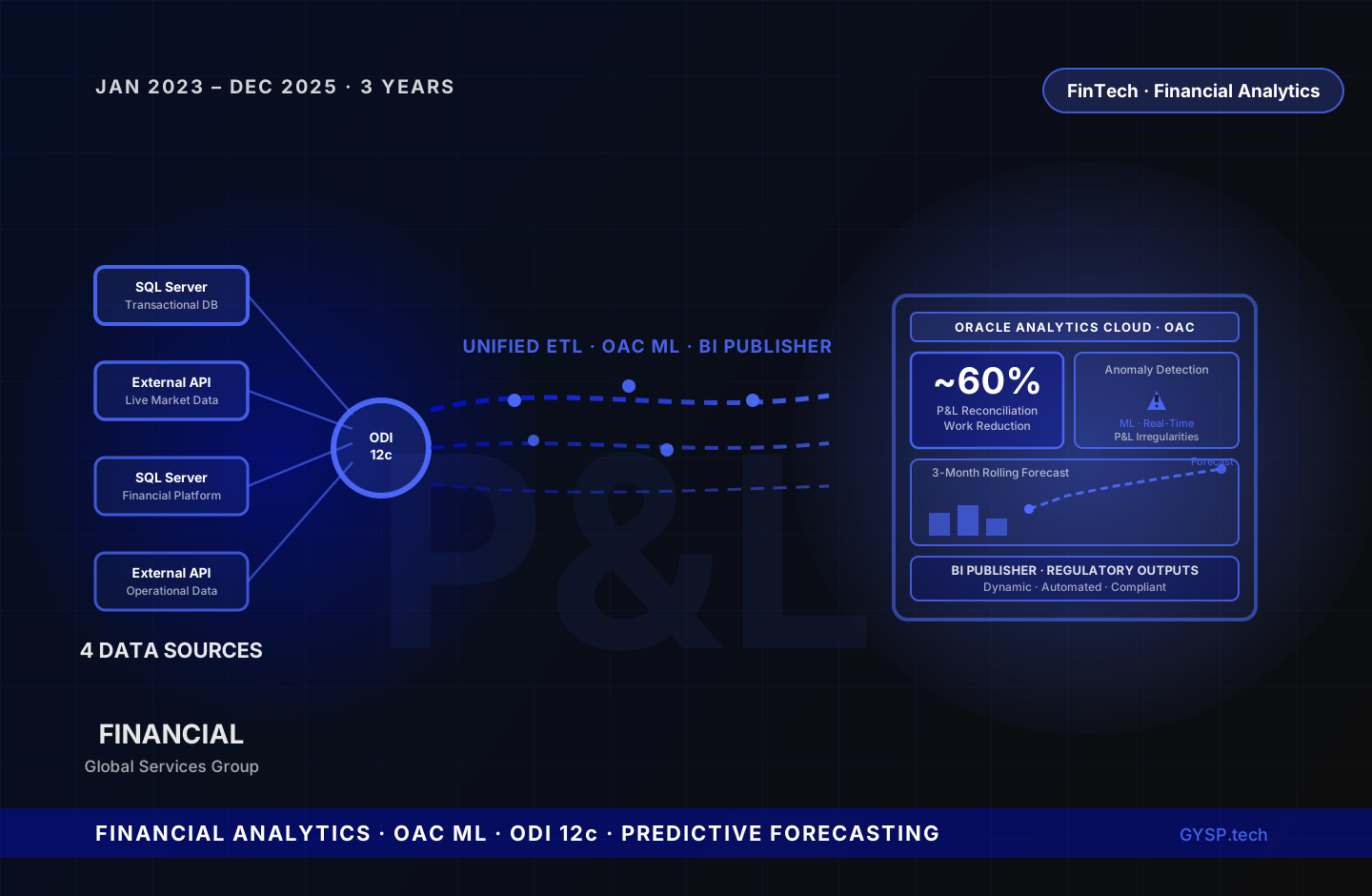 FinTech
Global Financial Services Group
A global financial services group was spending significant analyst bandwidth on manual P&L reconciliation across 4 disparate data systems, with no anomaly detection, no forward-looking forecast, and regulatory reports still produced from static spreadsheets. GYSP unified the data layers on ODI 12c, reduced reconciliation work by 60%, deployed OAC ML anomaly detection on live P&L pipelines, and built rolling 3-month commercial forecasting, all within a single integrated analytics architecture.
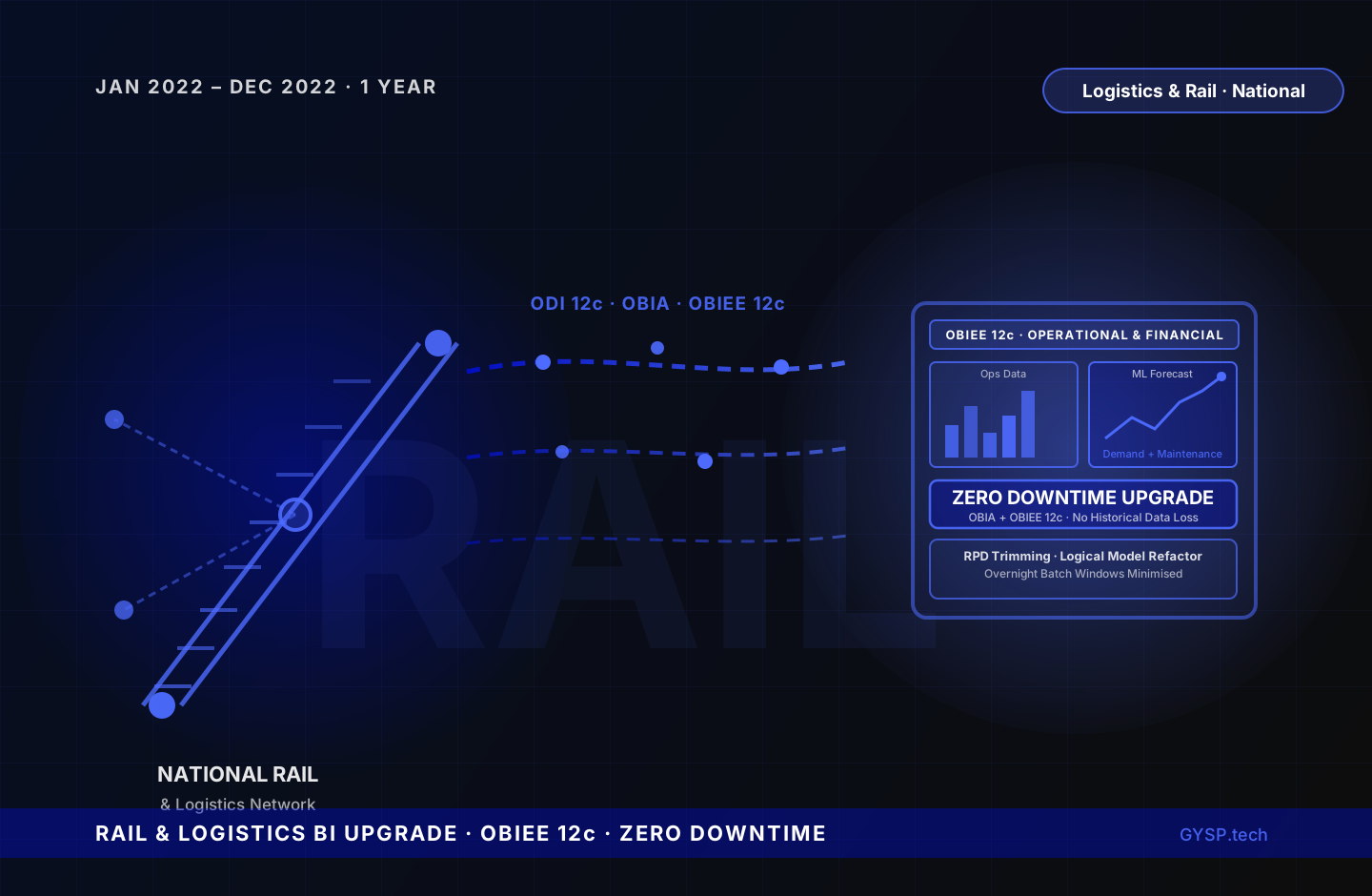 Logistics & Supply Chain
National Rail & Logistics Authority
A national rail and logistics authority was running operational and financial analytics on an aging OBIA and OBIEE stack approaching end of supportable version, with Informatica ETL pipelines extending overnight batch windows and no forward-looking ML capability for planners. GYSP executed the full lifecycle upgrade to OBIEE 12c with zero downtime, migrated ETL to ODI 12c, and embedded predictive demand and asset maintenance models into the analytics core.
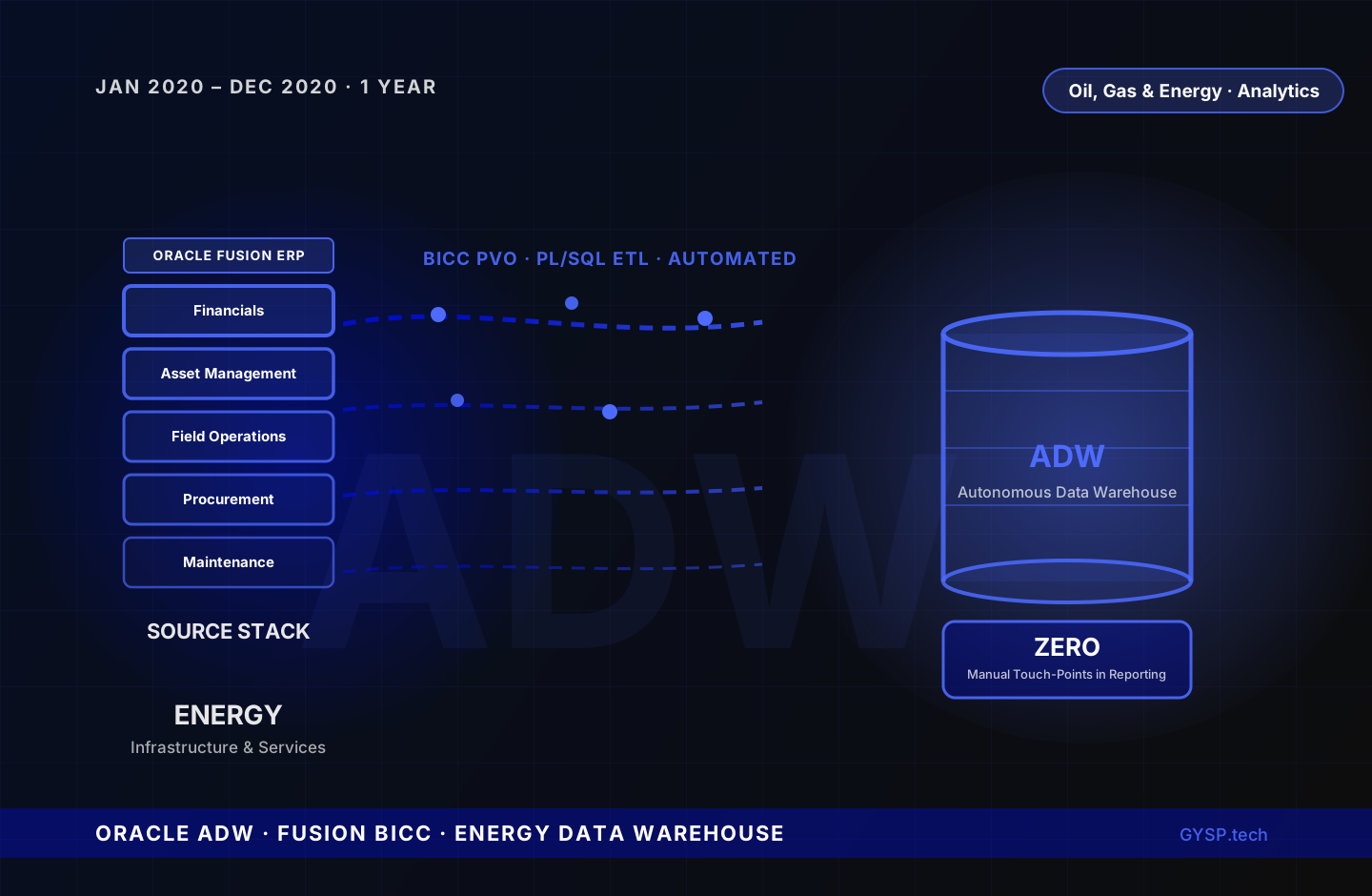 Oil, Gas & Energy
Energy Infrastructure & Services Provider
An energy infrastructure and services company was running financial and operational reporting through a cycle of manual extractions, transformations, and handoffs from Oracle Fusion, slow, error-prone, and dependent on IT for every update. GYSP built an Oracle Autonomous Data Warehouse from scratch, automated the full BICC extraction pipeline, and eliminated every manual touch-point from the reporting loop.
Industry Expertise
Industries We Serve with Data Engineering
Client Voices
What our clients say
“We wanted a seamless digital platform that could grow with us, and GYSP delivered exactly that. The scalable architecture, mobile-first experience, and real-time analytics helped us personalise customer journeys and expand regionally much faster. Their combination of technical depth and strategic input makes them invaluable to our growth story.”
“We were making business decisions on data that was 48 hours old. GYSP rebuilt our entire data pipeline. Fivetran to Snowflake, automated ETL, real-time dashboards. Suddenly we could see what was happening now, not yesterday. The shift in how quickly we could move was pretty immediate.”
“We needed to replace a 15-year-old rules engine with a production-grade ML risk model. GYSP rebuilt the entire MLOps pipeline — feature engineering, training, deployment, and automated retraining — and gave us explainability tooling our actuaries could use in regulatory submissions. Underwriting speed improved 3x in the first quarter.”
FAQs
Common questions
Everything buyers typically ask before starting a data engineering engagement.
Ask us anythingWhat is a modern data stack and does our company actually need one?
A modern data stack is a set of best-of-breed, cloud-native tools, typically an ingestion layer (Airbyte, Fivetran), a cloud warehouse (Snowflake, BigQuery, Databricks), a transformation layer (dbt), and a BI layer. You need it if you're spending more time fixing data than using it, or if your analysts are maintaining SQL scripts no one understands.
How do you handle data quality and governance at scale?
Data quality is built into the pipeline, not bolted on after. We implement dbt tests for schema validation and business logic, Great Expectations for runtime data quality checks, and data observability tooling for anomaly detection. Governance starts with a defined semantic layer so every team uses the same metric definitions.
How long does rebuilding a legacy data pipeline take?
A typical legacy warehouse-to-modern-stack migration takes 12–20 weeks depending on data volume, source system complexity, and the number of downstream consumers to revalidate. We migrate incrementally, so the new stack runs in parallel until parity is confirmed.
Can you integrate with our existing BI tools like Tableau or Power BI?
Yes. We build the transformation and semantic layer to be BI-tool-agnostic. Whether you're on Tableau, Power BI, Looker, or Metabase, the semantic layer ensures consistent metric definitions regardless of which tool is querying the warehouse.
What's the difference between a data warehouse and a data lakehouse?
A data warehouse (Snowflake, BigQuery) stores structured, processed data optimised for SQL analytics. A data lakehouse (Databricks, Delta Lake) combines raw storage flexibility with warehouse-style querying, essential when you need to run ML workloads on the same data as analytics. Most companies start with a warehouse and move to a lakehouse when ML use cases become central.
Let's build something together
Get a free technical brief on your data engineering challenge — architecture, timeline, and cost estimate in 48 hours.
Get Free Technical Brief