Web Development
Ships with confidence and your users stay on.
Full-stack web applications optimised for performance, SEO, and conversions. From headless commerce and composable architectures to enterprise portals, we build with scalability from day one.
What We Deliver
Core Capabilities
- Full-Stack Web Application Development
- Headless Commerce & Composable Architecture (MACH)
- eCommerce Platform Development (Shopify, WooCommerce, Adobe Commerce)
- Progressive Web Apps (PWA)
- API Development & Integration
- Web Performance & Core Web Vitals Optimisation
Ready to get started?
Get a free technical brief — architecture options, timelines, and cost estimates delivered within 48 hours. No commitment required.
- 01Submit your challenge≈ 1 min
- 02Receive your Technical BriefWithin 48h
- 03Discovery call — no obligationOptional
Or call us: +1 (929) 588-8364
By the Numbers
What clients achieve with GYSP
performance is designed in, not bolted on, and every project ships with passing LCP, FID, and CLS scores
typical result after migrating monolithic storefronts to headless MACH architecture with edge delivery
after Core Web Vitals optimisation and structured data implementation, as performance is an SEO multiplier
Proven Results
Web Development Case Studies
 FinTech
Global Banking Institution
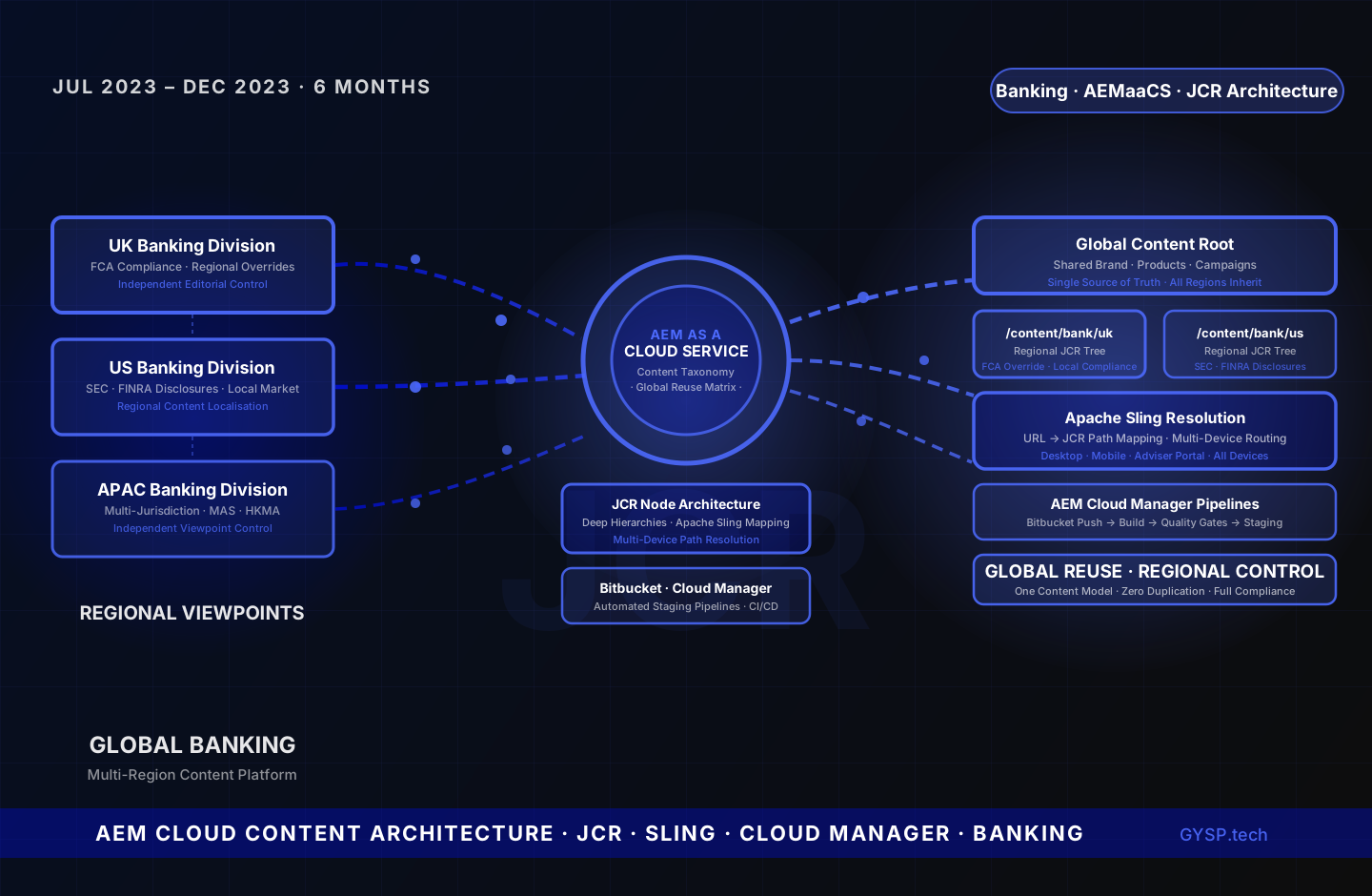
A global banking institution migrating to AEM as a Cloud Service needed a content architecture supporting global content reuse across independent regional viewpoints, with UK, US, and APAC divisions sharing a unified content model while maintaining independent editorial control. GYSP spearheaded content taxonomy modeling, configured optimised JCR node hierarchies with Apache Sling path resolution for multi-device delivery, and automated staging pipelines via AEM Cloud Manager and Bitbucket.
 FinTech
Global InsurTech Platform
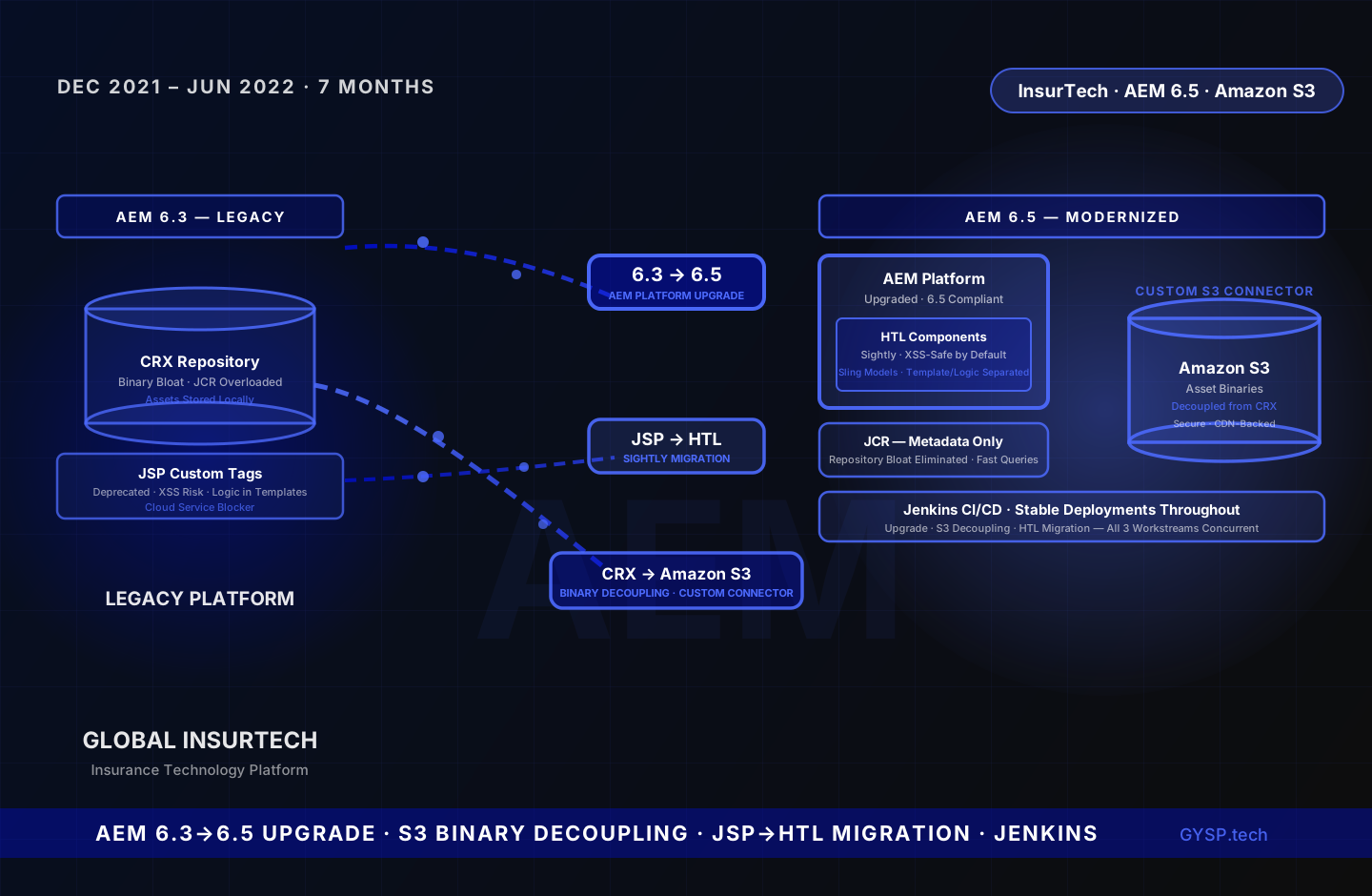
A global InsurTech platform running on AEM 6.3 needed a high-stakes modernization: upgrade to AEM 6.5, decouple its heavy digital asset binary architecture from the local CRX repository to Amazon S3, and refactor its deprecated JSP component codebase to modern Sightly (HTL). GYSP executed the full upgrade, built a custom S3 cloud datastore connector, completed the HTL migration, and sustained deployment stability via Jenkins CI throughout.
 FinTech
Global FinTech Cards Platform
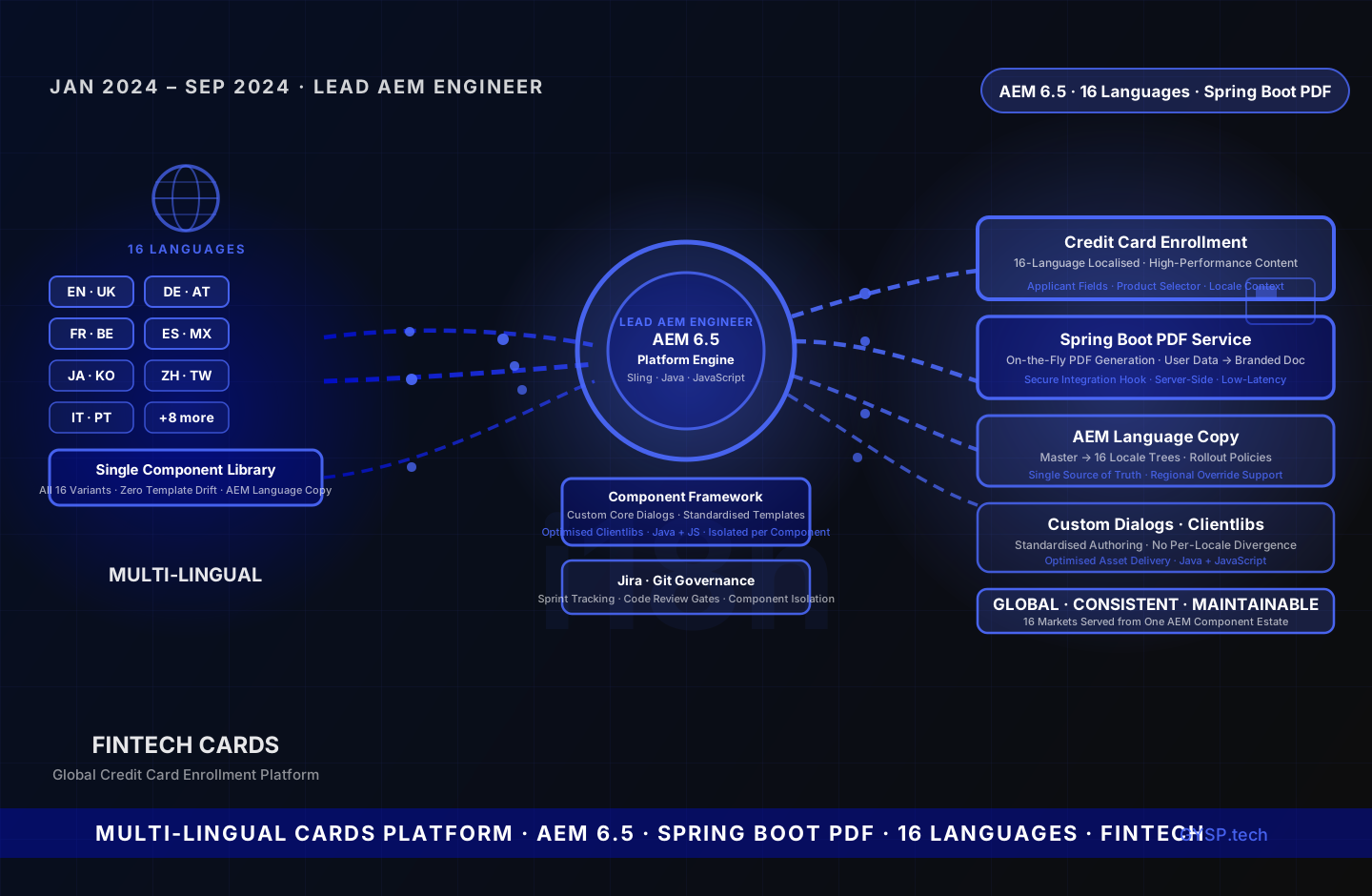
A global FinTech cards platform needed a localised digital enrollment experience for credit card products delivered consistently across 16 international language variations, with zero template drift and no per-locale component duplication. As Lead AEM Engineer, GYSP architected the full multi-lingual AEM 6.5 platform: structured language copy subsystems, a secure Spring Boot microservice integration hook for on-the-fly PDF generation, reusable component frameworks with customised core dialog fields, and Jira-governed sprint rollout with Git-enforced component isolation.
Industry Expertise
Industries We Serve with Web Development
Client Voices
What our clients say
“We handed GYSP a Figma file and a requirements document. Sixteen weeks later, we had a production SaaS platform with 300 paying beta customers and no unplanned outages since launch. This isn't the typical agency experience. They own outcomes, not just tickets.”
“Our Shopify store was converting at 1.4% — below industry average. GYSP rebuilt it headless: Next.js front-end, optimised checkout, a CMS our marketing team can actually use. Page speed hit 96 on Core Web Vitals. Conversion rate is at 2.9% and still improving three months post-launch.”
“Our student-facing portal was a legacy application we were embarrassed to demo to enterprise clients. GYSP rebuilt it in Next.js — real-time updates, role-based access, SCORM compliance, API-first architecture. The new portal became a sales asset within a month. Two enterprise deals closed partly on the demo alone.”
FAQs
Common questions
Everything buyers typically ask before starting a web development engagement.
Ask us anythingDo you build on existing platforms like Shopify or WordPress, or always custom?
Both, choosing the right tool for the job. Shopify or Shopify Plus for commerce with standard requirements. Headless Shopify and Next.js for performance-critical or heavily customised storefronts. WordPress for content-heavy sites. Custom Next.js for complex applications. We don't default to custom if a platform fits.
How do you approach Core Web Vitals and SEO performance?
Performance is designed in from the start, covering server-side rendering or static generation, image optimisation, font loading strategy, third-party script audit, and edge delivery. We don't optimise as an afterthought. Every project ships with Lighthouse scores above 90 before launch.
What is headless commerce and should we be using it?
Headless decouples your storefront from your commerce backend (Shopify, Commercetools, etc.). The benefit: full control over performance and UX, no platform UI constraints. The cost: more engineering complexity. Consider it if your current platform's storefront is limiting your conversion performance or brand experience.
How long does a typical web project take from kick-off to launch?
A marketing website with CMS: 6–8 weeks. An eCommerce storefront: 10–16 weeks. A complex web application: 16–24 weeks. Timeline is driven by content readiness and decision speed as much as engineering complexity.
Do you handle hosting, infrastructure, and DNS, or just the application?
We handle the full stack, including application, infrastructure as code, CDN configuration, DNS, SSL, monitoring, and CI/CD pipeline. At handover, you have everything running, documented, and deployable without us.
Let's build something together
Get a free technical brief on your web development challenge — architecture, timeline, and cost estimate in 48 hours.
Get Free Technical Brief