Automation & Process Intelligence
Automate the work that shouldn't need people
We design and implement intelligent automation across your business, from RPA and workflow orchestration to AI-powered process automation. Built on Make, n8n, Zapier, and custom integrations to eliminate bottlenecks and free your teams for high-value work.
What We Deliver
Core Capabilities
- Workflow Automation (Make, n8n, Zapier)
- Robotic Process Automation (RPA)
- AI-Powered Process Automation
- System Integration & API Orchestration
- Business Process Analysis & Optimisation
- Automation Monitoring & Maintenance
Ready to get started?
Get a free technical brief — architecture options, timelines, and cost estimates delivered within 48 hours. No commitment required.
- 01Submit your challenge≈ 1 min
- 02Receive your Technical BriefWithin 48h
- 03Discovery call — no obligationOptional
Or call us: +1 (929) 588-8364
By the Numbers
What clients achieve with GYSP
after AI agent deployment replaces manual review queues on exception-heavy workflows
after migrating from UI-scraping bots to API-based intelligent automation, no more break/fix cycles
for workflows previously requiring daily manual review, exception handling, and overnight monitoring
Where is your engineering team losing time before automation even starts?
12 questions. ~5 minutes. Get a velocity score (1–5, DORA-based) and a dollar estimate of engineering capacity lost to delivery bottlenecks — the friction that automation investments need to land on solid ground.
Proven Results
Automation Case Studies
 FinTech
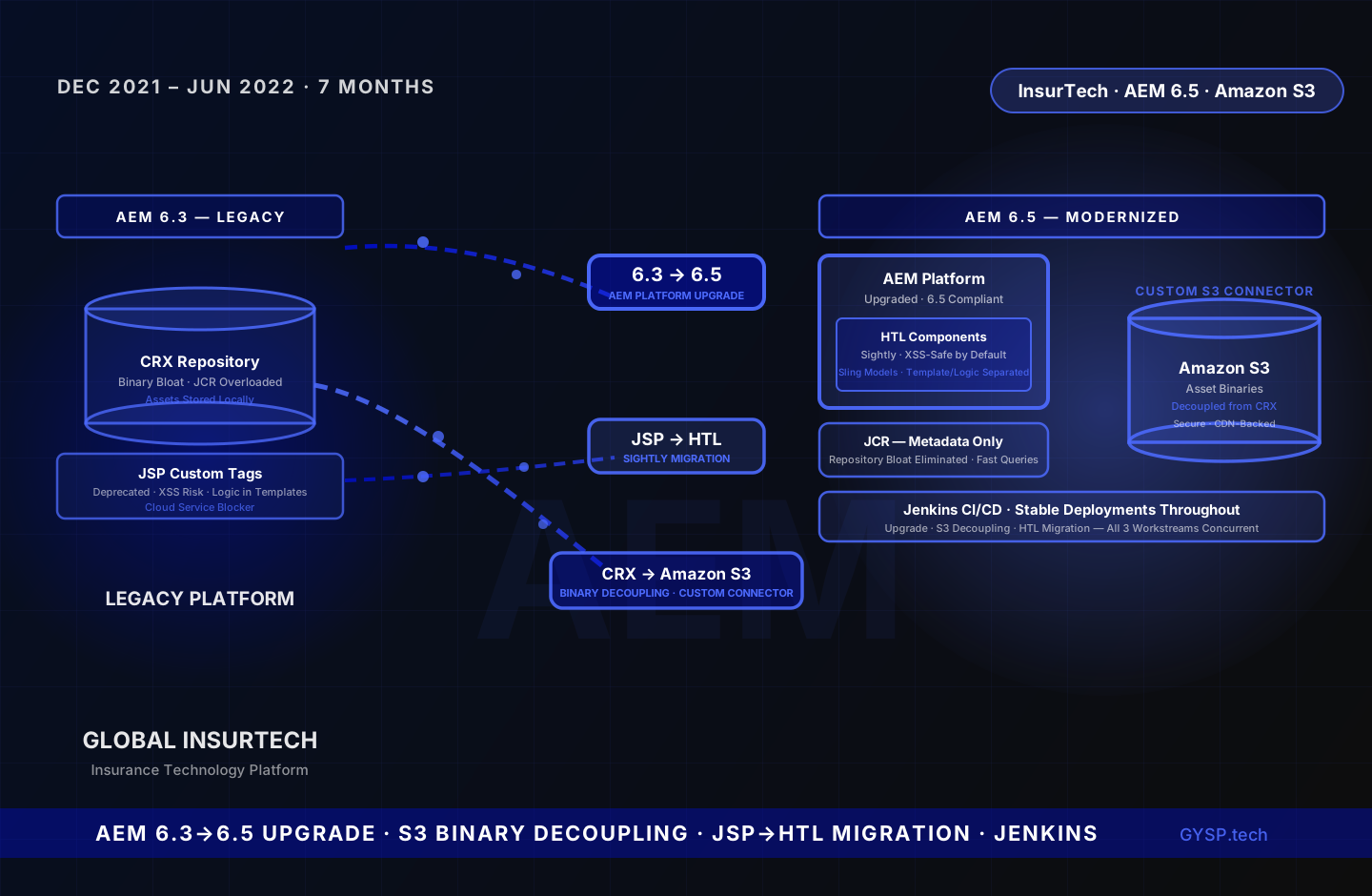
Global InsurTech Platform
A global InsurTech platform running on AEM 6.3 needed a high-stakes modernization: upgrade to AEM 6.5, decouple its heavy digital asset binary architecture from the local CRX repository to Amazon S3, and refactor its deprecated JSP component codebase to modern Sightly (HTL). GYSP executed the full upgrade, built a custom S3 cloud datastore connector, completed the HTL migration, and sustained deployment stability via Jenkins CI throughout.
 Government & Public Sector
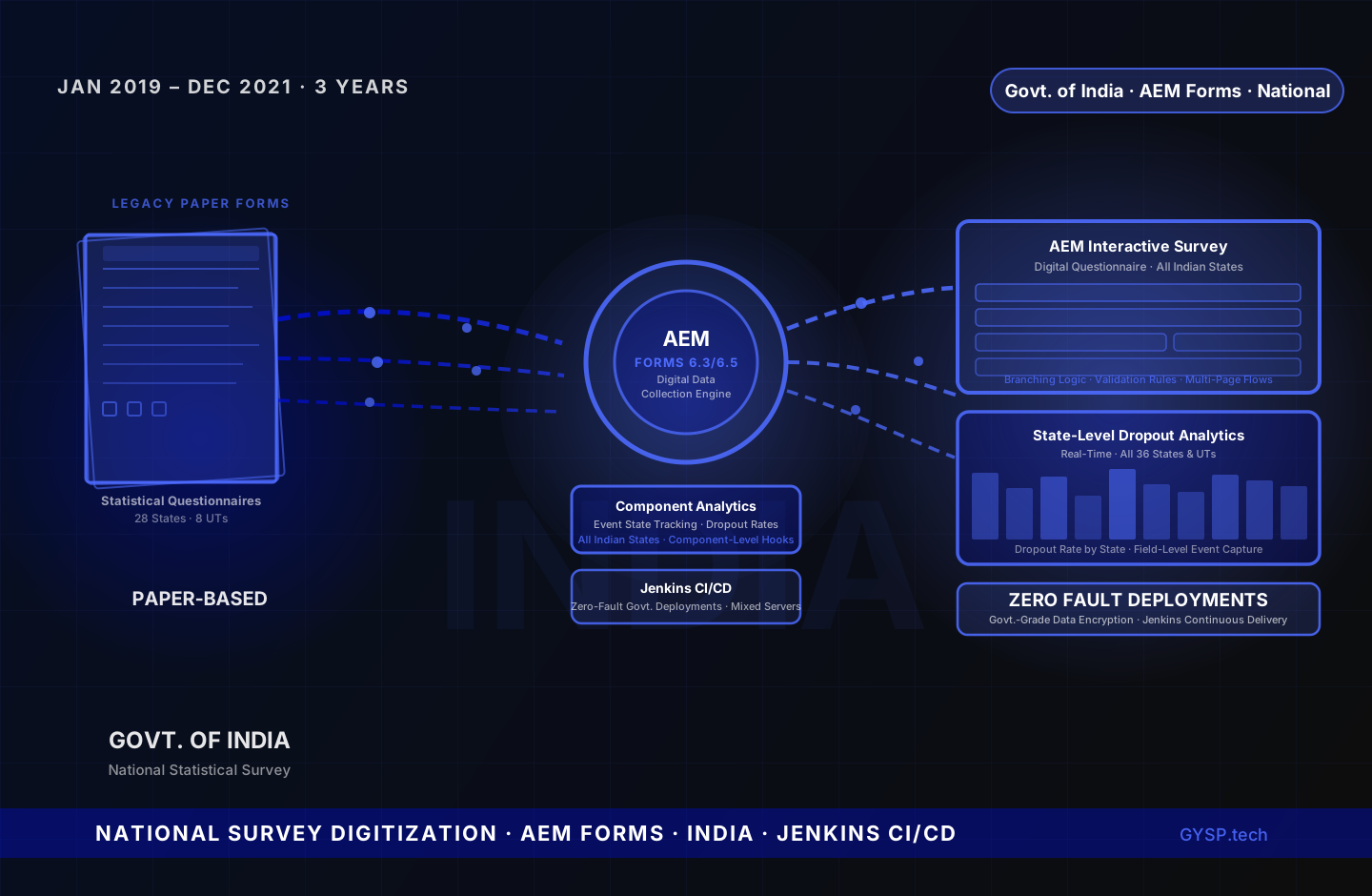
Government of India — National Statistical Survey
A national government statistical survey programme needed to move its mission-critical paper-based questionnaire infrastructure to a secure, scalable digital platform spanning all Indian states. GYSP transformed legacy paper forms into interactive AEM Forms instruments, programmed component-level analytics tracking for dropout and event monitoring across every state, and sustained zero-fault continuous delivery via Jenkins automation over a 3-year programme.
 Enterprise Technology
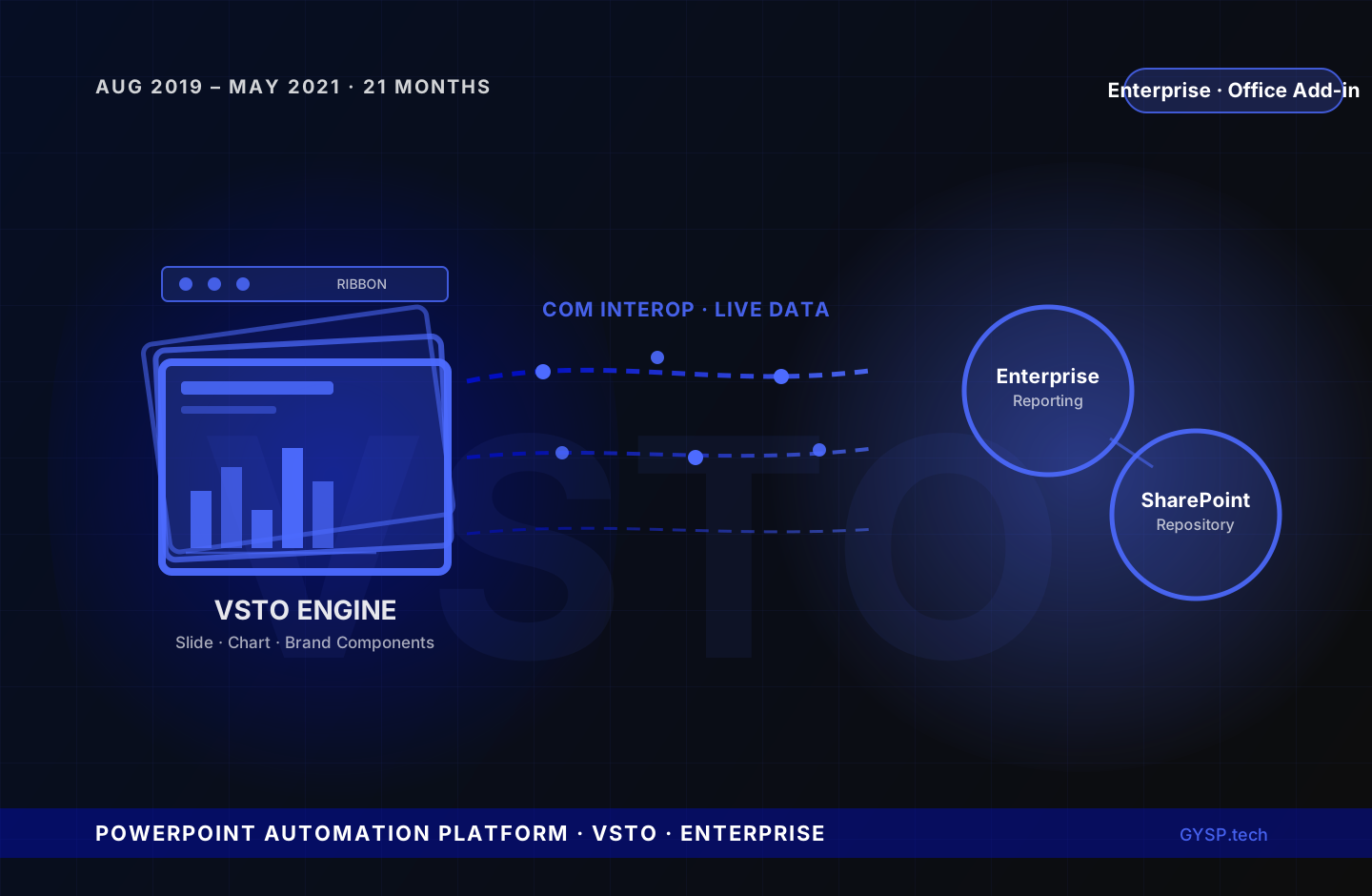
Global Professional Services Firm
Business teams were losing hours per proposal manually rebuilding slides, charts, and formatting from scratch. GYSP built a native PowerPoint automation platform that generated branded, data-accurate decks directly inside the tool teams already used every day.
Industry Expertise
Industries We Serve with Automation
Client Voices
What our clients say
“We needed a partner who could modernise our platform without cutting corners on compliance. GYSP delivered on both. Their work across cloud migration, security, and automation gave us a foundation that actually scales. The platform runs faster, more securely, and with far less maintenance overhead than before. That's all we were asking for.”
“Our claims processing team was manually handling 900 documents a day. GYSP built an intelligent document pipeline that handles classification, extraction, and validation automatically. It now processes 72% of cases without any human touch. The other 28% come through pre-annotated for our agents. We effectively doubled capacity without adding headcount.”
“We were running seven tools that didn't talk to each other. GYSP mapped our entire operations workflow, removed the redundant steps, and built an automation layer using Make and a custom LLM agent for exception handling. Contract turnaround dropped from four days to under six hours. Operations overhead fell 43%.”
FAQs
Common questions
Everything buyers typically ask before starting a automation engagement.
Ask us anythingHow do you decide what to automate versus what to keep manual?
We run a process portfolio analysis, classifying every process by automation ROI (volume × handling time × error rate) against automation complexity. High-volume, rules-based, structured-input processes are automated first. Low-volume, high-judgment processes stay human-in-the-loop.
What's the difference between RPA and AI agents?
RPA mimics user actions on a screen, fragile, maintenance-heavy, and prone to breaking when the UI changes. AI agents reason about inputs and select actions dynamically, more resilient and able to handle variation and exceptions. Most organisations are migrating from RPA to AI agents for core processes and keeping RPA only where API access doesn't exist.
How do you handle edge cases and exceptions in automated workflows?
Every automation we build has an exception handling framework: classify the exception, attempt resolution, escalate to human if unresolvable, log for pattern analysis. Over time, recurring exceptions become new automation rules. The goal is to shrink the exception rate continuously, not just automate the happy path.
What platforms do you build automations on?
Make (formerly Integromat), n8n, and Zapier for workflow orchestration. Custom Python or TypeScript for complex logic. API-first integrations wherever possible, and we avoid UI-scraping RPA unless there's no API available. Platform choice depends on your existing tech stack and internal maintenance capability.
What happens to our automations after you deliver them?
We document every automation fully, train your team on monitoring and basic maintenance, and offer ongoing support retainers for complex workflows. For AI agent-based automations, we set up monitoring dashboards so you can see exception rates, success rates, and processing volumes in real time.
Let's build something together
Get a free technical brief on your automation challenge — architecture, timeline, and cost estimate in 48 hours.
Get Free Technical Brief