Global Energy Trading Group
Energy Price Forecasting & Intelligent Automation — SGD 700K Weekly Value Capture
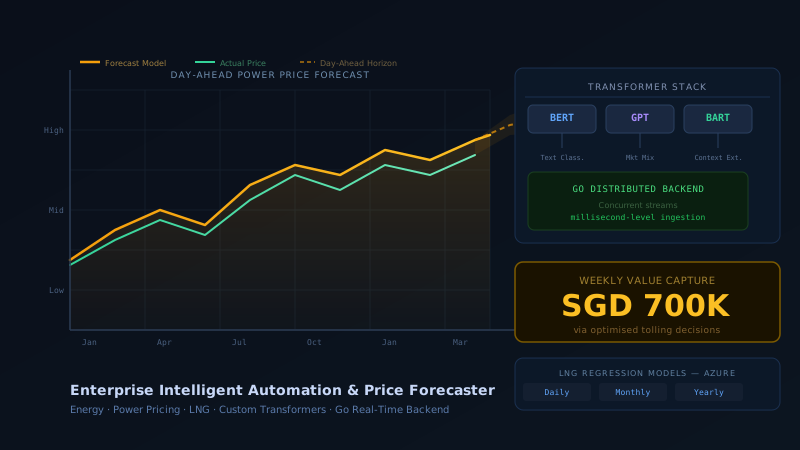
An energy trading group needed to turn power and LNG price signals into optimised decisions: fast enough to matter, accurate enough to trust. GYSP built the forecasting engine and real-time infrastructure behind SGD 700K in weekly value capture.
Industry
Energy
Key Result
SGD 700K Weekly Value Capture via Optimised Tolling Decisions
Primary Service
AI/ML Development
Core Stack
Python, BERT, GPT
The Challenge
A global energy trading group operating across power and Liquefied Natural Gas (LNG) markets faced a compounding forecasting problem. Day-ahead power pricing decisions were being made without a systematic predictive model, leaving potential value from optimised tolling decisions on the table. LNG price tracking across daily, monthly, and yearly horizons relied on manual processes without validated regression models or an enterprise deployment layer capable of operationalising forecasts at the pace markets move. A further gap existed in the organisation's data products: text classification, logistics mapping, market mix modelling, and demand forecasting were all either absent or handled with generic tooling not calibrated to the domain's specific signal types. And the infrastructure underpinning these workloads could not sustain millisecond-level data stream ingestion requirements — the data backend was not architected for the concurrent throughput that real-time energy market processing demands.
Our Solution
GYSP engineered a Day-Ahead power pricing forecasting engine deployed for live tolling decisions, directly facilitating a potential value capture of SGD 700K weekly through optimised pricing recommendations. Complementing the power forecasting engine, highly accurate LNG regression models were authored, validated, and optimised to track price fluctuations across daily, monthly, and yearly horizons, deployed through an enterprise Azure platform. A cross-functional portfolio of AI data products was built in parallel: custom text classification systems, logistics mapping frameworks, market mix modelling, and demand forecasting, each using custom transformer architectures built on BERT, GPT, and BART tokenisers for domain-specific text matching and context extraction. Underpinning the entire system, a highly concurrent distributed backend was architected in Go, designed specifically for millisecond-level data stream ingestion and real-time processing throughput, giving every model the low-latency data layer required to operate at market speed.
Most enterprise AI spend underperforms. Benchmark yours.
Key Deliverables
- Day-Ahead power pricing forecasting engine facilitating SGD 700K weekly value capture via optimised tolling decisions
- LNG regression models tracking daily, monthly, and yearly price fluctuations deployed on enterprise Azure platform
- Custom transformer architectures built on BERT, GPT, and BART tokenisers for domain-specific text matching and context extraction
- Custom text classification, logistics mapping, market mix modelling, and demand forecasting frameworks deployed as standalone data products
- Go distributed backend architected for millisecond-level data stream ingestion and high-throughput real-time processing
- Cross-functional AI/ML deployments across five distinct data product categories within a single 15-month engagement
Services Delivered
- AI/ML Development
- Cloud & DevOps Engineering
- Data Engineering
Tech Stack
This engagement used Python, BERT, GPT, BART, Go (Golang), and 5 additional tools.
Frequently Asked Questions
How does a Day-Ahead power pricing forecasting engine work and how was it built?+
Day-Ahead pricing forecasting models predict the clearing price for electricity in the next 24-hour market window using historical price data, weather inputs, demand signals, and generation capacity data as features. GYSP engineered a forecasting engine that produced price predictions calibrated specifically to the client's tolling decision context, where the model output directly informed whether to commit generation capacity at a given price point. The accuracy of the forecast determines the quality of those decisions — and the commercial value captured through them.
What are LNG regression models and why were three horizon types needed?+
LNG (Liquefied Natural Gas) regression models are statistical models that predict price movements based on supply, demand, shipping, storage, and macro-economic inputs. Three distinct models covering daily, monthly, and yearly horizons were built because each operates at a different signal frequency and feature set: daily models respond to short-term supply disruptions and cargo movements, monthly models capture seasonal demand patterns and contract flows, and yearly models incorporate long-term infrastructure and geopolitical factors. Using a single model across all three horizons would smooth over the shorter-cycle volatility that is commercially significant at the daily level.
Why were custom BERT, GPT, and BART transformer architectures used rather than off-the-shelf NLP tools?+
Off-the-shelf NLP models are trained on general-purpose text corpora and lack the domain-specific vocabulary, entity types, and contextual patterns present in energy market data — trading reports, regulatory filings, commodity news, and logistics communications. GYSP built custom transformer architectures using BERT, GPT, and BART tokenisers calibrated to the energy domain, producing text classification and context extraction systems that outperformed generic models on the client's specific data types. Each tokeniser was selected for its architectural strengths: BERT for bidirectional context in classification tasks, GPT for generative text modelling, and BART for sequence-to-sequence tasks like context extraction.
Why was Go (Golang) chosen for the real-time data backend rather than Python?+
Python is the dominant language for data science and model development but is not designed for the concurrent throughput requirements of millisecond-level data stream ingestion. Go's goroutine concurrency model allows thousands of concurrent data stream connections to be handled with minimal memory overhead, and its compiled execution speed makes it appropriate for latency-sensitive processing layers where Python's GIL (Global Interpreter Lock) would become a bottleneck under load. The architecture separated concerns cleanly: Python handled model training and inference, while Go handled the high-throughput ingestion and routing layer that fed data to the models in real time.
Work with GYSP
Similar Energy challenge?
Get a free technical brief: architecture options, cost estimates, and a delivery timeline scoped to your challenge.
- 48-hour turnaround
- Senior engineers only
- No commitment required
Or call: +1 (929) 588-8364
More Energy Case Studies
 Oil, Gas & Energy
National Oil & Gas Corporation
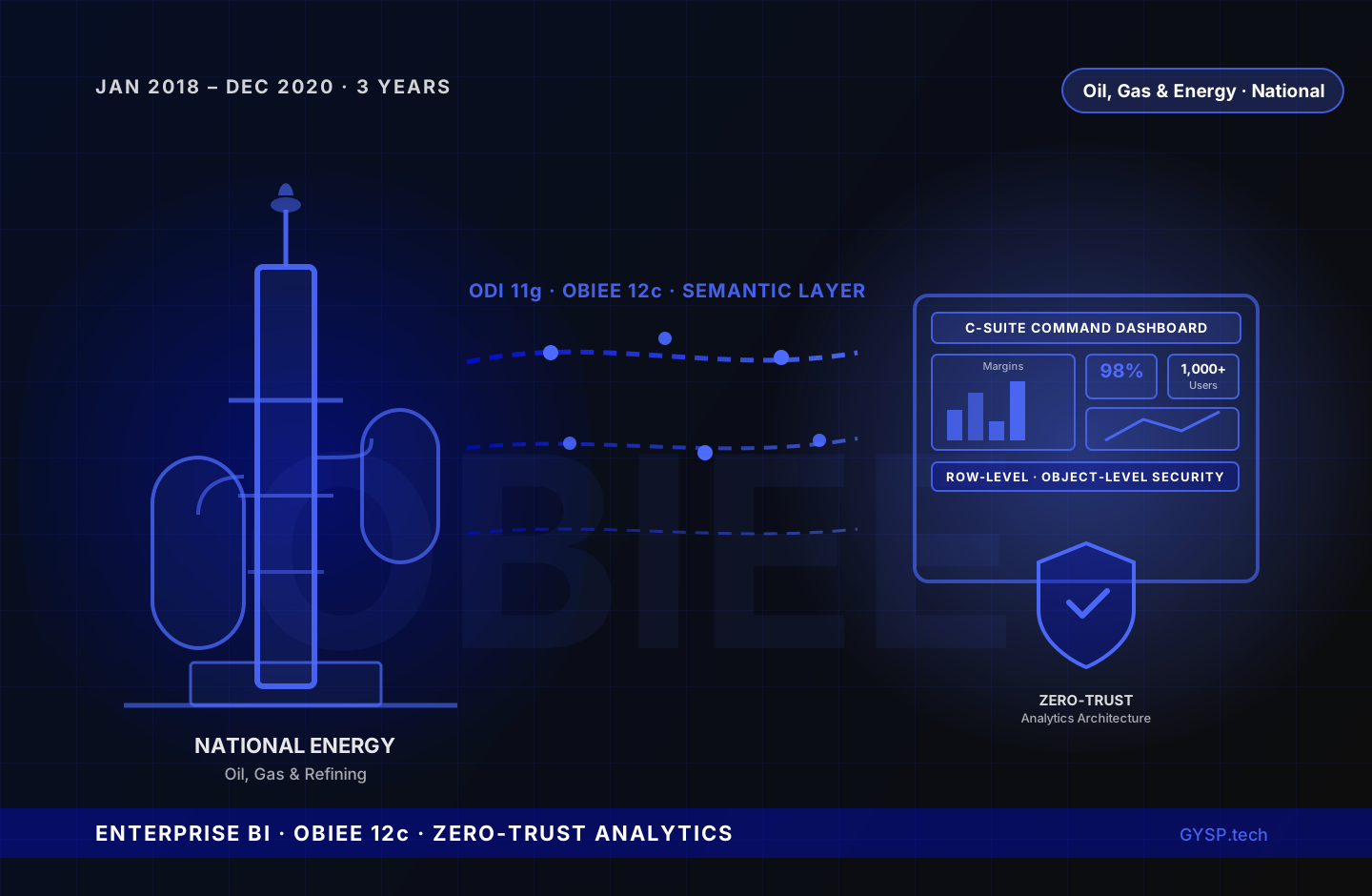
A national energy entity needed a single analytics platform that could serve the C-suite's operational margin visibility and a field operations manager's daily reports, from the same data, with zero cross-access risk. GYSP led the national-scale OBIEE 12c implementation, enforced a zero-trust security architecture, and trained over 1,000 end-users to eliminate IT report dependency.
 Oil, Gas & Energy
Energy Infrastructure & Services Provider
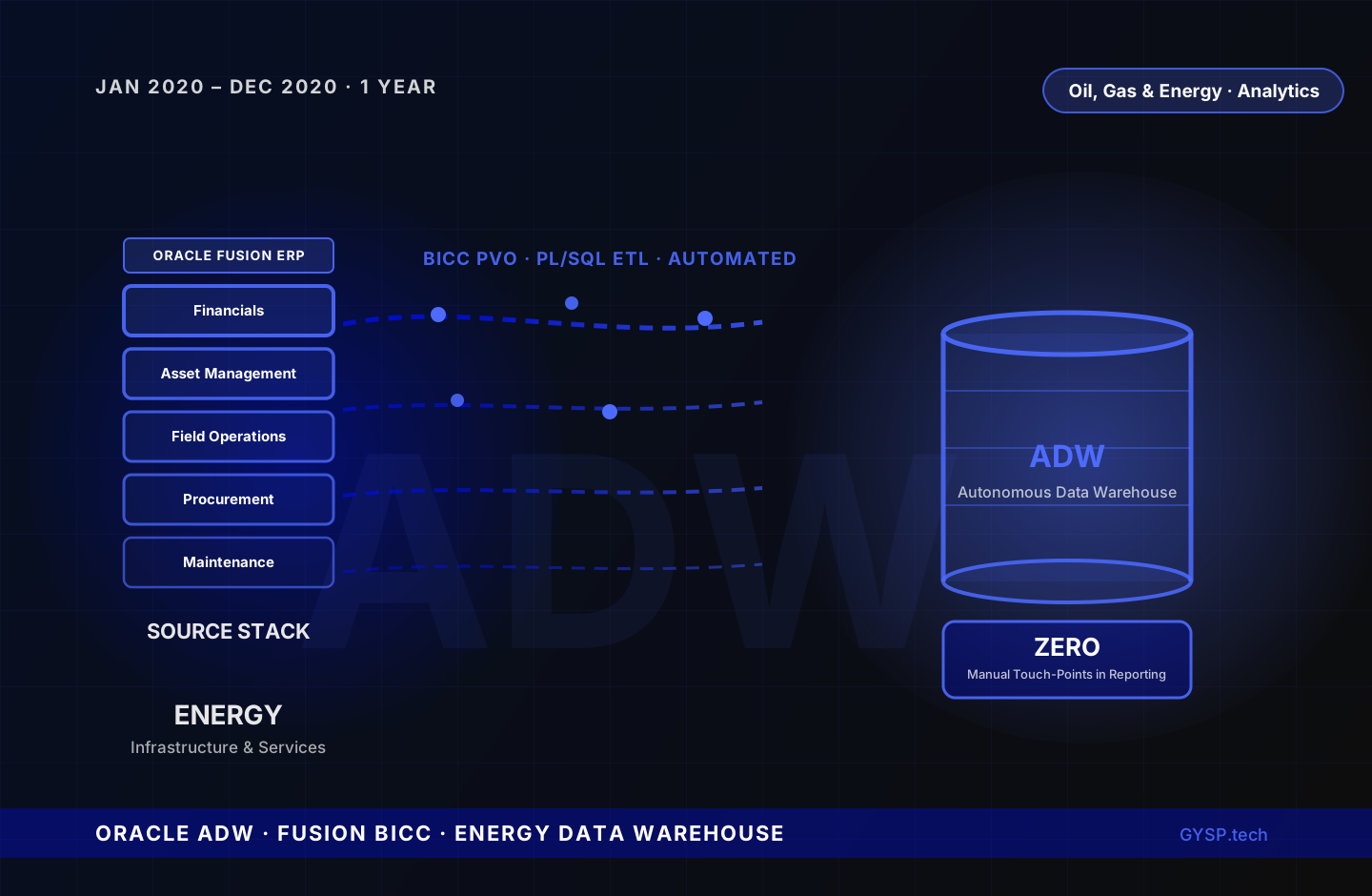
An energy infrastructure and services company was running financial and operational reporting through a cycle of manual extractions, transformations, and handoffs from Oracle Fusion, slow, error-prone, and dependent on IT for every update. GYSP built an Oracle Autonomous Data Warehouse from scratch, automated the full BICC extraction pipeline, and eliminated every manual touch-point from the reporting loop.
