Multi-Tenant Healthcare Cloud Platform
Healthcare Azure Landing Zone — HIPAA Tenant Segmentation
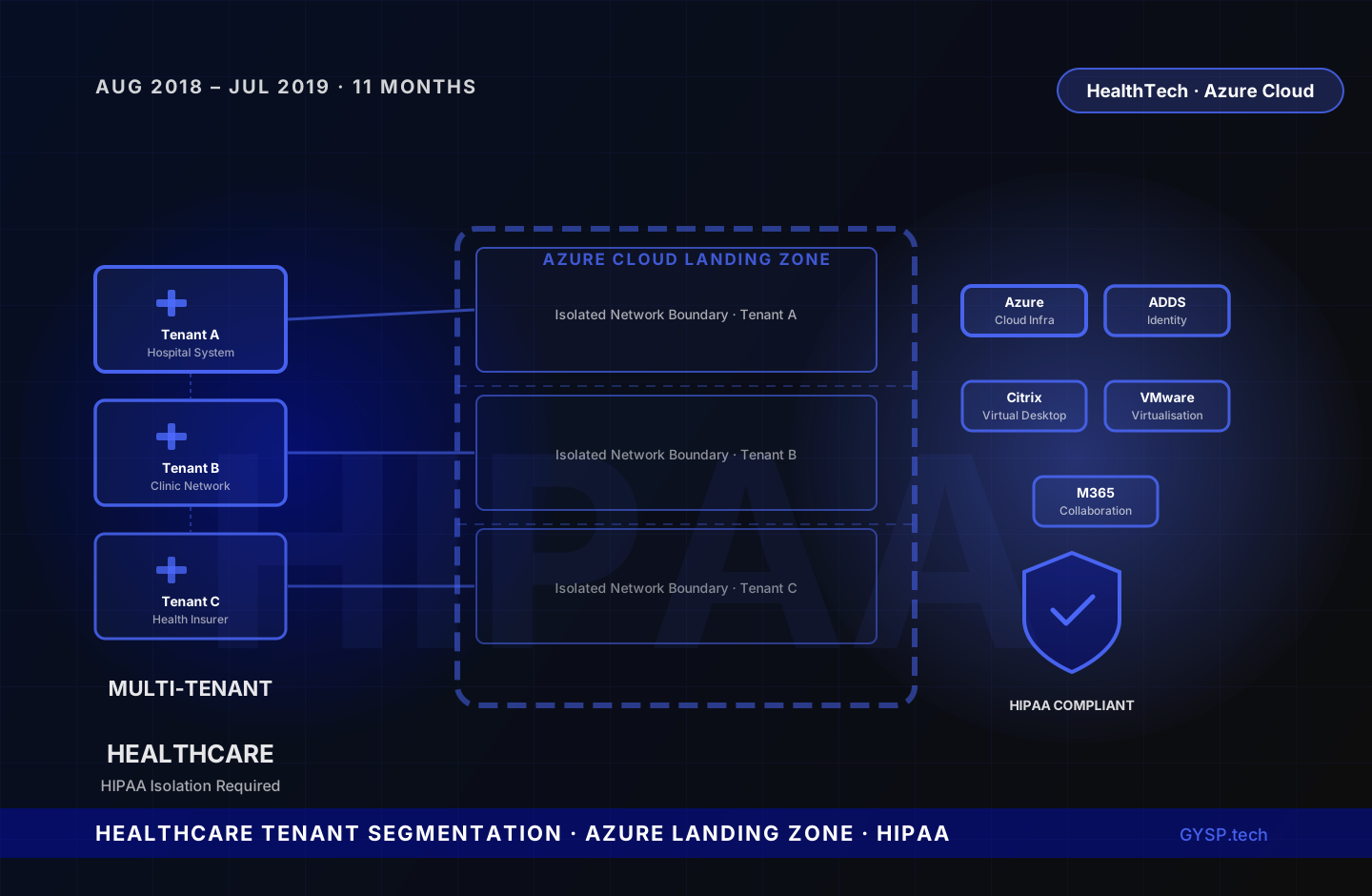
A multi-tenant healthcare cloud platform needed to host multiple hospital and clinic tenants on shared cloud infrastructure, without any cross-tenant data exposure and with a compliance architecture that could pass HIPAA scrutiny from day one. GYSP designed the Azure landing zone, formulated the tenant isolation blueprint, and governed daily operations across Citrix, VMware, Azure, M365, and Active Directory.
Industry
HealthTech
Key Result
Compliant Azure Landing Zone Designed for HIPAA Tenant Isolation
Primary Service
Azure Cloud Architecture
Core Stack
Microsoft Azure, Azure Landing Zone, Active Directory (ADDS)
The Challenge
Multi-tenant healthcare cloud platforms face a compliance challenge that doesn't exist in standard enterprise cloud architectures: each tenant, a hospital system, clinic network, or health insurer, brings its own patient data, medical applications, and regulatory obligations, and HIPAA mandates that these workloads must operate within clearly isolated environments with no cross-tenant data exposure or application access path. Designing this separation on shared cloud infrastructure requires embedding compliance controls at the infrastructure layer from the outset, not retrofitting them after deployment. An Azure cloud environment that hasn't been structured as a purpose-built healthcare landing zone will accumulate compliance debt that becomes increasingly difficult to remediate as tenant count grows. Alongside the architecture challenge, the operational environment across five heterogeneous enterprise platforms, Citrix virtual desktop infrastructure, VMware virtualisation, Microsoft Azure, Microsoft 365, and Active Directory, needed unified governance: consistent directory rules, performance tracking, and daily operational visibility to ensure the isolated healthcare environments remained stable, auditable, and resilient.
Our Solution
GYSP formulated an isolated IT environment segmentation blueprint and designed a new Azure cloud landing zone structured to safeguard medical applications and compliance footprints across all tenant organisations. The landing zone architecture embedded network separation, access control boundaries, and compliance controls at the infrastructure layer, ensuring each tenant's medical application workloads, patient data environments, and identity perimeters operated within clearly defined, auditable boundaries with no cross-tenant exposure paths built into the architecture. Active Directory (ADDS) was configured with directory rules aligned to healthcare compliance requirements, providing the identity and access control foundation that governed user and application access across the entire multi-tenant environment. Unified operational governance was established across all five enterprise platforms: Citrix, VMware, Microsoft Azure, Microsoft 365, and Active Directory. Daily performance tracking and operational metrics were maintained across each platform, providing continuous visibility into the compliance environment and enabling proactive identification of operational issues before they affected the healthcare tenants depending on the infrastructure.
29% of cloud spend is wasted on average. Find yours.
Key Deliverables
- Azure cloud landing zone designed from the ground up for healthcare tenant isolation: network separation, access control boundaries, and HIPAA-aligned compliance controls embedded at infrastructure level
- Isolated IT environment segmentation blueprint formulated to protect medical application workloads and patient data compliance footprints from cross-tenant exposure
- Active Directory (ADDS) configured with directory rules aligned to healthcare compliance requirements, providing the identity and access control foundation for the multi-tenant environment
- Operational governance established across 5 enterprise platforms: Citrix, VMware, Microsoft Azure, Microsoft 365, and Active Directory
- Daily performance tracking and operational metrics unified across all platforms for proactive compliance environment monitoring
Services Delivered
- Azure Cloud Architecture
- Network Segmentation
- Compliance Security
- Enterprise Platform Governance
Tech Stack
This engagement used Microsoft Azure, Azure Landing Zone, Active Directory (ADDS), Citrix, VMware, and 3 additional tools.
Frequently Asked Questions
What is an Azure cloud landing zone and why does healthcare require a purpose-built one?+
An Azure landing zone is a pre-configured cloud foundation that establishes the networking, identity, governance, and security baseline before any workloads are deployed. Healthcare requires a purpose-built landing zone because HIPAA's requirements for workload isolation, access control, and audit logging must be embedded into the network architecture from day one. A standard enterprise landing zone doesn't include the tenant separation boundaries, compliant logging configurations, or access control structures that healthcare workloads demand.
What is healthcare tenant segmentation and how does it satisfy HIPAA requirements?+
Tenant segmentation means each healthcare organisation (hospital, clinic, insurer) hosted on the platform operates within its own isolated network boundary: separate subnets, separate access control policies, and no shared application or data paths between tenants. HIPAA requires that covered entities protect the confidentiality and integrity of patient health information. Multi-tenant segmentation satisfies this by ensuring that one tenant's patient data cannot be accessed through another tenant's applications, credentials, or network connections, regardless of how they share the underlying cloud infrastructure.
How was Active Directory (ADDS) used to enforce access control across the multi-tenant environment?+
Active Directory Domain Services (ADDS) was configured as the central identity and access control layer, with directory rules establishing the boundaries between tenant environments at the identity level. Organisational Units (OUs) and Group Policy Objects (GPOs) were structured to enforce tenant-scoped access policies, ensuring users and applications could only authenticate to and access the resources within their own tenant boundary, even when running on shared infrastructure components like Citrix virtual desktops.
Why does a healthcare cloud environment require unified operational governance across 5 platforms?+
Each platform in a healthcare cloud environment contributes to the compliance posture: Citrix handles virtual desktop delivery and session isolation; VMware provides the hypervisor layer for workload separation; Azure hosts the cloud infrastructure and network controls; M365 governs communication and collaboration; and Active Directory controls identity and access. A compliance failure in any one of these layers can compromise the entire isolation architecture. Unified governance, with consistent policies, daily performance monitoring, and operational metrics across all five, ensures that the compliance guarantees designed into the architecture are actually maintained in daily operation.
Work with GYSP
Similar HealthTech challenge?
Get a free technical brief: architecture options, cost estimates, and a delivery timeline scoped to your challenge.
- 48-hour turnaround
- Senior engineers only
- No commitment required
Or call: +1 (929) 588-8364

