Global HVAC Manufacturer
M365 Cross-Tenant Sync — Global HVAC Manufacturer
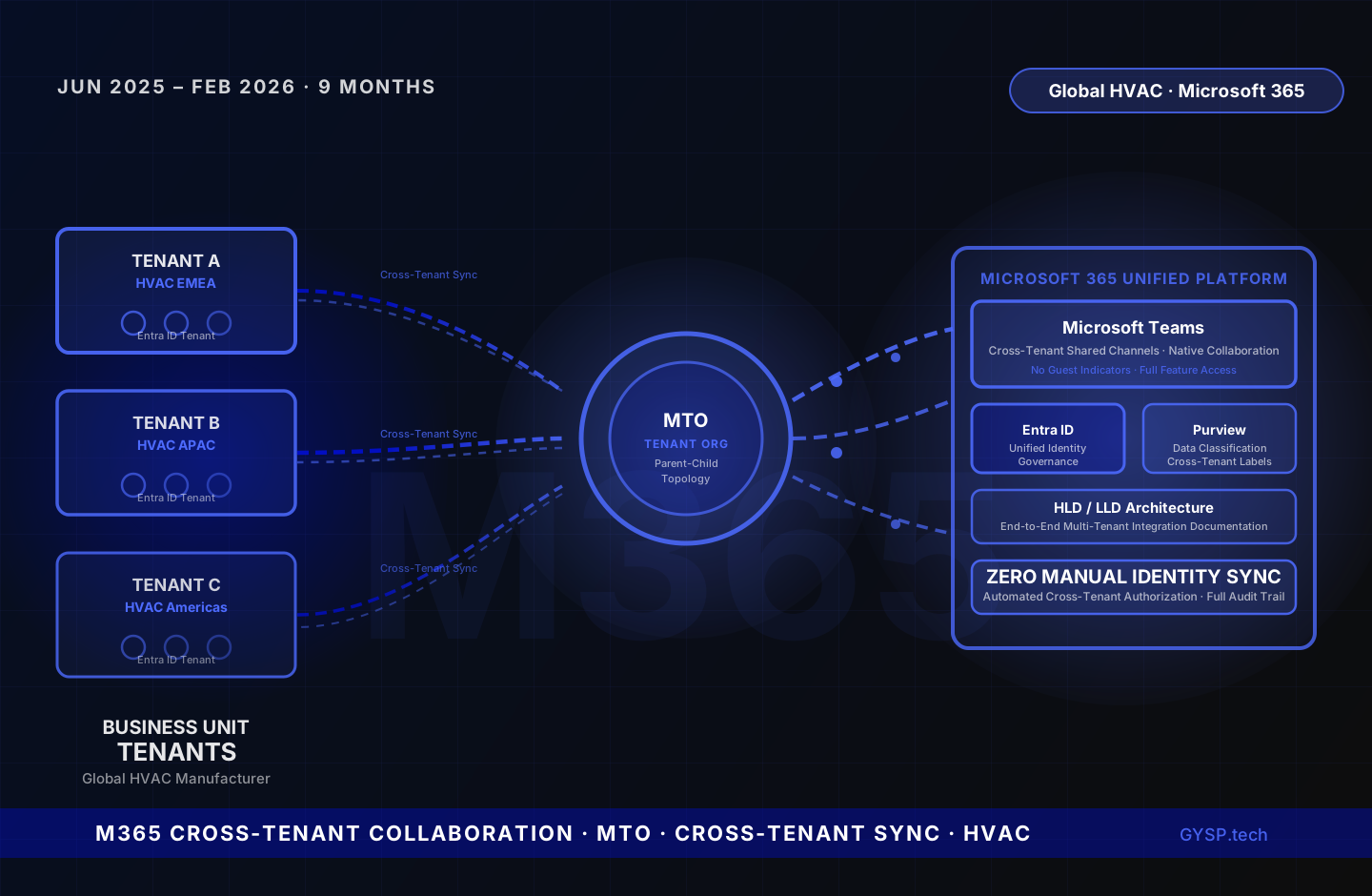
A global HVAC manufacturer operating across multiple regional business units needed a secure, unified collaboration platform, without merging their separate Microsoft 365 tenants. GYSP architected a multi-tenant M365 fabric using Microsoft Tenant Organization configurations and Cross-Tenant Sync rules, enabling fluid cross-border Teams collaboration and automated identity authorization across every organisational boundary.
Industry
Manufacturing & Industry 4.0
Key Result
Cross-Tenant Native Teams Collaboration Across All Business Units — No Guest Access Required
Primary Service
Multi-Tenant M365 Architecture
Core Stack
Microsoft 365, Microsoft Teams, Microsoft Entra ID
The Challenge
Large manufacturers that have grown through acquisition or regional expansion frequently operate multiple separate Microsoft 365 tenants: one per business unit, region, or legal entity. For this global HVAC manufacturer, this meant engineers in one region couldn't collaborate natively with counterparts in another, ad-hoc guest access workarounds were creating security and governance gaps, and cross-border resource sharing required manual intervention. The mandate was not simply enabling collaboration. It was doing so securely at scale, without merging tenants (which would require massive identity migration and carry significant operational risk), while enforcing corporate data-handling governance policies meeting the compliance requirements of multiple jurisdictions. Complex identity overlap, where users existed in multiple tenants or needed to authorize resources in tenants they didn't belong to, had to be resolved in a fully automated and auditable way.
Our Solution
Architected a multi-tenant Microsoft 365 collaboration fabric using Microsoft Tenant Organization (MTO) as the structural foundation, linking business unit tenants in a governed parent-child topology that enabled cross-tenant Teams shared channels and resource access. Cross-Tenant Synchronization rules were designed and implemented to automate identity propagation across tenant boundaries, making business unit users appear as synchronized members rather than external guests inside M365 services. Security collaboration policies and data-handling governance frameworks were established to govern what data could cross tenant boundaries, under what conditions, and with what audit controls. Comprehensive HLD/LLD architecture documentation was produced covering the full multi-tenant topology, sync rule logic, governance framework, and operational procedures.
29% of cloud spend is wasted on average. Find yours.
Key Deliverables
- Architected a secure multi-tenant Microsoft 365 and Teams collaboration fabric across disparate HVAC business units, enabling native cross-border collaboration without tenant mergers or identity migration risk
- Deployed Microsoft Tenant Organization (MTO) configurations linking business unit tenants in a governed parent-child topology, enabling cross-tenant shared channels and native resource access in Teams
- Implemented Cross-Tenant Synchronization rules automating identity propagation across tenant boundaries, eliminating guest access overhead and resolving complex multi-tenant identity overlap at scale
- Established corporate cloud governance models: security collaboration policies and data-handling governance frameworks governing cross-tenant data flows, access conditions, and audit trails
- Produced comprehensive HLD/LLD architecture documentation covering the full multi-tenant integration topology, sync rule design, and operational procedures for ongoing governance
Services Delivered
- Multi-Tenant M365 Architecture
- Cross-Tenant Identity Sync
- Microsoft Teams Governance
- Cloud Security & Compliance
Tech Stack
This engagement used Microsoft 365, Microsoft Teams, Microsoft Entra ID, Microsoft Tenant Organization (MTO), Cross-Tenant Synchronization, and 3 additional tools.
Frequently Asked Questions
What is Microsoft Tenant Organization (MTO) and why does a manufacturing company need it?+
Microsoft Tenant Organization is an M365 feature that links multiple Azure AD/Entra ID tenants into a governed parent-child topology, allowing users across tenants to collaborate in Teams shared channels and access M365 resources as near-native members rather than external guests. A global manufacturing company with separate M365 tenants per business unit, region, or acquired entity needs MTO to enable seamless operational collaboration, including engineering teams sharing design files, procurement accessing shared supplier channels, leadership accessing cross-BU reporting, without the security and governance gaps of unmanaged guest access, and without the operational risk of a full tenant merger.
What is Cross-Tenant Synchronization and how does it differ from standard guest access?+
Guest access (Azure AD B2B) invites external users into your tenant as guests, they appear with an external indicator, face feature restrictions in Teams, and require manual invitation management. Cross-Tenant Synchronization automatically provisions external business unit users as synchronised members within the target tenant's directory: they appear without a guest indicator, access the full Teams and M365 feature set, and are governed by defined sync rules rather than individual invitation workflows. For a global manufacturer with hundreds of cross-BU collaborators, this is the difference between a manageable, auditable identity architecture and an ungovernably large guest user directory that creates compliance exposure.
What does 'complex identity overlap' mean in a multi-tenant M365 environment?+
Identity overlap occurs when the same real-world user exists in multiple tenants, or when a user in Tenant A needs to be treated as an authorised member in Tenant B without being a true member of that tenant. In manufacturing, this happens with shared service functions, IT, Finance, Legal, that operate across business units, or executives who need access across all regional tenants. Cross-Tenant Sync resolves this by defining authoritative sync rules that determine precisely which identities are propagated where, and with what attributes and permissions, preventing duplicate accounts, authorisation conflicts, and compliance-violating access patterns across the multi-tenant estate.
What governance frameworks were established to control cross-tenant data flows?+
The governance framework defined what categories of data could cross tenant boundaries (project collaboration files, but not HR or financial records), under what conditions (authenticated, synced identities only, with no anonymous external sharing), and with what audit logging. Microsoft Purview information protection policies were applied to enforce data classification controls that persisted across tenant boundaries, ensuring confidential documents shared in cross-tenant Teams channels retained their protection labels and access controls regardless of which business unit's users accessed them.
Work with GYSP
Similar Manufacturing & Industry 4.0 challenge?
Get a free technical brief: architecture options, cost estimates, and a delivery timeline scoped to your challenge.
- 48-hour turnaround
- Senior engineers only
- No commitment required
Or call: +1 (929) 588-8364