Agricultural IoT Platform
A precision agriculture IoT platform needed a backend capable of ingesting live environmental data streams from climate monitoring sensors, managing structured operational records through analytics dashboards, and accommodating the schema flexibility that IoT payloads demand. GYSP architected the RESTful API layer, the dual-layer data architecture, and the UX prototypes from the ground up.
The Challenge
Precision agriculture operates at the intersection of two data problems that pull in opposite directions. Live environmental data streams — soil readings, climate events, sensor telemetry from third-party monitoring systems — arrive continuously, unpredictably, and with variable schema that doesn't fit neatly into a relational model. Structured operational data — field records, resource allocations, crop management cycles — demands the relational integrity and complex query support of a proper SQL layer. A single database layer can serve one of these well but not both. Building an API architecture that unified both layers transparently, while reliably consuming live streams from external environmental and climate monitoring software, required both backend architectural discipline and a clearly documented integration contract for every third-party connection — especially critical for a platform that would be developed and extended over 3.5 years by a team that needed to onboard and hand off cleanly throughout. On top of the backend complexity, the platform's users were agricultural domain experts, not technical users — requirements had to be translated from domain language into concrete workflow prototypes before any screen could be built.
Our Solution
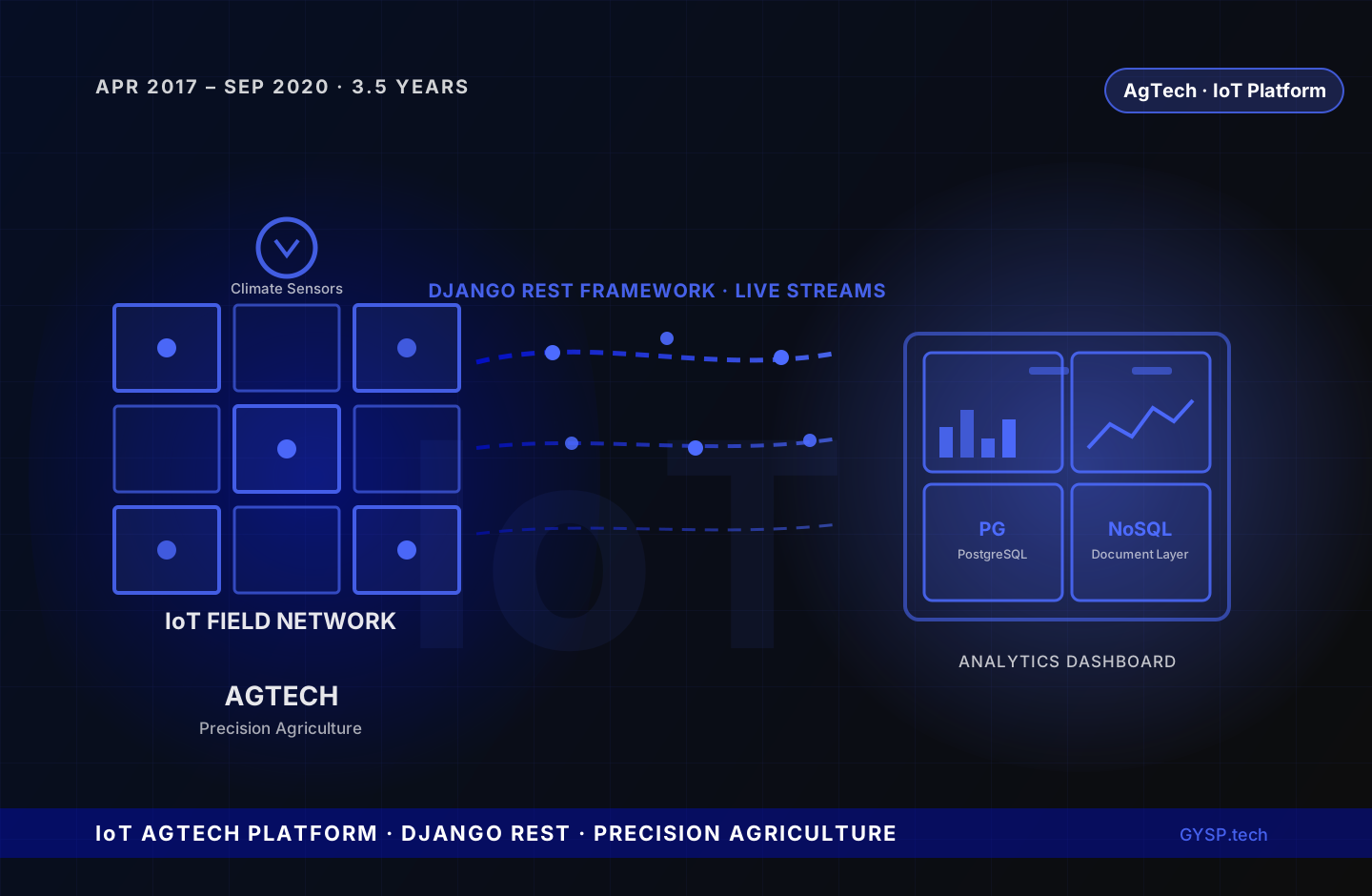
GYSP architected and deployed production-ready RESTful APIs using Django REST Framework, providing the unified interface through which analytics dashboards and resource management CRUD loops interacted with both data layers simultaneously. A dual-layer data architecture was designed and built: PostgreSQL handled structured operational data — field records, resource allocations, and the relational queries powering analytics dashboards; a flexible document-based NoSQL layer absorbed the variable-schema payloads arriving from live IoT sensor streams. Customised database migration and seeding scripts managed complex schema transformations between the two layers throughout the platform's evolution, keeping data consistent as the schema changed across nearly three and a half years of active development. Resilient, heavily documented API clients were built to consume live, continuous data streams from third-party environmental and climate monitoring software — handling stream continuity, error recovery, and the documentation discipline required for multi-developer work over a long engagement. On the product side, GYSP translated client requirements into detailed Figma user journey mockups and workflow prototypes, giving agricultural stakeholders a concrete, interactive blueprint before development committed to any UI implementation. DRY architecture principles were applied consistently throughout: APIs designed for reuse and extension from the outset, streamlining both team onboarding and technical handoffs across the entire 3.5-year platform lifecycle.
Facing a similar challenge? Get a no-commitment technical brief.
Get free briefKey Deliverables
- Production-ready RESTful APIs architected using Django REST Framework, powering analytics dashboards and resource management CRUD loops
- Dual-layer data architecture designed — PostgreSQL for structured operational data, NoSQL document layer for flexible live IoT sensor payloads
- Customised database migration and seeding scripts managing complex schema transformations between structured and document-based layers
- Resilient, heavily documented API clients built to consume live, continuous data streams from third-party environmental and climate monitoring software
- Detailed Figma user journey mockups and workflow prototypes translating agricultural stakeholder requirements into concrete product blueprints
- DRY architecture principles applied throughout — APIs designed for reuse and extension, enabling clean onboarding and handoffs across a 3.5-year engagement
Services Delivered
- RESTful API Architecture
- Data Layer Engineering
- Third-Party API Integration
- UX Prototyping
Tech Stack
Frequently Asked Questions
What is Django REST Framework and why is it suited for IoT platform APIs?+
Django REST Framework (DRF) is a Python toolkit for building Web APIs on top of the Django web framework. It's particularly suited for IoT platform APIs because it provides serialization, authentication, and viewset patterns that handle the high-volume, structured API traffic from multiple concurrent clients — analytics dashboards, resource management interfaces, and inbound stream consumers — without requiring custom boilerplate for each endpoint.
Why does a precision agriculture IoT platform need both PostgreSQL and NoSQL data layers?+
The two data types in precision agriculture have fundamentally different structural requirements. Operational records — field allocations, resource management cycles, user accounts — have fixed schemas and relational dependencies that PostgreSQL handles well. IoT sensor and telemetry payloads from environmental and climate monitoring systems have variable, unpredictable schemas that change as sensor types are added or updated — a document-based NoSQL layer absorbs that flexibility without requiring schema migrations every time the sensor landscape changes.
How were third-party environmental and climate monitoring streams integrated reliably?+
GYSP built API clients designed specifically for live, continuous stream consumption rather than standard request-response patterns — handling stream continuity, connection recovery on interruption, and error classification so that a transient third-party outage didn't corrupt the platform's data state. Each integration was heavily documented as part of the build, ensuring any developer joining the platform later could understand the integration contract without reverse-engineering it.
What does UX prototyping in Figma contribute to an IoT platform development process?+
Agricultural domain experts understand their workflows deeply but not always in terms that translate directly into software requirements. Figma user journey mockups and workflow prototypes gave stakeholders something concrete to react to — specific screens, flows, and interaction patterns — so requirements could be validated and refined before any code was committed to a UI. This reduced costly late-stage changes and gave the development team a precise blueprint rather than open-ended requirements.
Work with GYSP
Want results like these?
Get a free technical brief — architecture options, cost estimates, and a delivery timeline tailored to your challenge.
- 48-hour turnaround
- Senior engineers only
- No commitment required
Or call: +1 (929) 588-8364
