Construction Technology Platform, North America
A construction industry technology platform needed an integration layer connecting dozens of partner systems — each with its own data format and protocol — without breaking live data flows every time a new partner came online.
The Challenge
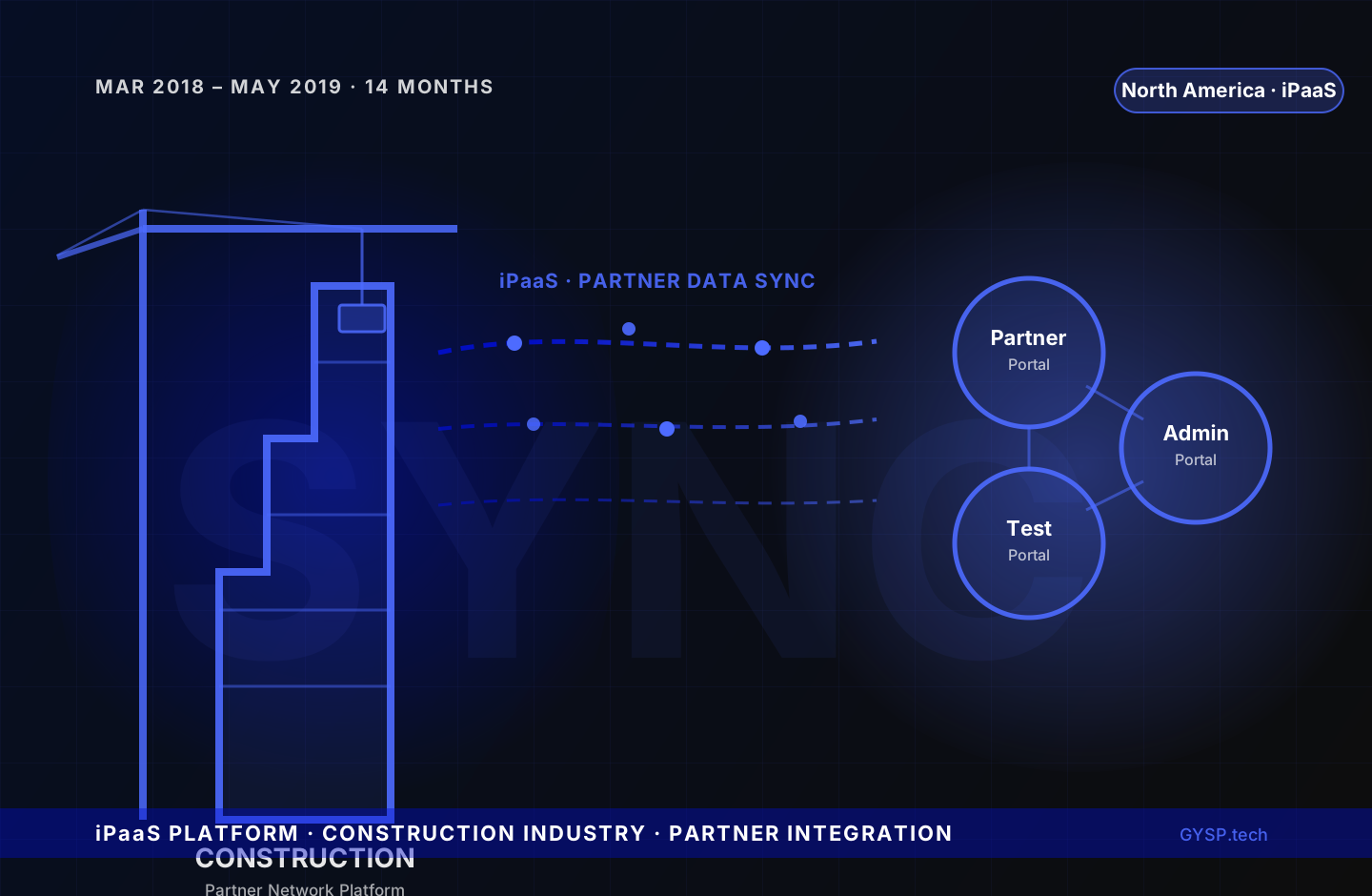
Construction is one of the most fragmented industries in enterprise software: general contractors, subcontractors, material suppliers, and equipment vendors each run their own systems — ERPs, supplier portals, inventory platforms — with no shared data layer between them. The platform needed an iPaaS (Integration Platform as a Service) capable of synchronizing data reliably between these disparate partner systems through standardised APIs, alongside the internal admin tooling needed to manage the partner network and a dedicated test portal to validate every new integration before it went live. The risk profile was unforgiving: every new partner onboarded introduced a different schema, a different protocol, a different failure mode, and a single bad integration could silently corrupt data flowing between two live trading partners. On top of that, the platform operated under a weekly release cadence with stringent deadlines, and the business's existing finance and operations reporting ran on legacy Microsoft Office-based workflows that could not simply be replaced — they had to be integrated with the new platform without disrupting the daily reporting processes teams already depended on.
Our Solution
As Tech Lead, GYSP architected and built the backend APIs powering the partner, test, and admin portals — the integration backbone synchronizing data between each partner's system and the central platform. A dedicated test framework was engineered specifically to validate new partner integrations end-to-end — schema validation, sync correctness, and regression coverage — before any integration could be promoted to production, removing the risk of a new partner onboarding silently breaking existing live data flows. CI/CD pipelines were integrated directly with this test framework so every code change was automatically validated before deployment, supporting the weekly release cadence without sacrificing reliability. Daily code reviews were instituted across the engineering team to enforce architectural consistency and code quality at the pace the release schedule demanded. Full ownership extended across architecture and business logic design, requirements analysis, production issue triage, and new feature delivery. To bridge the new platform with the business's existing finance and operations workflows, enterprise reporting was integrated with Microsoft Office automation using Object Models and COM Interop — allowing the legacy Office-based reporting teams relied on daily to consume data from the new platform without requiring a disruptive rebuild of those workflows.
Facing a similar challenge? Get a no-commitment technical brief.
Get free briefKey Deliverables
- Backend APIs architected and built for partner, test, and admin portals — the integration backbone synchronizing data across disparate partner systems
- Dedicated test framework engineered to validate every new partner integration end-to-end before promotion to production
- CI/CD pipelines integrated directly with the test framework, automating validation on every code change
- Daily code reviews instituted across the engineering team to sustain code quality at a weekly release cadence
- Enterprise Microsoft Office workflows integrated via Object Models and COM Interop — bridging new platform data with legacy finance and operations reporting
- Full architecture and business logic ownership, from requirements analysis through production issue resolution
- Weekly production releases sustained under stringent deadlines for 14 months without a live partner sync failure
Services Delivered
- Custom Software Development
- API Development
- Test Automation
- CI/CD Engineering
Tech Stack
Frequently Asked Questions
What is iPaaS and why did this construction platform need one?+
iPaaS (Integration Platform as a Service) is a layer that synchronizes data between disparate systems through standardised APIs, without requiring each system to integrate directly with every other one. The construction platform's partners — general contractors, subcontractors, material suppliers, and equipment vendors — each ran their own ERPs and portals with no shared data layer, so an iPaaS was necessary to reliably synchronize data across the entire partner network as it scaled.
How was the test framework designed to validate new partner integrations?+
GYSP built a dedicated test framework that validated every new partner integration end-to-end before it could be promoted to production — covering schema validation, sync correctness, and regression coverage against existing live integrations. This removed the risk of a new partner's data format or protocol silently breaking data flows for partners already live on the platform, and was integrated directly into the CI/CD pipeline so validation ran automatically on every change.
What is COM Interop and why was it used to integrate Microsoft Office automation?+
COM Interop is a .NET capability that allows code to programmatically drive Microsoft Office's Object Model — automating Word, Excel, and other Office applications as if a user were operating them directly. GYSP used it to bridge the new iPaaS platform with the business's existing Microsoft Office-based finance and operations reporting, allowing those legacy workflows to consume data from the new platform without forcing a disruptive rebuild of reporting processes teams relied on daily.
How did the team sustain weekly releases while maintaining code quality?+
Three disciplines ran in parallel: a test framework that automatically validated every change before deployment, CI/CD pipelines that enforced those checks as a deployment gate, and daily code reviews across the engineering team to catch architectural and quality issues before they reached production. Together, these sustained a weekly release cadence for 14 months without a single live partner sync failure.
Work with GYSP
Want results like these?
Get a free technical brief — architecture options, cost estimates, and a delivery timeline tailored to your challenge.
- 48-hour turnaround
- Senior engineers only
- No commitment required
Or call: +1 (929) 588-8364