LLM Integration & Fine-Tuning
Connect and customise foundation models for your exact use case.
AI integration services that embed GPT-4o, Claude, Gemini and open-source LLMs into your enterprise systems, with fine-tuning on proprietary data, prompt engineering, guardrails, and end-to-end observability for production reliability.
What We Deliver
Core Capabilities
- LLM API Integration (OpenAI, Anthropic, Google, Mistral, Llama)
- Fine-Tuning on Proprietary Data (LoRA, RLHF, DPO)
- Prompt Engineering & Optimisation
- Guardrails, Safety Controls & PII Filtering
- LLM Observability, Cost Tracking & Evaluation
- Multi-Model Orchestration (LangChain, LlamaIndex)
Ready to get started?
Get a free technical brief — architecture options, timelines, and cost estimates delivered within 48 hours. No commitment required.
- 01Submit your challenge≈ 1 min
- 02Receive your Technical BriefWithin 48h
- 03Discovery call — no obligationOptional
Or call us: +1 (929) 588-8364
By the Numbers
What clients achieve with GYSP
covering API integration, prompt engineering, guardrails, observability, and handover — fine-tuning projects add two to four weeks depending on dataset size
achieved by routing queries to the most cost-efficient model tier and caching repeated prompt patterns, without sacrificing output quality
measured on client-defined evaluation sets for specialised tasks where prompt engineering alone does not meet the quality threshold
Proven Results
LLM Integration Case Studies
 HealthTech
Global Life Sciences & Healthcare Platform
A life sciences platform needed to automate regulatory document auditing, process multi-terabyte genomic datasets, and ingest live medical device streams, all in production, all at the same time. GYSP built the full stack: LLMOps multi-agent pipelines, distributed Spark genomics, and real-time Flink sensor ingestion.
 EdTech
Gen-AI Education Platform
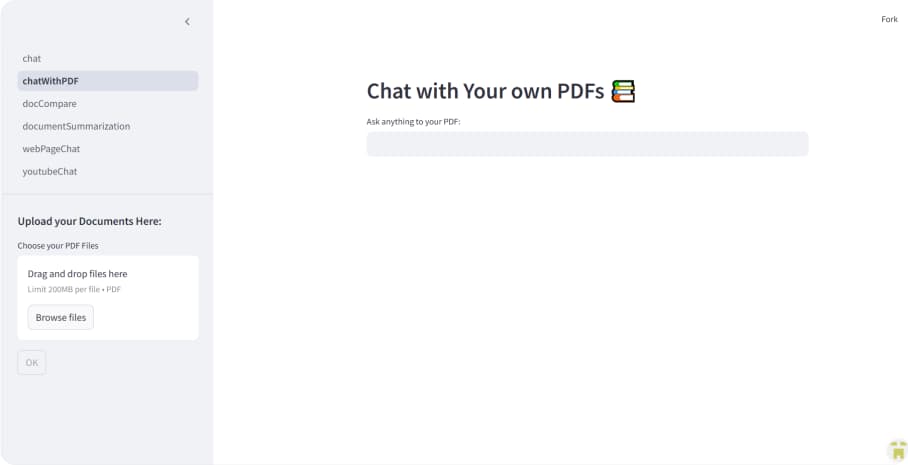
Users were spending hours manually searching across PDFs, videos, and web pages. The question: could a single AI interface replace all of it, accurately, at enterprise scale?
 FinTech
Global Financial Services Group
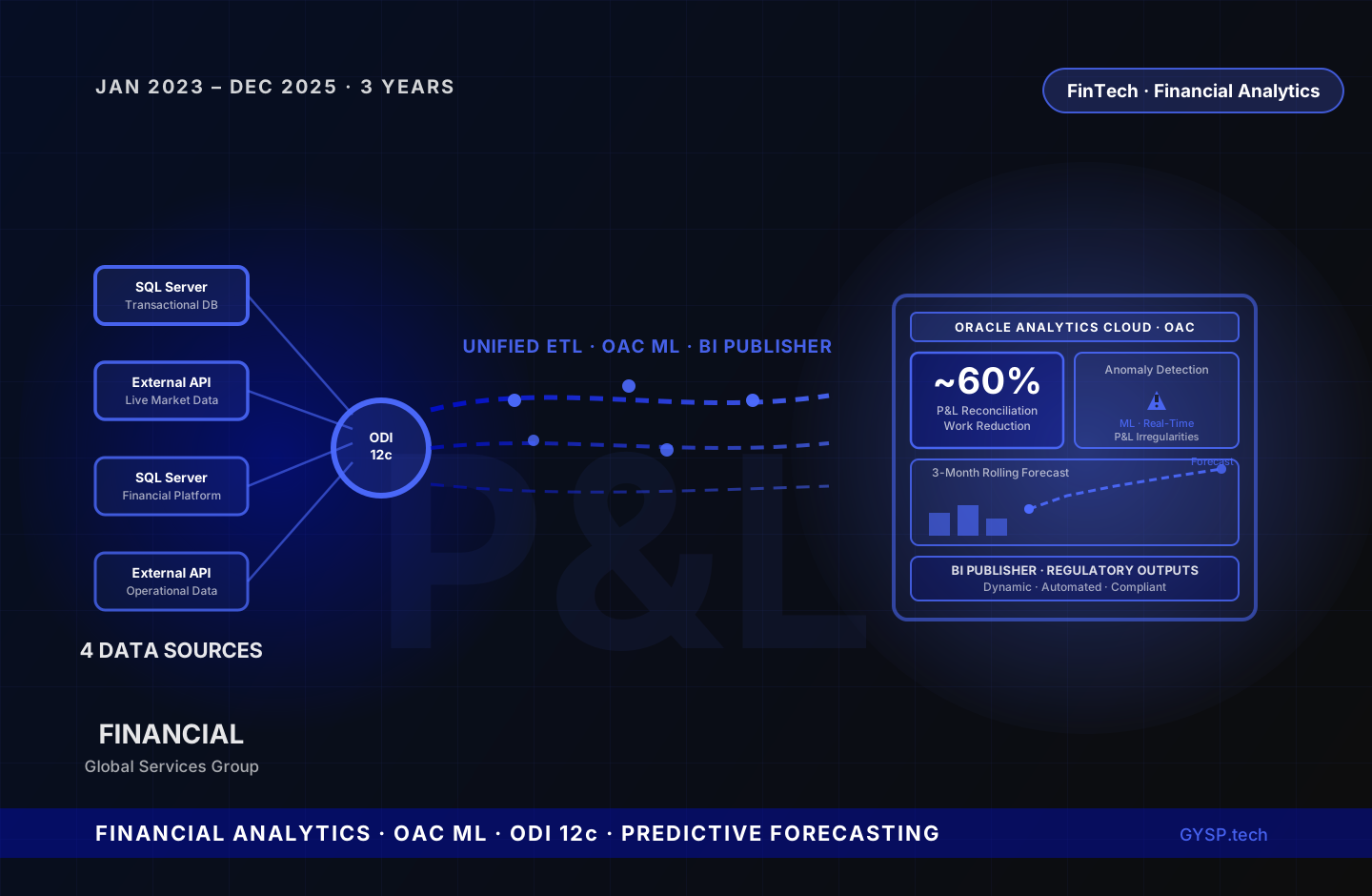
A global financial services group was spending significant analyst bandwidth on manual P&L reconciliation across 4 disparate data systems, with no anomaly detection, no forward-looking forecast, and regulatory reports still produced from static spreadsheets. GYSP unified the data layers on ODI 12c, reduced reconciliation work by 60%, deployed OAC ML anomaly detection on live P&L pipelines, and built rolling 3-month commercial forecasting, all within a single integrated analytics architecture.
Industry Expertise
Industries We Serve with LLM Integration
FAQs
Common questions
Everything buyers typically ask before starting a llm integration engagement.
Ask us anythingWhen should we fine-tune rather than use prompt engineering?
Most enterprise teams achieve strong results from prompt engineering and RAG before fine-tuning becomes necessary. Our AI integration services begin with an evaluation phase — we test the base model against your use case, identify where prompt engineering falls short, and recommend fine-tuning only when domain-specific accuracy consistently requires it. Fine-tuning is most valuable for specialised style, tone, or vocabulary that cannot be injected at query time.
Which LLM providers and models do you integrate?
We integrate OpenAI (GPT-4o, o1, o3), Anthropic (Claude 3.5 and 4), Google (Gemini 1.5, 2.0), Mistral, Meta Llama, and Cohere, as well as open-source models self-hosted on AWS, Azure, or GCP. Model selection is driven by your latency requirements, cost envelope, data-residency rules, and output quality benchmarks.
How do you protect sensitive data during LLM integration?
We implement PII scrubbing before data reaches any model API, role-based prompt access controls, audit logging of every inference call, and output filtering for harmful or off-topic responses. For regulated industries we scope an on-premises or VPC-isolated deployment where no data leaves your environment.
What does LLM observability include?
We instrument every integration with token-level cost tracking, latency percentiles, prompt and completion logging, hallucination rate baselines, and drift alerts when model outputs degrade. Dashboards surface these in real time so your team can catch regressions before they reach end users.
How long does a typical LLM integration project take?
Our AI integration services follow a structured delivery: a two-week discovery and model evaluation sprint, a four-to-six-week build phase covering API integration, prompt engineering, guardrails, and observability, then a two-week hardening and handover. Most production-ready integrations ship in eight to ten weeks. Fine-tuning projects add two to four weeks depending on dataset size and evaluation cycles.
Let's build something together
Get a free technical brief on your llm integration challenge — architecture, timeline, and cost estimate in 48 hours.
Get Free Technical Brief