5G Telecom Giant, Thailand
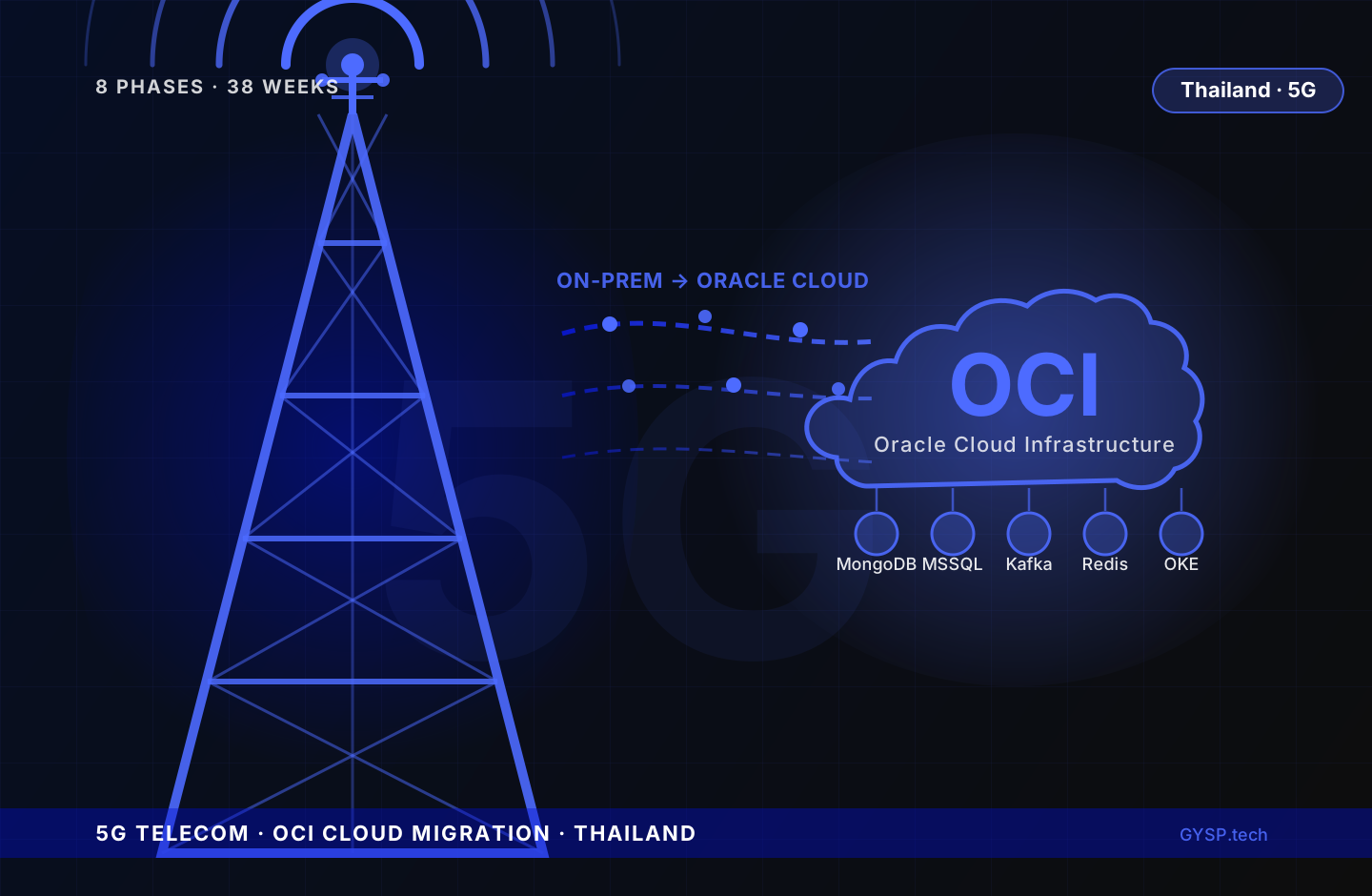
A national 5G telecom leader in Thailand needed to migrate an entire on-premises platform to Oracle Cloud Infrastructure — across four heterogeneous data systems, with zero production downtime, and a mandate to build a reusable blueprint for 11 more sites to follow.
The Challenge
Thailand's largest 5G telecom operator runs infrastructure at national scale — 5G networks, digital services, and subscriber data across millions of users. The migration challenge wasn't simply moving workloads; it was re-platforming a heterogeneous stack of four distinct data systems (MSSQL, MongoDB, Redis, Kafka) simultaneously, without disrupting live telecom services. Every architectural decision carried a second constraint: this was the first of twelve sites requiring migration, meaning the design had to function as a reusable, Terraform-driven blueprint — not a one-off solution. The on-premises environment lacked the elastic capacity needed for 5G growth, manual deployment processes were creating release bottlenecks, and Thailand's PDPA data protection regulations alongside NBTC telecom compliance requirements imposed strict data residency and audit obligations that had to be embedded into the OCI architecture from day one. A mandatory two-week holiday freeze fell mid-way through PROD cutover — requiring a phased cutover strategy designed to pause safely and resume cleanly without rollback risk.
Our Solution
GYSP designed and delivered a full OCI cloud architecture from scratch — an intentional re-platform, not a lift-and-shift. Phase 1 began with a full Architecture Assessment and HLD/LLD design, establishing an OCI Landing Zone aligned to Oracle's reference architecture and customised for the client's network topology, security policies, and PDPA compliance requirements. Terraform Infrastructure-as-Code and Oracle DevOps pipelines were engineered to automate the entire provisioning stack, producing a fully auditable and repeatable deployment framework. Database migrations were executed concurrently across all four platforms: MSSQL migrated to OCI Autonomous Database, MongoDB to OCI ADB JSON, Redis to OCI Cache with TTL-aware configuration, and Kafka re-platformed (not lifted) to OCI Streaming — with producers and consumers validated at the protocol level to catch incompatibilities before production. All microservices were containerised and deployed to OKE (Oracle Kubernetes Engine) using Blue/Green deployment strategies to achieve zero production downtime at cutover. A DR setup and live DR Drill were delivered in Phase 7 to validate active-passive failover. The full delivery artefact set — Terraform modules, runbooks, SOPs, test scripts, and migration playbooks — was structured as a reusable framework explicitly designed to accelerate the remaining 11 site migrations.
Facing a similar challenge? Get a no-commitment technical brief.
Get free briefKey Deliverables
- Full OCI Landing Zone designed from scratch — customised to PDPA, NBTC compliance, and client network topology
- MSSQL → OCI ADB, MongoDB → OCI ADB JSON, Redis → OCI Cache — four concurrent heterogeneous database migrations
- Kafka re-platformed to OCI Streaming with full producer/consumer protocol validation (not lift-and-shift)
- All microservices containerised on OKE with Blue/Green deployment for zero-downtime PROD cutover
- Terraform IaC + Oracle DevOps pipelines delivering fully automated, auditable cloud provisioning
- Migration framework engineered as a reusable blueprint for 11 remaining sites in the programme
Services Delivered
- Cloud Architecture
- OCI Migration
- Infrastructure as Code
- DevOps Engineering
Tech Stack
Frequently Asked Questions
How did GYSP migrate 5G telecom infrastructure to Oracle Cloud with zero downtime?+
GYSP used Blue/Green deployment on Oracle Kubernetes Engine (OKE) to eliminate downtime at cutover. All four database systems — MSSQL, MongoDB, Redis, and Kafka — were migrated concurrently with full protocol-level validation before production traffic was switched. A phased cutover strategy also accommodated a mandatory two-week holiday freeze mid-programme, designed to pause safely and resume cleanly without rollback risk.
What is an OCI Landing Zone and why does it matter for enterprise migrations?+
An OCI Landing Zone is a pre-configured, security-hardened cloud foundation within Oracle Cloud Infrastructure. For this telecom migration, GYSP customised it to the client's network topology, PDPA data protection requirements, and NBTC telecom compliance obligations — embedding security and governance from day one rather than retrofitting them post-migration.
Can the same OCI migration framework be reused across multiple sites?+
Yes. GYSP engineered every artefact — Terraform modules, runbooks, SOPs, test scripts, and migration playbooks — as a reusable framework from the outset. The AIS Thailand engagement established a validated blueprint now being applied across 11 additional sites in the programme, with each migration inheriting the proven architecture.
How long does an OCI cloud migration of this scale typically take?+
The engagement was delivered across 8 phases in 38 weeks — covering architecture assessment and HLD/LLD design, OCI Landing Zone provisioning, four concurrent database migrations, microservice containerisation on OKE, UAT, a live disaster recovery drill, and production cutover — including a built-in pause for a mandatory holiday freeze mid-programme.
Work with GYSP
Want results like these?
Get a free technical brief — architecture options, cost estimates, and a delivery timeline tailored to your challenge.
- 48-hour turnaround
- Senior engineers only
- No commitment required
Or call: +1 (929) 588-8364
Services Used
More Telecom Case Studies
 Telecom
British Telecom
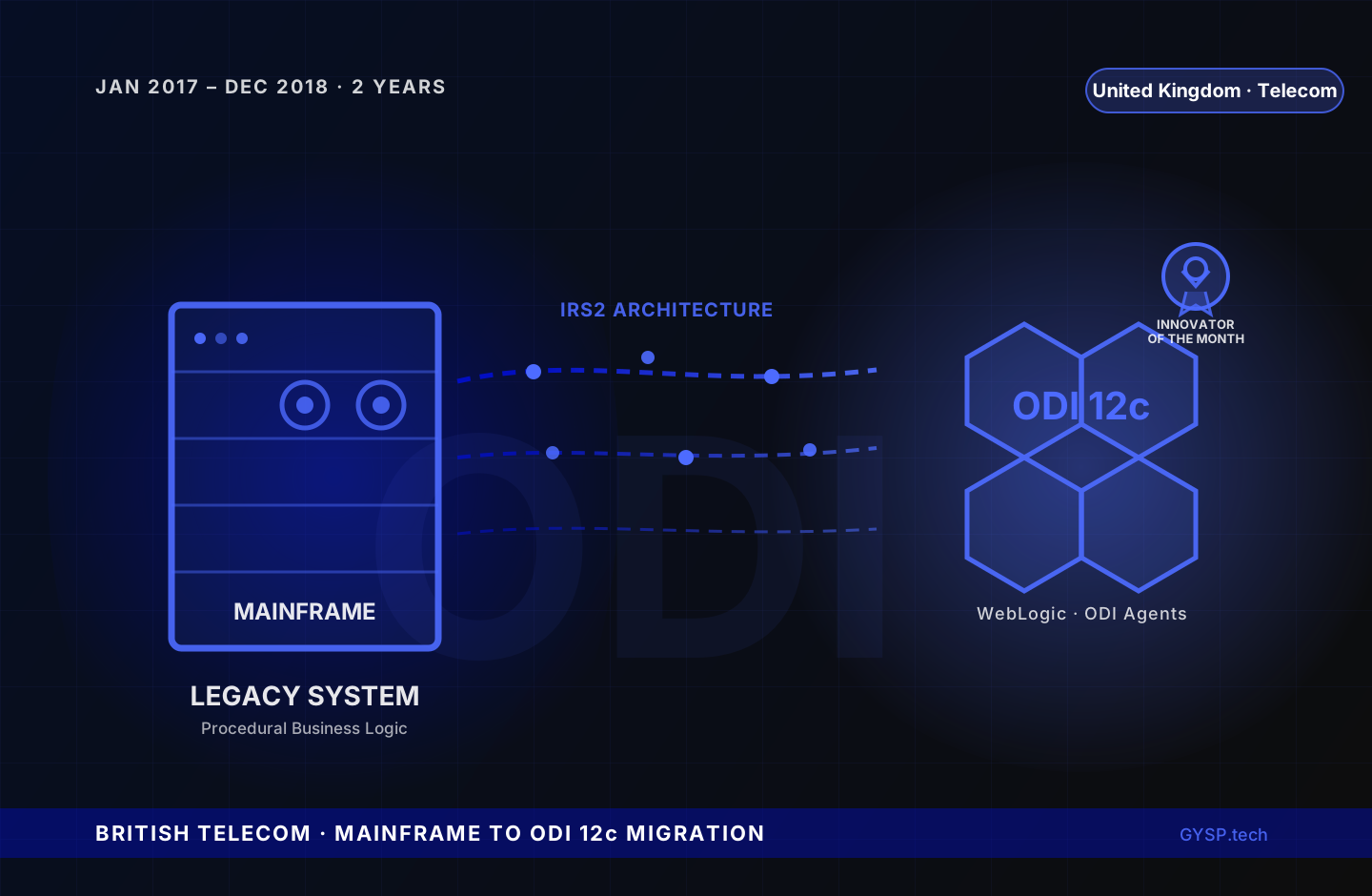
British Telecom needed to retire a legacy Mainframe platform without losing decades of embedded business logic. As ODI Lead, GYSP re-architected the system on Oracle Data Integrator 12c — work recognised internally with British Telecom's "Innovator of the Month" award.
 Telecom
Enterprise Telecom BSS/OSS Platform
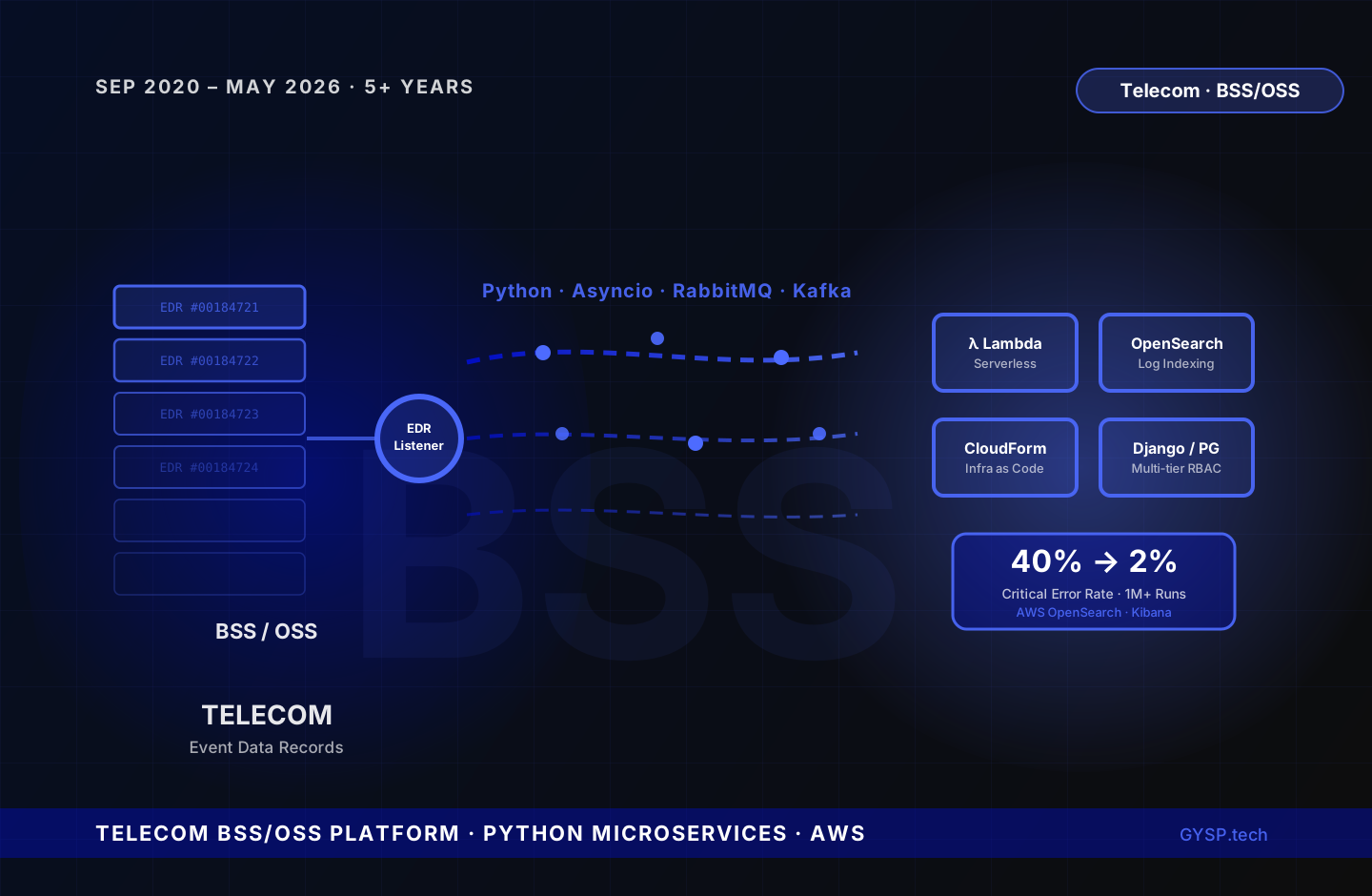
A telecom BSS/OSS platform processing millions of Event Data Records was failing at a 40% critical error rate. Over a 5+ year engagement, GYSP led the development of its core async microservices, cut critical errors to 2%, and scaled the platform across AWS infrastructure without accumulating the system bottlenecks that kill throughput at telecom load.
