Industrial Manufacturing Company
Azure to OCI Migration: AKS, Oracle EBS and Oracle ADB
An industrial manufacturer running Oracle E-Business Suite for procurement, inventory, and order management on Azure needed to consolidate their Oracle stack on OCI to eliminate licensing overhead and resolve EBS latency under peak planning cycles.
Industry
Manufacturing & Industry 4.0
Key Result
Zero Production Downtime at Cutover
Primary Service
Cloud Migration
Core Stack
Azure AKS, Oracle Kubernetes Engine (OKE), Terraform
The Challenge
The client operated Oracle E-Business Suite across Manufacturing, Procurement, Finance, and Order Management modules on Azure virtual machines, supported by a fleet of .NET microservices on Azure AKS. Oracle Database 19c running on Azure VMs required full processor licensing with no cloud discount pathway, making their Oracle database spend significantly higher than OCI equivalents. Under peak month-end and year-end planning cycles, EBS workloads showed latency attributed to Oracle running outside its native hardware environment. With Oracle licensing consuming a growing share of cloud budget and EBS performance degrading at volume, the client needed to migrate their full application stack to OCI to unlock BYOL savings, improve EBS throughput on OCI bare metal, and consolidate their Oracle ERP infrastructure under Oracle's own cloud.
Our Solution
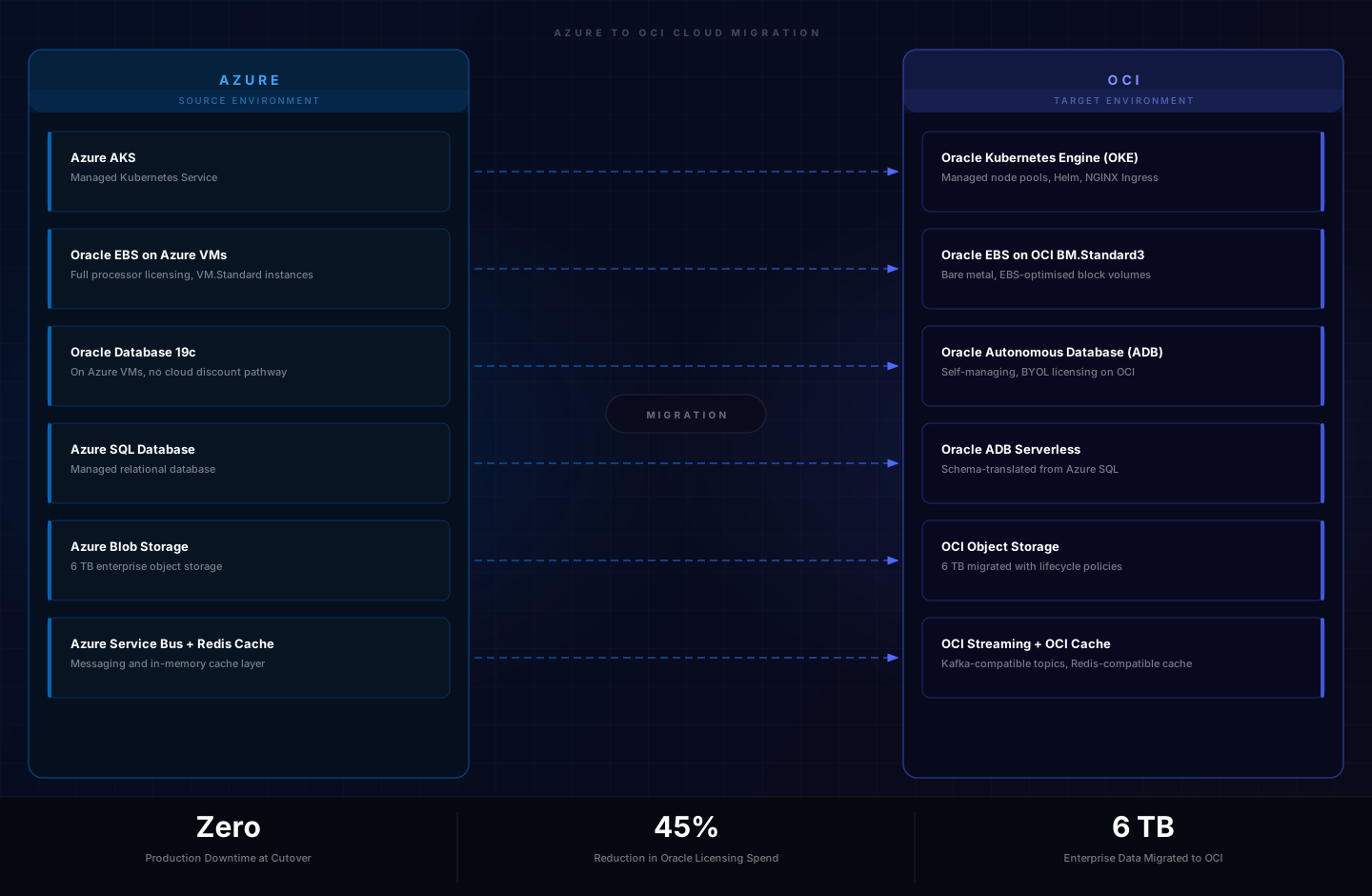
GYSP designed and executed a phased Azure-to-OCI migration across three environments. The engagement opened with OCI Landing Zone provisioning via Terraform, establishing VCN, compartments, NSGs, IAM dynamic groups, and OCI Vault. Container workloads moved from Azure AKS to Oracle Kubernetes Engine with Helm-managed deployments, NGINX Ingress, and cert-manager. Oracle E-Business Suite was lifted and shifted to OCI BM.Standard3 bare metal instances with EBS-specific block volume sizing and concurrent processing node configuration. Oracle Database 19c migrated to Oracle Autonomous Database with full schema validation and EBS-representative query benchmarking. Azure SQL databases were schema-translated to Oracle ADB Serverless. Six terabytes of Azure Blob Storage was synchronised to OCI Object Storage with lifecycle policies and integrity verification. Azure Service Bus was replaced with OCI Streaming and Azure Cache for Redis with OCI Cache. A wave-based cutover with dual-run validation windows kept all three environments live throughout.
29% of cloud spend is wasted on average. Find yours.
Key Deliverables
- OCI Landing Zone provisioned via Terraform with VCN, compartments, NSGs, IAM dynamic groups, and OCI Vault
- Azure AKS migrated to Oracle Kubernetes Engine (OKE) with NGINX Ingress, cert-manager, and Helm
- Oracle EBS migrated from Azure VMs to OCI BM.Standard3 with EBS-specific block volume and concurrent processing configuration
- Oracle Database 19c migrated to Oracle Autonomous Database with schema validation and EBS query benchmarking
- Azure SQL Database migrated to Oracle ADB Serverless with schema translation and connectivity testing
- 6 TB of Azure Blob Storage migrated to OCI Object Storage with lifecycle policies and integrity validation
- Azure Service Bus replaced with OCI Streaming with topic, partition, and consumer group parity
- Wave-based cutover across three environments with UAT, smoke testing, and post-launch hypercare support
Services Delivered
- Cloud Migration
- OCI Architecture
- Kubernetes Migration
- Database Migration
- DevOps Engineering
Tech Stack
This engagement used Azure AKS, Oracle Kubernetes Engine (OKE), Terraform, Helm, NGINX Ingress, and 14 additional tools.
Frequently Asked Questions
Why do manufacturers migrate Oracle EBS from Azure to OCI?+
Oracle E-Business Suite on Azure runs on virtual machines that require full Oracle processor licensing with no cloud discount pathway. On OCI, manufacturers can apply existing Oracle processor licenses through the Bring Your Own License (BYOL) programme, significantly reducing the cost of running Oracle EBS at scale. Oracle also tunes its database engine specifically for OCI hardware, so EBS workloads including manufacturing planning, order management, and financial close cycles run at lower latency on OCI than on Azure. For manufacturers running month-end and year-end ERP cycles, this performance difference is material.
How do you migrate from Azure AKS to Oracle Kubernetes Engine without downtime?+
The migration uses a parallel-run approach. Container images are rebuilt and pushed to OCI Container Registry. Helm charts are adapted for OKE-specific configuration, including OCI Load Balancer integration and OCI Block Volume storage classes. Workloads are deployed to OKE staging environments for full regression testing before any traffic moves. DNS-based routing then shifts traffic incrementally to OKE while the Azure AKS cluster remains active. Only after UAT and smoke testing pass on OKE is the AKS cluster decommissioned.
How was Oracle EBS migrated from Azure to OCI bare metal?+
Oracle EBS on Azure VMs was migrated using a lift-and-shift approach to OCI BM.Standard3 bare metal instances, which provide the dedicated compute and memory profile Oracle recommends for EBS production workloads. The migration covered EBS application tier servers, Oracle Database 19c backend, concurrent processing nodes, and shared file system reconfiguration. Block volumes were sized to Oracle EBS I/O recommendations and the EBS application URL was updated to OCI load balancer endpoints. Post-migration benchmarks against EBS-representative manufacturing and finance workloads confirmed lower latency under peak load compared to the Azure baseline.
How do you migrate Azure Blob Storage to OCI Object Storage at scale?+
Objects are transferred from Azure Blob containers to OCI Object Storage buckets using parallel transfer tooling, with MD5 checksums validated at the object level after each batch. Bucket lifecycle policies and access controls are recreated as equivalent OCI policies and IAM compartment rules. For large datasets like the 6 TB volume in this engagement, transfers are staged across migration waves to avoid saturating network throughput. A final delta sync runs during the application freeze window to capture objects written after the initial bulk transfer, ensuring full data consistency at cutover.
Work with GYSP
Similar Manufacturing & Industry 4.0 challenge?
Get a free technical brief: architecture options, cost estimates, and a delivery timeline scoped to your challenge.
- 48-hour turnaround
- Senior engineers only
- No commitment required
Or call: +1 (929) 588-8364