Tier-1 Retail Bank, United Kingdom
Open Banking API Migration on GCP — Zero Disruption
Ahead of the UK's January 2018 Open Banking deadline, a tier-1 retail bank needed to migrate its legacy platform to containerized, multi-region cloud infrastructure on GCP without disrupting live banking operations or missing a single regulatory milestone.
Industry
FinTech
Key Result
100% On-Time PSD2 / Open Banking Compliance
Primary Service
Cloud Architecture
Core Stack
GCP, Kubernetes, Docker
The Challenge
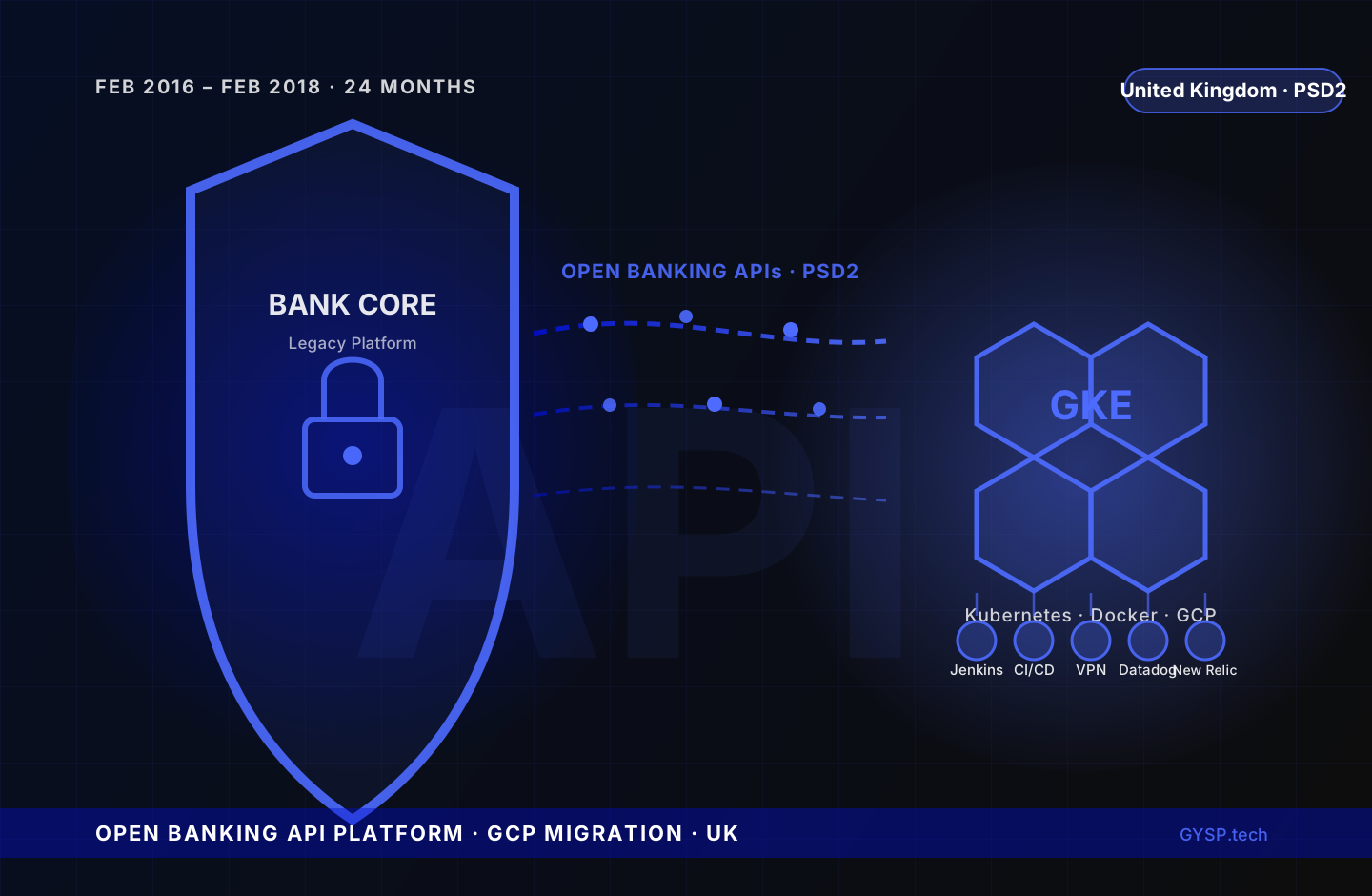
In January 2018, the UK's Open Banking standard came into force, mandating the country's nine largest banks (CMA9) to expose secure, standardised APIs giving regulated third-party providers access to customer account information and payment initiation, under the EU's revised Payment Services Directive (PSD2). Meeting that deadline meant more than building new endpoints: the bank's core platform was running on a legacy, monolithic on-premises architecture that had never been designed for external, third-party API consumption at scale. Every component built for Open Banking needed to operate under bank-grade security and compliance constraints, network segmentation, encrypted transport, strict data residency, while the underlying platform was simultaneously being re-platformed onto containerized infrastructure to support the throughput and global availability the new API surface would demand. The engineering team carried two compounding pressures throughout the two-year programme: a fixed regulatory deadline that could not slip, and a weekly production release cadence that had to continue on a live banking platform handling real customer financial data. Any production issue, a failed deployment, a network misconfiguration, a missed compliance control, carried regulatory exposure as well as reputational risk.
Our Solution
GYSP's senior engineering team led the migration of the bank's legacy services to a fully containerized environment on Google Cloud Platform, using Kubernetes and Docker to re-platform monolithic services into independently deployable microservices capable of supporting standardised Open Banking API traffic. Secure, scalable CI/CD pipelines were built around a Linux-based Jenkins release process, automating build, test, and deployment stages while enforcing the security gates required for enterprise-grade banking deployments. Infrastructure provisioning was automated end-to-end, enabling repeatable, audited multi-region deployments that gave the platform global availability rather than a single-region point of failure. Network architecture was hardened specifically for Open Banking compliance: firewalls, subnets, and VPN gateways were configured to enforce strict data residency and segmentation between the bank's internal systems and the externally-facing API surface. Datadog and New Relic were instrumented across the platform to give the team real-time visibility into system health, enabling proactive incident resolution before issues reached customers, critical given the weekly release cadence sustained throughout the engagement. Beyond infrastructure, GYSP's engineers owned full-cycle feature delivery: architecture and business logic design, coding, unit and integration testing, production issue analysis, and backend integration with the bank's Microsoft Office-based reporting and automation workflows used for internal compliance and operations reporting.
29% of cloud spend is wasted on average. Find yours.
Key Deliverables
- Legacy monolithic banking platform re-platformed to containerized microservices on GCP using Kubernetes and Docker, ahead of the UK's January 2018 Open Banking deadline
- Secure, scalable CI/CD pipelines built on a Linux-based Jenkins release process, enabling enterprise-grade deployments without compromising release velocity
- Multi-region infrastructure provisioning automated end-to-end for global application availability and resilience
- Network architecture hardened with firewall, subnet, and VPN gateway configuration to meet Open Banking data residency and segmentation requirements
- Datadog and New Relic instrumented platform-wide for proactive incident detection ahead of customer impact
- Weekly production releases sustained for two years without a single missed regulatory milestone
- Backend integration delivered with Microsoft Office-based reporting and automation workflows for internal compliance operations
Services Delivered
- Cloud Architecture
- Containerization & Kubernetes
- CI/CD Engineering
- Network & Compliance Security
Tech Stack
This engagement used GCP, Kubernetes, Docker, Jenkins, Datadog, and 4 additional tools.
Frequently Asked Questions
What is Open Banking and why did it require a cloud migration?+
Open Banking is the UK's implementation of the EU's revised Payment Services Directive (PSD2), which from January 2018 required the nine largest UK banks (CMA9) to expose secure, standardised APIs giving regulated third parties access to customer account information and payment initiation. The bank's legacy, monolithic on-premises platform had never been built for external, third-party API consumption at the scale and security level the regulation demanded, making a re-platform to containerized cloud infrastructure necessary rather than optional.
How was the legacy banking platform containerized without disrupting live operations?+
GYSP re-platformed monolithic services into independently deployable microservices on Kubernetes and Docker, running on Google Cloud Platform. A Linux-based Jenkins CI/CD pipeline automated build, test, and deployment stages with security gates appropriate for banking-grade releases, allowing the team to sustain a weekly production release cadence throughout the two-year migration without introducing instability into a live platform handling real customer financial data.
How was network security and compliance handled for Open Banking APIs?+
Network architecture was hardened specifically for Open Banking compliance: firewalls, subnets, and VPN gateways were configured to enforce strict data residency and segmentation between the bank's internal systems and the externally-facing API surface. This ensured the new API endpoints exposed to regulated third parties met PSD2's security and data protection requirements from day one, rather than retrofitting controls after launch.
How did the team maintain weekly releases on a live banking system for two years?+
Datadog and New Relic were instrumented across the platform to give the engineering team real-time visibility into system health, enabling proactive incident resolution before issues reached customers. Combined with disciplined unit and integration testing, automated CI/CD deployment gates, and root-cause analysis of production issues as they arose, the team sustained a weekly release cadence for the full two-year engagement without missing a regulatory milestone.
Work with GYSP
Similar FinTech challenge?
Get a free technical brief: architecture options, cost estimates, and a delivery timeline scoped to your challenge.
- 48-hour turnaround
- Senior engineers only
- No commitment required
Or call: +1 (929) 588-8364
More FinTech Case Studies
 FinTech
Global FinTech SaaS Company
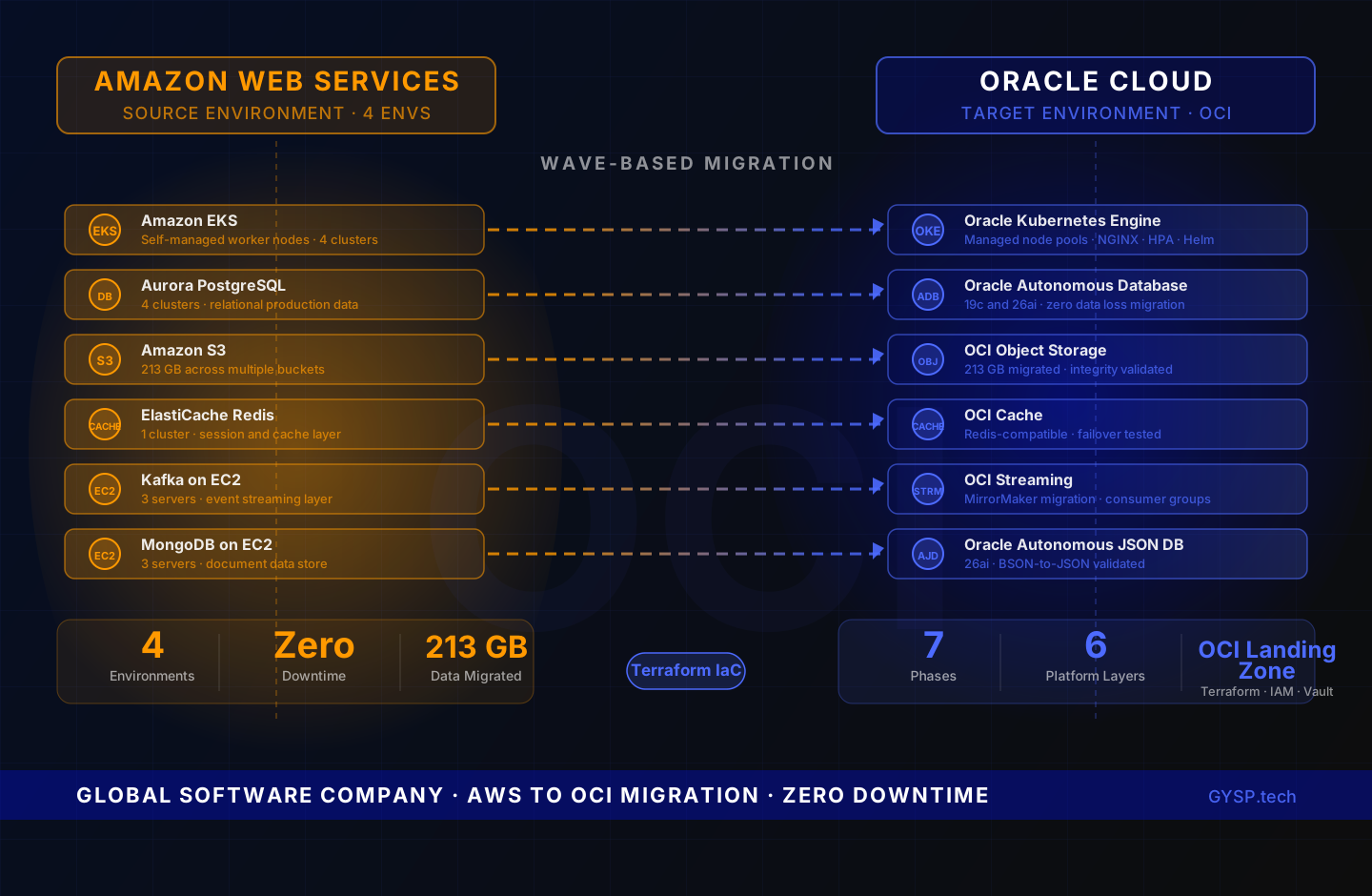
A global software company running business-critical workloads across four AWS environments needed a full-stack migration to Oracle Cloud Infrastructure: containers, databases, messaging, caching, and object storage, without disrupting production operations.
 FinTech
DotPe
Growing transaction volumes, three active compliance frameworks, and a full AWS-to-GCP migration, all without a single major service outage. The stakes were high for this fintech platform.
 FinTech
Options Trading Platform
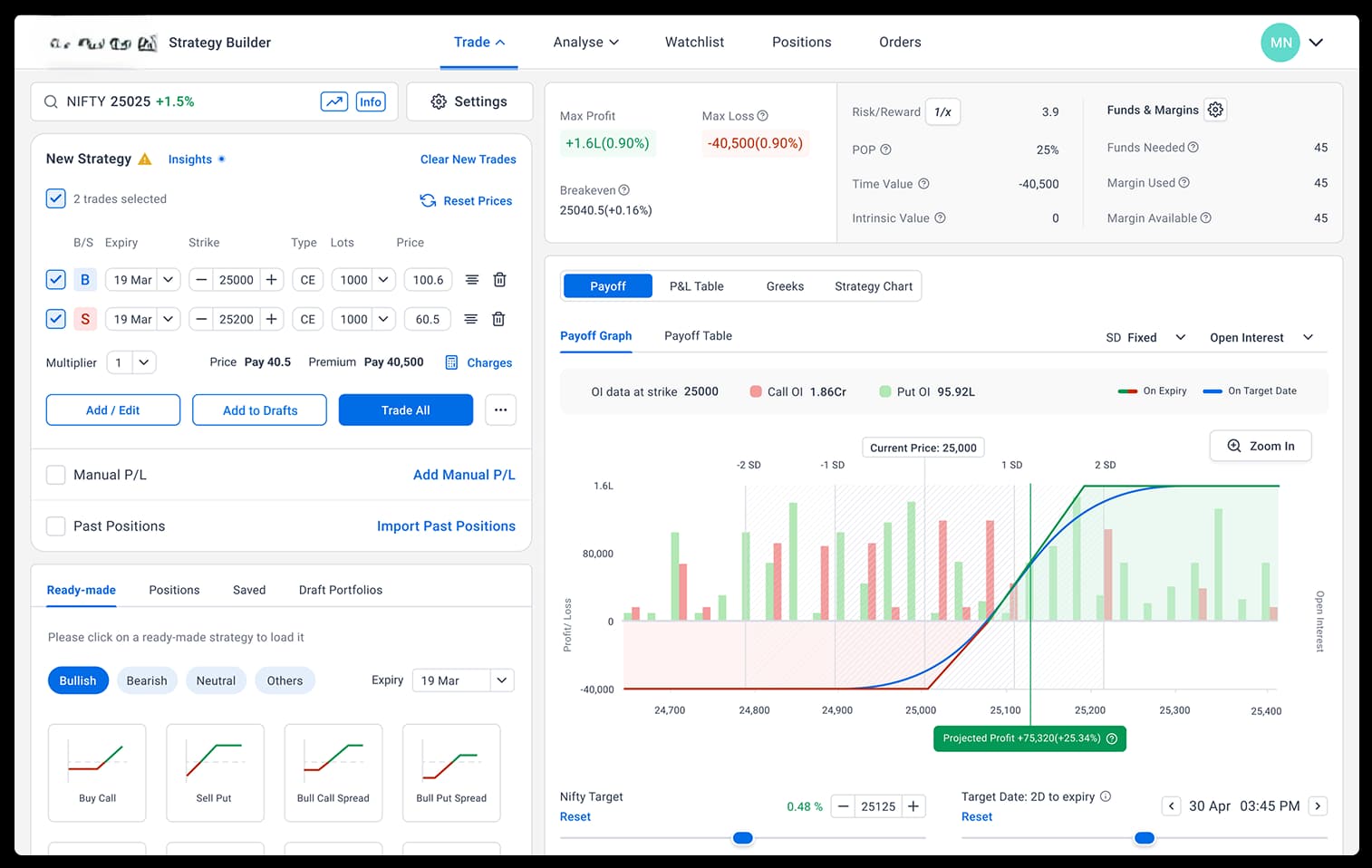
Retail traders were making high-stakes decisions with manual calculations and static charts. They needed the kind of strategy tools professional desks take for granted, built for the masses.
