Options Trading Platform
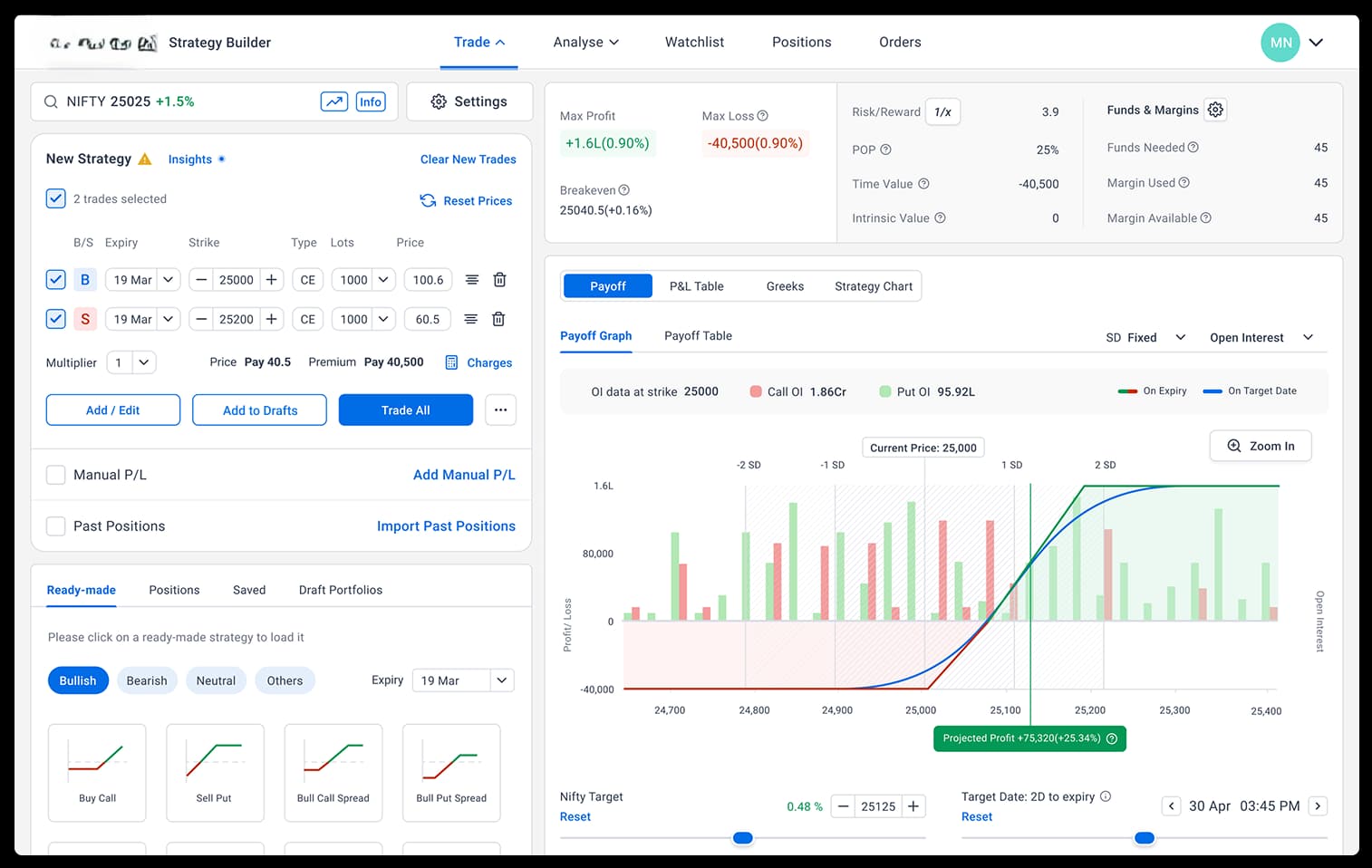
Retail traders were making high-stakes decisions with manual calculations and static charts. They needed the kind of strategy tools professional desks take for granted — built for the masses.
The Challenge
A fintech company needed to empower retail traders with tools that professional desks take for granted — visual strategy builders, historical backtesting, and real-time risk-reward analysis. Traders were making decisions based on manual calculations that were slow, error-prone, and causing missed opportunities. The platform needed to be intuitive, cross-device, and secure enough to handle sensitive financial data.
Our Solution
GYSP built a custom AI-powered options strategy platform featuring a flexible strategy builder, a forecasting engine integrating historical market datasets, and risk-reward analysis calculators highlighting breakeven points and probability metrics. The UI was designed for speed and clarity — intuitive enough for retail traders but powerful enough for sophisticated strategies. A low-latency backend was optimised for financial data security, with encrypted data handling and secure authentication throughout.
Facing a similar challenge? Get a no-commitment technical brief.
Get free briefKey Deliverables
- Custom strategy builder with flexible, visual interface for options structuring
- AI forecasting engine integrating historical market data for backtesting
- Risk-reward calculators with breakeven points and probability metrics
- Responsive, cross-device UI designed for speed and trader intuitiveness
- Low-latency backend optimised for real-time financial data processing
- Encrypted data handling and secure authentication for compliance
Services Delivered
- AI/ML Development
- Web Development
- Custom Software Development
Tech Stack
Frequently Asked Questions
What is backtesting and why is it important for options traders?+
Backtesting means running an options strategy against historical market data to see how it would have performed before risking real capital. GYSP's platform integrates historical market datasets into a forecasting engine that lets traders test strategies across different market conditions, volatility regimes, and time windows — giving retail traders the same validation capability that professional trading desks take for granted.
How did GYSP build an AI forecasting engine for options strategies?+
The forecasting engine integrates historical market datasets covering price, volatility, and volume data, processed through Python-based models to identify statistical patterns and simulate strategy outcomes. Rather than providing a single prediction, it generates a distribution of probable outcomes across different scenarios — giving traders a probabilistic view of risk and reward before entering a position.
How does GYSP ensure security for sensitive financial data in trading platforms?+
GYSP applied encrypted data handling for all financial data at rest and in transit, with secure authentication including session management and token expiry built into the application layer. The low-latency backend was architected on AWS and GCP with network-level access controls separating the data layer from the application layer — ensuring user financial information and trading history cannot be accessed without proper authentication and authorisation.
What is risk-reward analysis and how was it implemented for retail traders?+
Risk-reward analysis quantifies the potential upside versus potential loss of an options strategy — expressed as the profit and loss at expiry across a range of underlying prices. GYSP built interactive calculators that visualise the P&L profile of any configured strategy, highlight breakeven points, and display probability metrics (probability of profit, probability of max loss) — giving retail traders a clear picture of what they risk and what they stand to gain before executing.
Work with GYSP
Want results like these?
Get a free technical brief — architecture options, cost estimates, and a delivery timeline tailored to your challenge.
- 48-hour turnaround
- Senior engineers only
- No commitment required
Or call: +1 (929) 588-8364
Services Used
More FinTech Case Studies
 FinTech
DotPe
Growing transaction volumes, three active compliance frameworks, and a full AWS-to-GCP migration — all without a single major service outage. The stakes were high for this fintech platform.
 FinTech
Tier-1 Retail Bank, United Kingdom
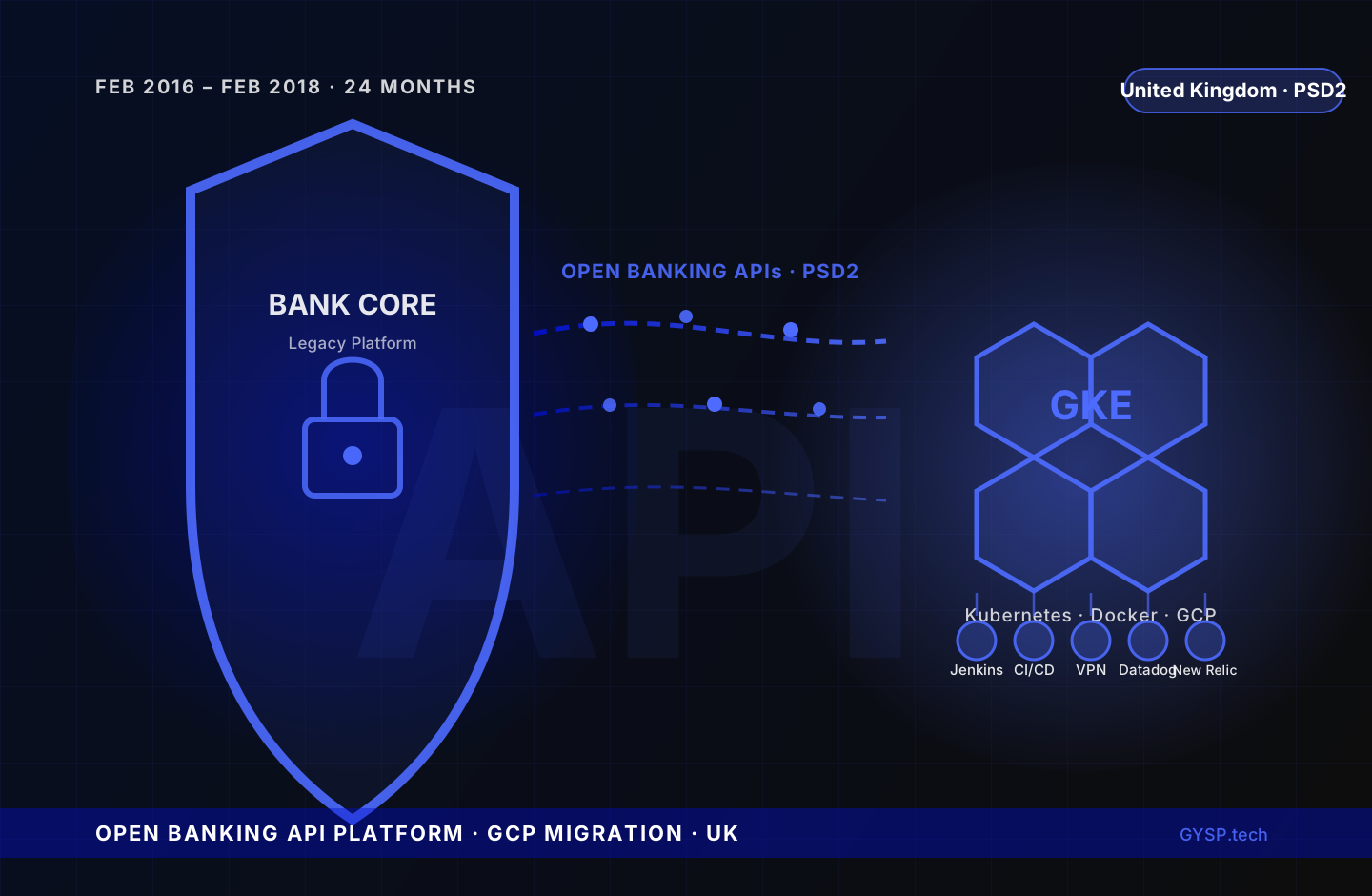
Ahead of the UK's January 2018 Open Banking deadline, a tier-1 retail bank needed to migrate its legacy platform to containerized, multi-region cloud infrastructure on GCP — without disrupting live banking operations or missing a single regulatory milestone.
 FinTech
Global Financial Services Group
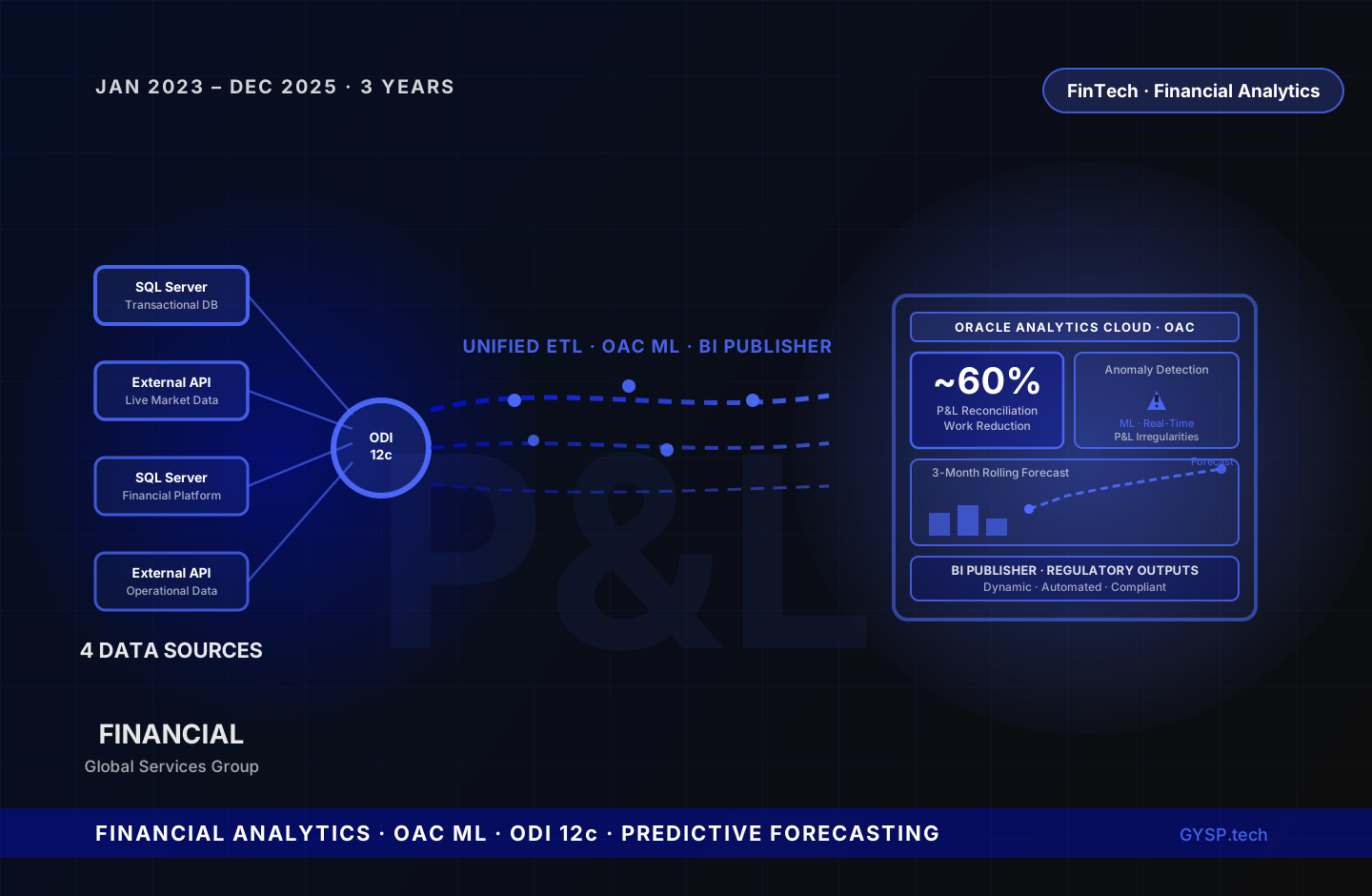
A global financial services group was spending significant analyst bandwidth on manual P&L reconciliation across 4 disparate data systems, with no anomaly detection, no forward-looking forecast, and regulatory reports still produced from static spreadsheets. GYSP unified the data layers on ODI 12c, reduced reconciliation work by 60%, deployed OAC ML anomaly detection on live P&L pipelines, and built rolling 3-month commercial forecasting — all within a single integrated analytics architecture.
