Enterprise Telecom Giant
Oracle Cloud Data Migration — Zero Mismatches
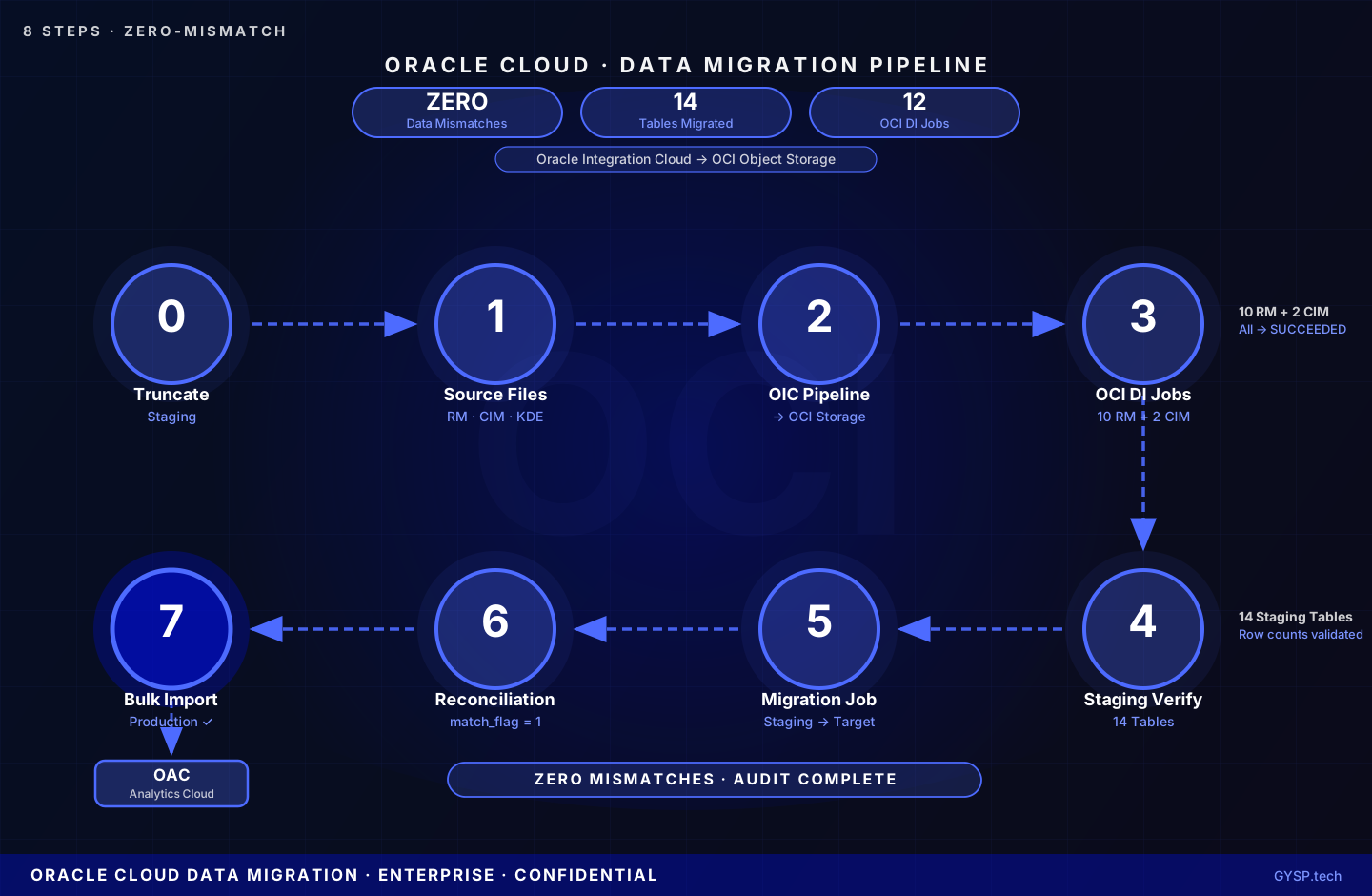
A confidential enterprise client engaged GYSP as a dedicated Oracle resource to architect and execute an 8-phase Oracle Cloud data migration, moving Revenue Management and Customer Information Management data through a validated pipeline, achieving zero data mismatches across 14 staging tables.
Industry
Enterprise Technology
Key Result
Zero Data Mismatches at Reconciliation
Primary Service
Oracle Cloud Migration
Core Stack
Oracle Integration Cloud (OIC), OCI Data Integration, OCI Object Storage
The Challenge
The engagement required migrating two critical Oracle data domains, Revenue Management (RM) and Customer Information Management (CIM), from legacy on-premises systems to Oracle Cloud, across 14 interdependent staging tables. The pipeline had to integrate KDE source file repositories, Oracle Integration Cloud (OIC) for orchestration, OCI Object Storage for file staging, and 12 OCI Data Integration jobs (10 RM, 2 CIM), each requiring individual monitoring and targeted rerun capability without full pipeline restart. The environment contained accumulated data quality issues including duplicate contacts and scheduled bulk import job errors across all 14 tables, which had to be identified and remediated during UAT before production migration could proceed. The reconciliation standard was absolute: zero mismatches at match_flag validation level, with any discrepancy requiring root-cause analysis and full upstream re-execution before cutover approval could be sought.
Our Solution
GYSP delivered the engagement as a dedicated Oracle resource, owning the full migration pipeline from staging environment preparation through to production bulk import. Step 0 established a provably clean baseline by truncating all staging tables and confirming zero row counts before any data movement began. Source files were validated against naming, size, and format specifications before KDE upload. OIC orchestrated file transfer to OCI Object Storage and triggered all 12 DI pipelines, each monitored individually to SUCCEEDED status, with targeted reruns applied for any failure rather than full pipeline restarts. Row counts across all 14 staging tables were captured and tracked in the Legacy Import Tracker at every phase for full auditability. Reconciliation output files in OCI Object Storage were analysed at record level. A match_flag = 1 confirmed data fidelity; any match_flag = 0 triggered immediate root-cause investigation and upstream re-execution. The final bulk import step was executed only after explicit stakeholder approval, with live monitoring for duplicate and lock errors, followed by final row count comparison against reconciliation baselines and sample record validation. Oracle Analytics Cloud (OAC) was configured as the analytics and reporting layer over the migrated Oracle Fusion dataset, enabling stakeholders to visualise migrated data, validate integrity post-cutover, and generate the audit-ready reports required for sign-off.
29% of cloud spend is wasted on average. Find yours.
Key Deliverables
- 8-phase structured migration pipeline (Step 0–7) with rollback-safe design and full audit trail
- 12 OCI Data Integration jobs (10 RM + 2 CIM) individually monitored and validated to SUCCEEDED status
- Zero data mismatches at reconciliation, match_flag = 1 confirmed across all records before cutover
- UAT defect resolution: duplicate contact removal and bulk import job error remediation across 14 tables
- Legacy Import Tracker maintained throughout all phases for row-count auditability per stakeholder
- Oracle Analytics Cloud (OAC) configured as the post-migration analytics and reporting layer over Oracle Fusion data
- Executive Summary reports generated and uploaded at each milestone, complete artefact set preserved for audit
Services Delivered
- Oracle Cloud Migration
- Data Engineering
- OCI Architecture
- Oracle Analytics Cloud (OAC)
- UAT & QA
Tech Stack
This engagement used Oracle Integration Cloud (OIC), OCI Data Integration, OCI Object Storage, Oracle Analytics Cloud (OAC), Oracle Scheduler, and 3 additional tools.
Frequently Asked Questions
What is Oracle Integration Cloud (OIC) and how is it used in data migration?+
Oracle Integration Cloud (OIC) is Oracle's managed integration platform for orchestrating data flows between systems. In this engagement, OIC handled file transfer from KDE source repositories to OCI Object Storage and triggered all 12 OCI Data Integration jobs, acting as the central orchestration layer coordinating the entire migration pipeline, with each job monitored individually to SUCCEEDED status.
What does zero data mismatch mean in Oracle Cloud migration?+
Zero data mismatches means every migrated record matched the target system at reconciliation, confirmed by match_flag = 1 across all rows in the reconciliation output files in OCI Object Storage. Any match_flag = 0 result triggered immediate root-cause investigation and full upstream re-execution. This engagement achieved zero mismatches across all 14 staging tables before production cutover approval was sought.
What is Oracle Analytics Cloud (OAC) used for after data migration?+
Oracle Analytics Cloud (OAC) was configured as the analytics and reporting layer over the migrated Oracle Fusion dataset. Post-cutover, it enabled stakeholders to visualise the migrated data, validate integrity against pre-migration baselines, and generate the audit-ready reports required for final sign-off.
How does GYSP ensure data integrity during an Oracle Cloud migration?+
GYSP's 8-phase approach builds integrity validation into every step. Step 0 truncates all staging tables to establish a clean baseline. The Legacy Import Tracker captures row counts per table at every phase. Reconciliation is performed at record level via match_flag validation, and any discrepancy triggers root-cause analysis and upstream re-execution. Production cutover proceeds only after zero mismatches are confirmed and explicit stakeholder approval is received.
Work with GYSP
Similar Enterprise Technology challenge?
Get a free technical brief: architecture options, cost estimates, and a delivery timeline scoped to your challenge.
- 48-hour turnaround
- Senior engineers only
- No commitment required
Or call: +1 (929) 588-8364
More Enterprise Technology Case Studies
 Enterprise Technology
Global Professional Services Firm
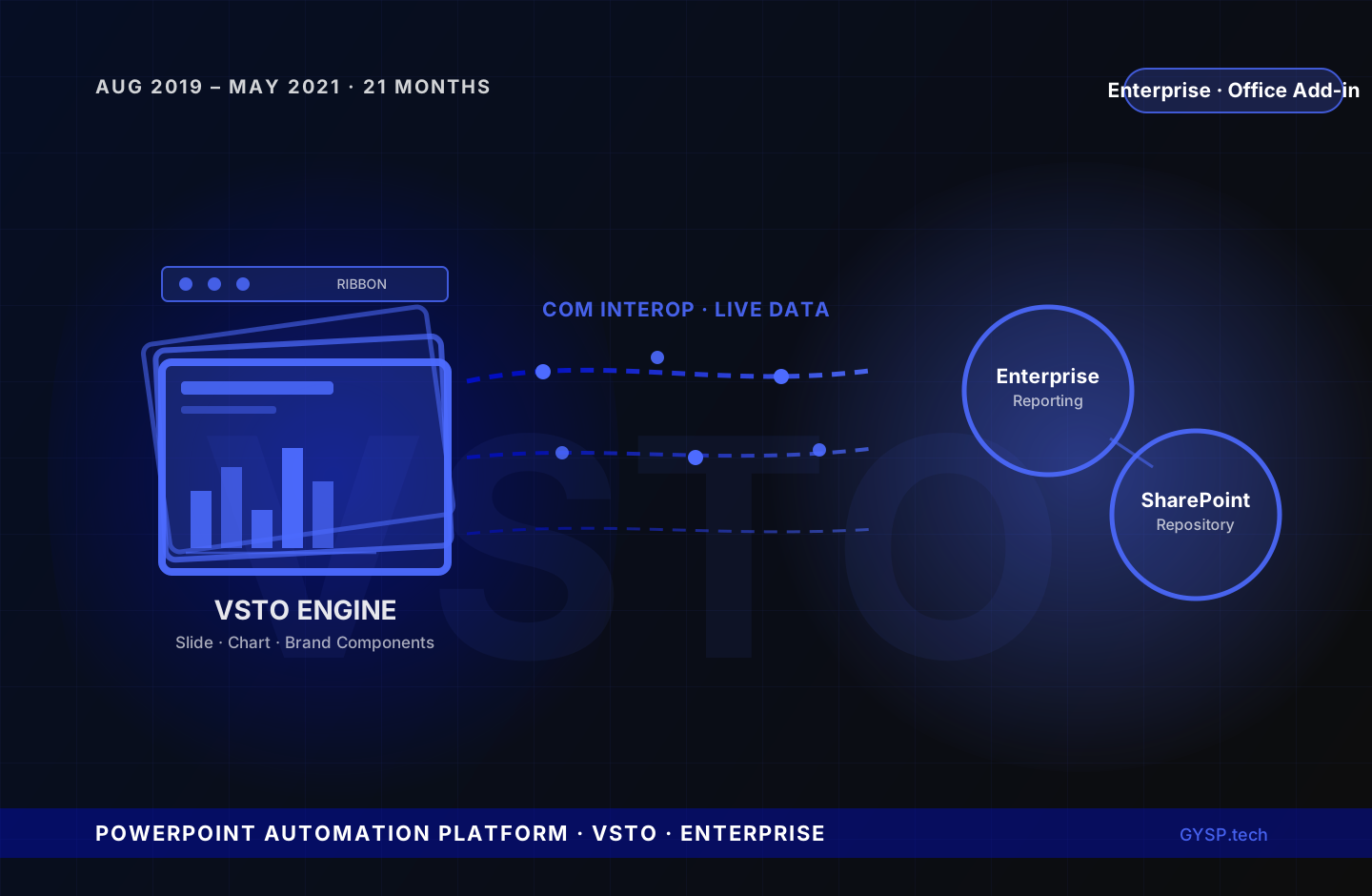
Business teams were losing hours per proposal manually rebuilding slides, charts, and formatting from scratch. GYSP built a native PowerPoint automation platform that generated branded, data-accurate decks directly inside the tool teams already used every day.
 Enterprise Technology
Confidential Global Enterprise Client
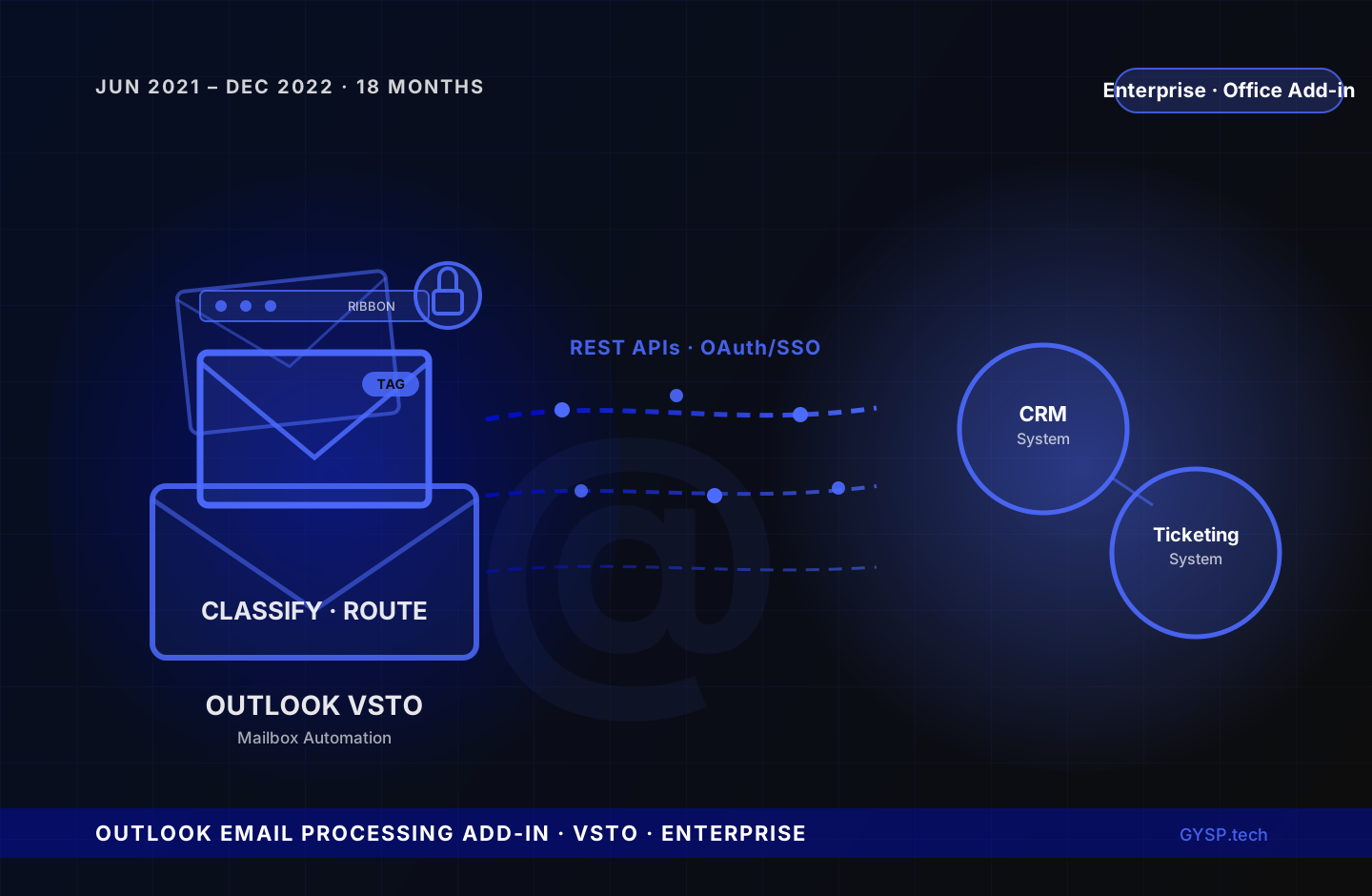
Inboxes were the bottleneck, with every incoming email requiring manual triage, attachment handling, and ticket creation before any real work began. GYSP built an Outlook VSTO Add-in that classified, routed, and processed emails automatically, secured with OAuth and enterprise SSO.
 Enterprise Technology
Global Enterprise — VDI Expansion Programme
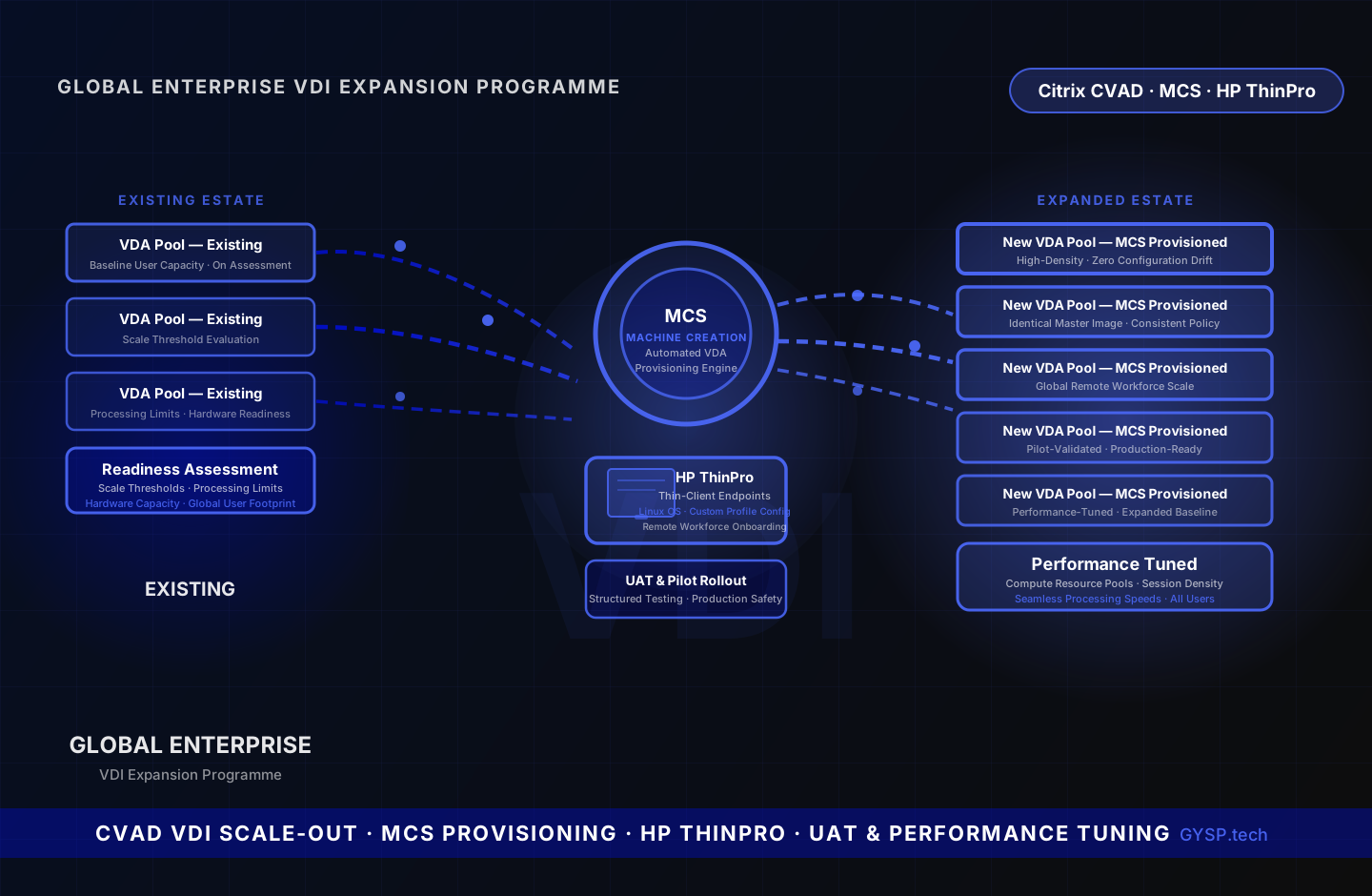
A global enterprise needed to scale its Citrix VDI estate to support a growing remote workforce without disrupting existing operations. GYSP assessed infrastructure readiness, provisioned new Virtual Delivery Agents using Machine Creation Services automation, configured HP ThinPro thin-client endpoints for incoming remote users, managed structured UAT and pilot rollout, and tuned compute resource pools to sustain performance across the expanded user baseline.
