Global Consumer Platform
Customer Analytics & Sentiment Engine — 20% Outreach CapEx Reduction
A large consumer platform had no way to predict who would leave, why they were dissatisfied, or where marketing spend was being wasted. GYSP built the analytics engine that answered all three.
Industry
Enterprise Technology
Key Result
20% Reduction in Customer Outreach Capital Expenditure
Primary Service
AI/ML Development
Core Stack
Python, R, Go

The Challenge
A large-scale consumer platform was operating with no systematic view of customer behaviour beyond transactional records. Churn was reactive: customers left before anyone knew they were at risk. Marketing spend was allocated without a quantitative model of which segments returned value proportional to outreach cost, and customer feedback collected at scale across digital channels sat as unstructured raw text with no mechanism to surface product issues or sentiment trends. The data infrastructure reflected the problem: multiple disparate systems holding customer, transactional, behavioural, and feedback data, none of them connected, each requiring manual effort to query and reconcile. Without a unified data layer, building any statistical model meant weeks of data preparation before a single hypothesis could be tested.
Our Solution
GYSP architected a unified customer intelligence platform built on an agnostic multi-language stack spanning SQL, Go, R, Python, and Hadoop, designed from the ground up for analytical workloads at consumer data scale. Automated ingestion pipelines replaced all manual data reconciliation, connecting the disparate relational databases into a single analytical layer with no per-query preparation overhead. On that foundation, GYSP built three statistical modelling layers: churn prediction models using historical behavioural data to score customers by flight risk before they disengaged, customer lifetime value estimations quantifying the revenue at stake per segment, and predictive propensity models informing which customers were most likely to respond to specific outreach types. A fourth layer addressed the unstructured feedback problem: specialised NLP text mining and sentiment tracking workflows were built directly on raw customer feedback, extracting product insight vectors and flagging sentiment trends that manual review would never have surfaced consistently at volume. The CLV and propensity outputs fed directly into marketing allocation logic, replacing intuition-driven spend decisions with statistically grounded customer segmentation. The result was a 20% reduction in total capital expenditure for customer outreach campaigns without reducing reach to high-value segments.
Most enterprise AI spend underperforms. Benchmark yours.
Key Deliverables
- Unified customer intelligence platform built on an agnostic multi-language stack: SQL, Go, R, Python, and Hadoop
- Scalable automated ingestion pipelines eliminating manual data reconciliation across all customer, transactional, and behavioural data sources
- Statistical churn prediction models scoring customers by flight risk using historical behavioural data before disengagement occurs
- Customer lifetime value (CLV) estimations and predictive propensity models driving data-grounded marketing allocation decisions
- Specialised user segmentation algorithms reducing customer outreach capital expenditure by 20% without reducing high-value segment coverage
- NLP text mining and sentiment tracking workflows extracting actionable product insight vectors from raw customer feedback at scale
- Integrated retention platform connecting churn risk scores, CLV estimates, and sentiment signals into a unified customer intelligence view
Services Delivered
- AI/ML Development
- Data Engineering
- Predictive Analytics
Tech Stack
This engagement used Python, R, Go, SQL, Hadoop, and 3 additional tools.
Frequently Asked Questions
How did the churn prediction model work and what data did it use?+
The churn prediction models were trained on historical customer behavioural data, including login frequency, product usage patterns, support interactions, and transaction history, to identify statistical signatures that preceded disengagement. Each active customer was scored against the model continuously, producing a flight risk ranking that let retention teams prioritise outreach toward customers showing early warning patterns rather than reacting after the decision to leave had already been made.
What is customer lifetime value (CLV) and how was it used in marketing allocation?+
CLV is the net present value of the future revenue a customer is expected to generate over their relationship with the platform. GYSP built CLV estimation models using historical revenue data and propensity scores, then connected the outputs directly into marketing allocation logic. Spend decisions that had previously been made on segment-level averages were replaced with per-customer CLV weighting, concentrating outreach investment on segments where the expected return justified the spend. This produced the 20% reduction in total outreach capital expenditure without reducing coverage of high-value customers.
How did the NLP sentiment engine extract product insights from raw customer feedback?+
Specialised text mining workflows were built to process raw customer feedback at scale, applying NLP techniques including tokenisation, entity extraction, and sentiment classification to surface themes, product pain points, and sentiment trends that manual review could never process consistently at volume. Rather than producing generic positive or negative scores, the workflows extracted specific product insight vectors — references to particular features, friction points, or service experiences — giving product teams an evidence base for prioritisation decisions grounded in what customers were actually saying.
Why was a multi-language stack (SQL, Go, R, Python, Hadoop) used rather than a single platform?+
Each component was matched to the language best suited for its specific workload. R handled the statistical modelling where its analytical library ecosystem was the fastest path to validated models. Python powered the NLP workflows and data transformation layer. Go was used for the high-throughput ingestion pipelines where concurrency and performance mattered. SQL managed the relational query layer across the unified data hub, and Hadoop provided the distributed processing capacity for analytical workloads at consumer data scale. An agnostic stack meant each problem was solved with the right tool rather than forcing every workload into a single technology's constraints.
Work with GYSP
Similar Enterprise Technology challenge?
Get a free technical brief: architecture options, cost estimates, and a delivery timeline scoped to your challenge.
- 48-hour turnaround
- Senior engineers only
- No commitment required
Or call: +1 (929) 588-8364
More Enterprise Technology Case Studies
 Enterprise Technology
Enterprise Telecom Giant
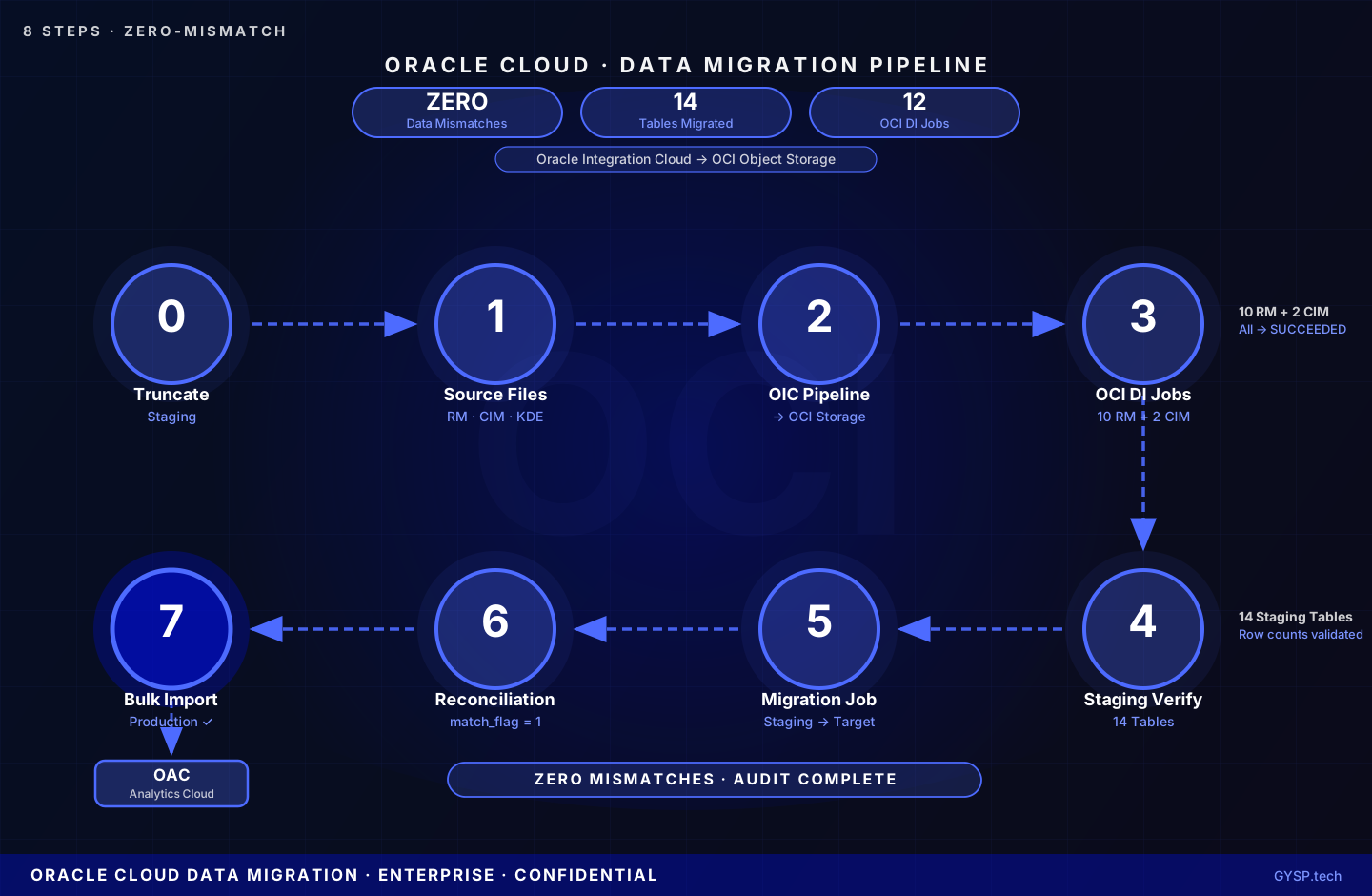
A confidential enterprise client engaged GYSP as a dedicated Oracle resource to architect and execute an 8-phase Oracle Cloud data migration, moving Revenue Management and Customer Information Management data through a validated pipeline, achieving zero data mismatches across 14 staging tables.
 Enterprise Technology
Global Professional Services Firm
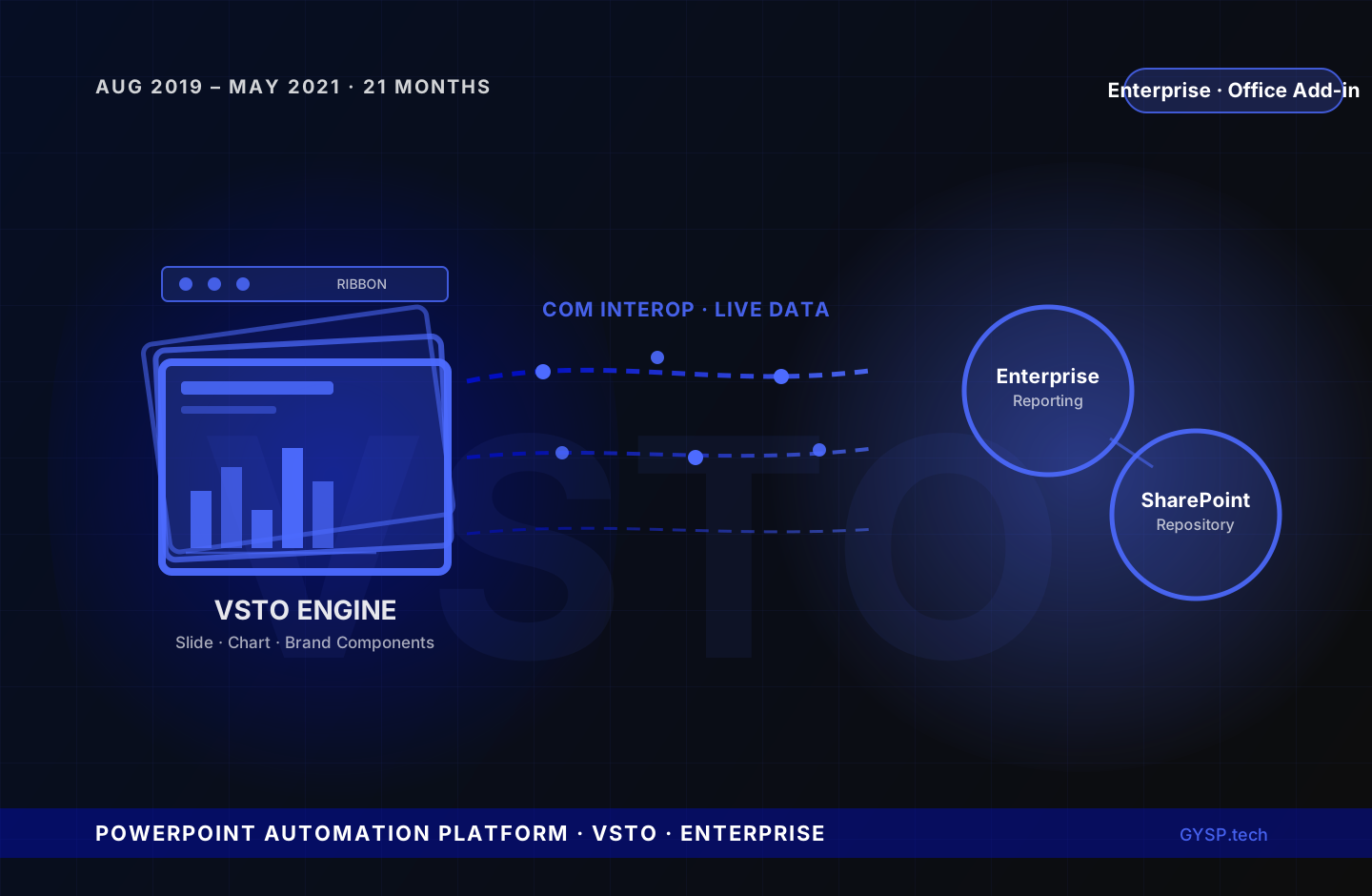
Business teams were losing hours per proposal manually rebuilding slides, charts, and formatting from scratch. GYSP built a native PowerPoint automation platform that generated branded, data-accurate decks directly inside the tool teams already used every day.
 Enterprise Technology
Confidential Global Enterprise Client
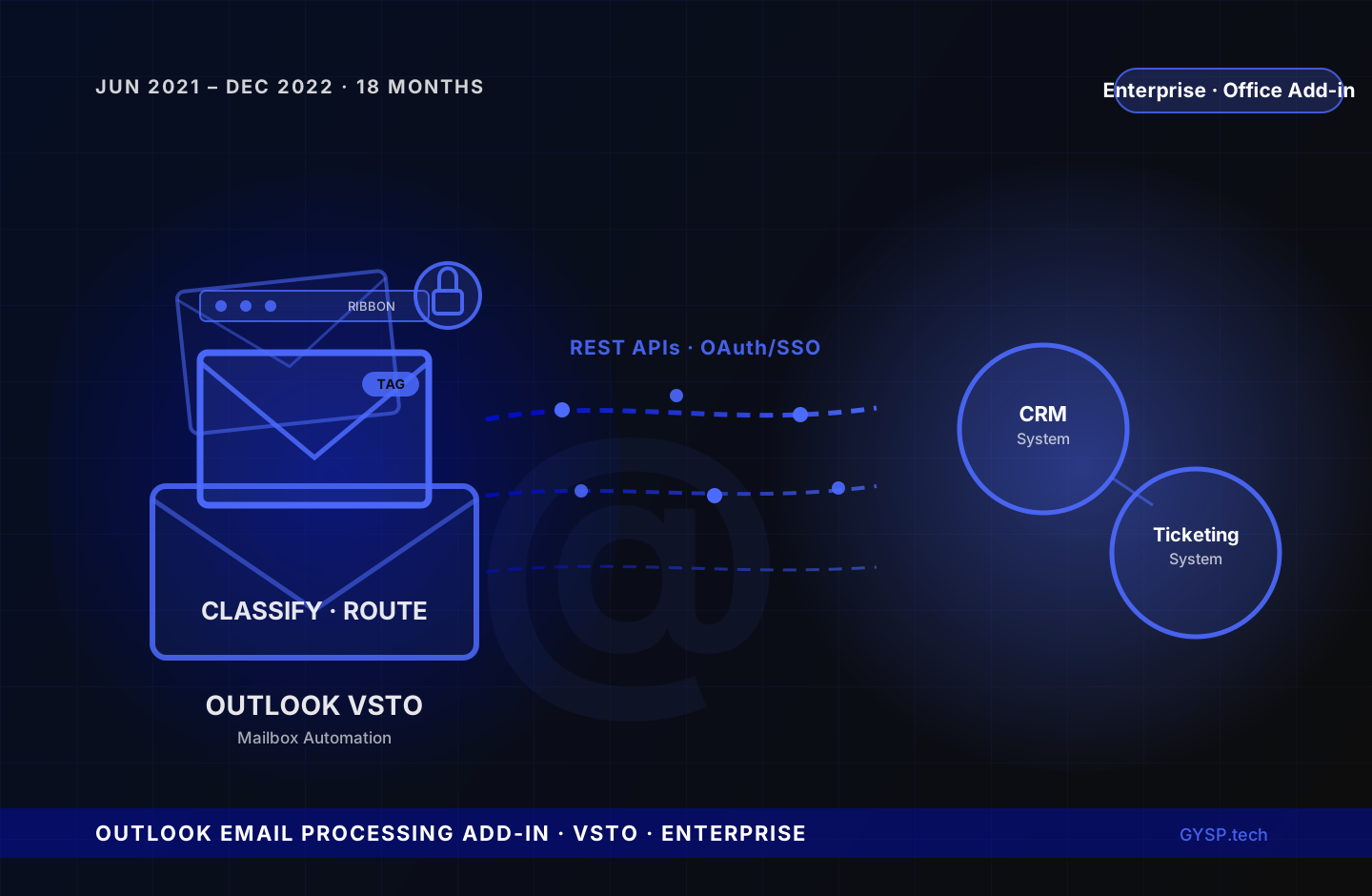
Inboxes were the bottleneck, with every incoming email requiring manual triage, attachment handling, and ticket creation before any real work began. GYSP built an Outlook VSTO Add-in that classified, routed, and processed emails automatically, secured with OAuth and enterprise SSO.
